As greenhouse projects scale up, the focus is shifting from infrastructure alone to the operational systems required to sustain performance over time. This transition is particularly visible in emerging markets such as Egypt, where rapid investment is revealing both the potential and the limits of technology-led development.
According to Giovanni Angiolini, Director Middle East & Africa (MEA) of Dutch Greenhouse Delta and coordinator of the Partners for International Business (PIB) programme of the Netherlands, Egypt's protected cultivation sector is developing quickly but unevenly. "You see everything from low-tech net and film structures to mid-tech upgrades and a limited but growing high-tech segment linked to larger commercial projects," he explains.
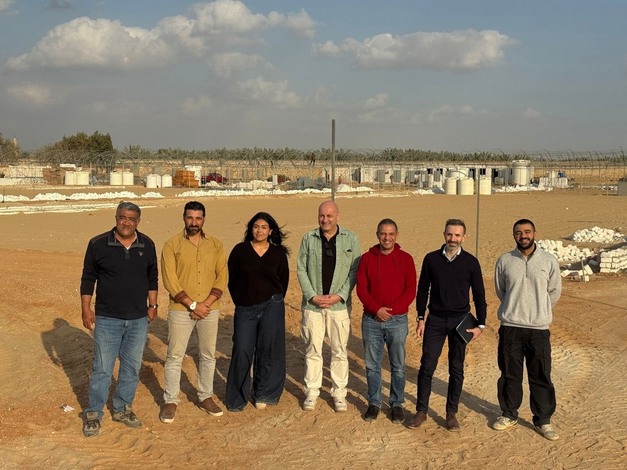
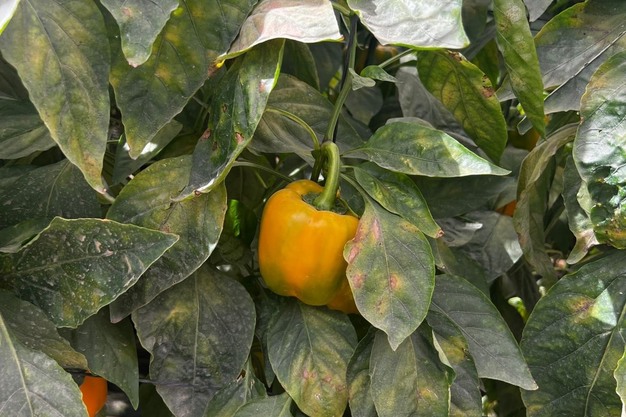
Recent field visits underline this contrast. During a series of greenhouse visits in Egypt, he observed how projects that once reflected strong ambition can struggle over time when operational practices fail to evolve alongside technology. "Maintenance discipline, hygiene routines, structured management and data accuracy ultimately determine whether a greenhouse continues to perform," he notes. These gaps become particularly visible in export-oriented operations, where international standards, traceability and compliance requirements are increasingly stringent.
Market drivers are clear: water scarcity, climate resilience, productivity and export readiness. Yet operational maturity does not always keep pace with investment. "The sector is moving forward quickly, but operational capabilities vary widely between projects."
 © Dutch Greenhouse Delta
A new generation of commercial growers
At the same time, a new group of business-oriented growers is emerging. "We see a rise of 'farmepreneurs' who are building scalable operations," Giovanni explains. "They are already adopting hydroponics, alternative substrates, water-saving strategies and biological crop protection."
This group is also changing purchasing behaviour. "Their logic is shifting from lowest upfront cost to performance, reliability and long-term results," he observes. This mindset supports more sustainable decision-making and opens the door to integrated solutions combining technology, service and applied knowledge.
Operational gaps limit long-term performance
Despite strong designs, many greenhouse projects struggle to maintain output after commissioning. Angiolini stresses that the root causes are rarely technical. "Preventive maintenance, biosecurity, hygiene protocols, structured workflows and reliable data are the most common weaknesses."
Field experience confirms this pattern. "Even well-designed greenhouses gradually lose efficiency when operational discipline is missing," he adds, noting that declining crop health and inconsistency are often the first warning signs.
 © Dutch Greenhouse Delta
People and process as key multipliers
Long-term performance depends less on technology alone and more on organisational capability. "The real multipliers are applied technical skills, continuous training, clear SOPs with accountability and strong on-site management," Giovanni explains.
Equally important is alignment with market demand and access to reliable supply chains for inputs, spare parts and calibration. "Technology only performs when there is an operational culture around it."
Export standards and data integrity
For export-oriented producers, compliance is becoming non-negotiable. While many growers understand international requirements, consistent execution remains challenging. "The issue is not intent, but embedding standards into daily operations. Data accuracy, traceability and standardised workflows are where most struggle."
Treating compliance as a continuous operational process, rather than a periodic audit exercise, is increasingly decisive for long-term commercial success.
 © Dutch Greenhouse Delta
Integrated operating models
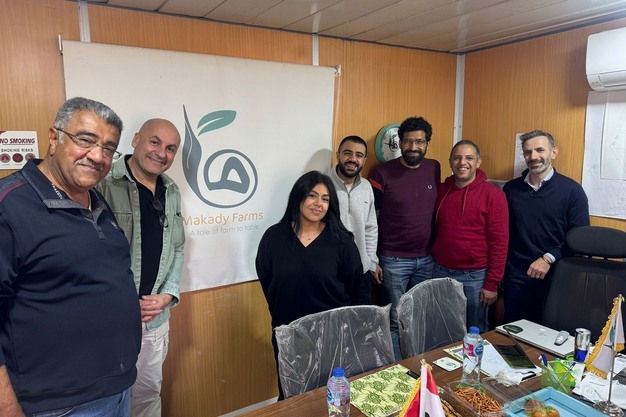
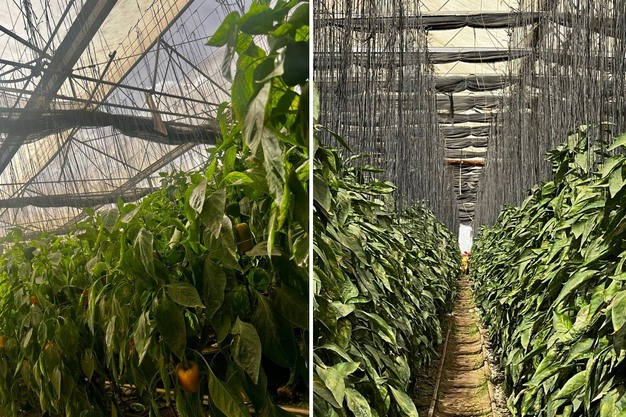
He points to Makady Farms as an example of how integrated operating models can bridge this gap between ambition and performance. The project combines modern greenhouses with packing and post-harvest facilities, employee accommodation and on-site management infrastructure.
Strong attention has been given to water management, climate control, workflow balance and long-term planning. Parts of the facility are expected to become operational around the upcoming Ramadan. "This combination of vision, structure and operational discipline provides the foundation for sustainable scale and meaningful international collaboration," he notes.
 © Dutch Greenhouse Delta
Aligning investment with operations
For investors and developers, operational readiness should be treated as a core investment stream. "Training, SOP development, maintenance systems, hygiene routines and data discipline must be funded from day one," he advises.
Operational KPIs should be governed alongside financial metrics, and long-term supply chain support should be secured early. "That determines whether a project is still performing three years after commissioning."
Beyond technology supply
Giovanni sees the greatest impact not in hardware alone, but in long-term partnerships. "Applied knowledge transfer, operational excellence, water-smart cultivation approaches and export-compliance enablement are where value is created."
He concludes that long-term partnerships combining technology with skills development and continuous improvement will play a central role in the next phase of Egypt's greenhouse sector development.
 © Dutch Greenhouse Delta
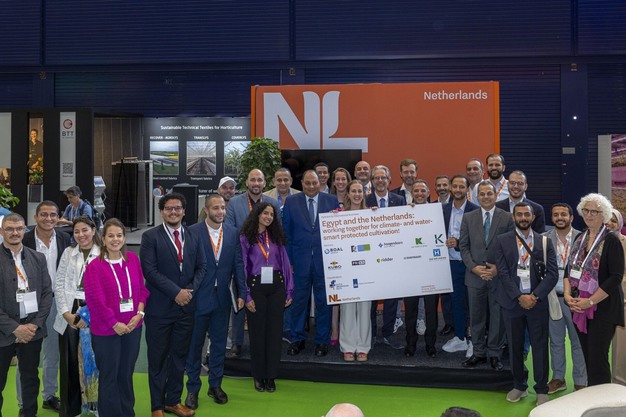
The NLHortiWaterRoad2Egypt covenant was confirmed at GreenTech Amsterdam last year, marking a public-private partnership to advance climate-smart, water-efficient horticulture in Egypt.
For more information: Dutch Greenhouse Delta
[email protected]
www.dutchgreenhousedelta.com