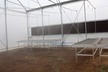
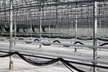
Belarus continues to modernize existing greenhouse facilities and develop new projects aimed at ensuring year-round supplies of fresh vegetables and reducing seasonal production gaps. The strategy focuses on expanding winter production through supplemental lighting, energy-efficient technologies, and phased infrastructure upgrades.
As of January 2026, large greenhouse enterprises in Belarus operate 233 hectares of winter greenhouses. Year-round production using artificial lighting technology has been introduced at 10 greenhouse complexes, covering 56.9 hectares. These facilities grow cucumbers, tomatoes, leafy greens, strawberries, and flowers, allowing stable output during periods of low natural light.
Belarus has already exceeded domestic demand for cucumbers during the 2024–2025 off-season, producing 14,300 tonnes, or 172% of national needs. By 2027–2028, planned projects are expected to cover 118% of off-season tomato demand, reaching 20,300 tonnes, while output of leafy greens is set to double from 400 to 800 tonnes.
Greenhouse modernization is guided by the national strategy for greenhouse vegetable production for 2023–2027. Between 2023 and 2025, 10 greenhouse facilities were reconstructed for light-assisted cultivation, adding 25.5 hectares of upgraded production area. New construction projects are scheduled for subsequent years.
Domestic produce dominates the Belarusian market. Local products account for 94% of cucumbers, 71% of tomatoes, 94% of carrots, 90% of beets, 82% of white cabbage, and 59% of apples sold domestically. Annual consumption averages 40,000–50,000 tonnes of cucumbers and 50,000–60,000 tonnes of tomatoes, with off-season monthly demand estimated at 2,000–3,000 tonnes.
To support winter production, Belarus applies seasonal incentives, including reduced electricity tariffs for greenhouse operators meeting production targets and differentiated natural gas pricing during heating-intensive periods. These measures are designed to offset high energy costs associated with lighting and climate control.
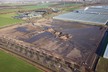
Several major projects are underway. In the Minsk region, a new energy-efficient greenhouse complex is being built near Tabory village, with year-round production and artificial lighting. The first tomato harvest from the facility is expected in November.
In the Brest region, a joint project with Chinese partners предусматривает phased construction of advanced greenhouses. The pilot phase includes a 1.6-hectare fifth-generation greenhouse planned for 2026. Future stages may expand production within the Brest free economic zone. The project will incorporate AI-based systems to manage climate, nutrition, and lighting, with projected yield increases of up to 50% per hectare and lower production costs.
Source: www.sb.by