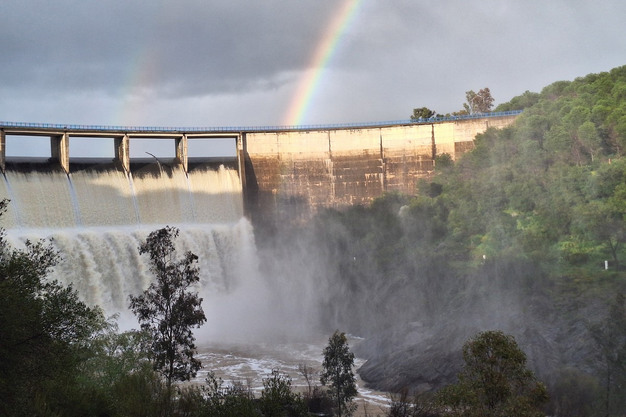
This week, Andalusia, like much of Spain, woke up looking to the sky, closely monitoring the arrival of what experts have termed an "atmospheric river", described as "an exceptional and very rare phenomenon in the region, expected to unload over Portugal, Morocco and Andalusia".
"The situation is complex and the risk of flooding is high in several parts of Andalusia. There are several reservoirs registering historic rises. In the Guadalquivir River Basin Authority alone, 33 reservoirs are currently releasing water, and if we look at the past few days, there are 50 in total. AEMET says this phenomenon will bring an unprecedented concentration of rainfall, and there are areas of Andalusia that could receive the equivalent of an entire year's rainfall over just a few days. And we are talking about areas that are already saturated," stressed the Andalusian government, which has asked citizens to "restrict mobility from midnight on Wednesday to midnight on Thursday" and to travel only when "strictly necessary".
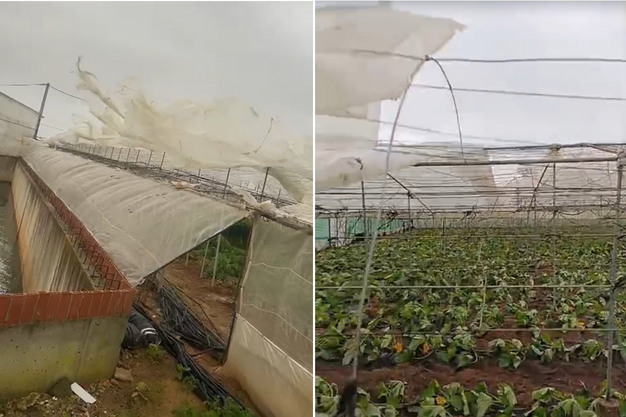
In agricultural areas already hit by previous storms, such as Chipiona, the situation is described as "chaotic", according to the Association of Producers of the Northwest Coast of Cádiz. Intense rainfall, accompanied by episodes of strong wind and hail, has caused significant damage to agriculture in Chipiona, affecting both open field crops and greenhouse structures.
 © Asociación de Productores Costa Noroeste de Cádiz
"The succession of storms over recent weeks, with the storm Kristin having a particularly strong impact on January 28, has left a complex scenario that farmers are still assessing. The wind, together with Monday's hailstorm, has meant that we have lost a lot of crops, both outdoors and under protection, and many greenhouse covers have been damaged."
Open field crops severely affected
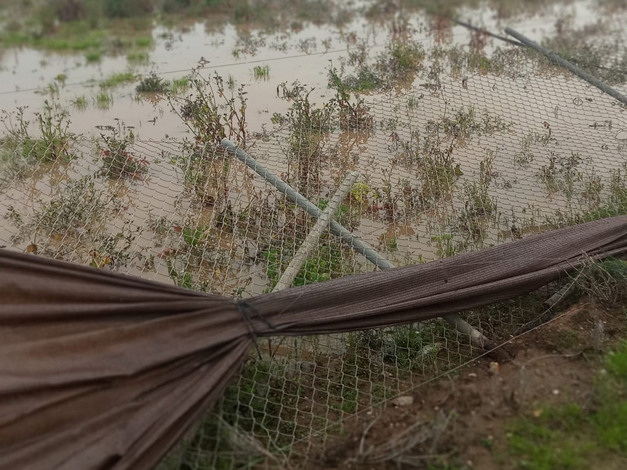
Outside greenhouses, the damage is particularly evident in extensive and horticultural crops. "A lot of potatoes have been lost, cabbage, carrots, even leeks, which usually tolerate a lot of water, have started to rot due to the water accumulated in the soil. There are also orange trees affected in plots located in flood prone areas," explains Eduardo Ruiz.
 © Asociación de Productores Costa Noroeste de Cádiz
The accumulation of water has left some plots completely flooded and inaccessible, with losses that have yet to be quantified. "The association began a data collection process about a week ago, and we fear that the storm arriving today will further affect farms in the area."
In addition, Chipiona's farmers are warning about a long standing structural problem, namely the high water table of the aquifer. "With very little rain, water levels rise immediately. More than 350 hectares are already affected and the figure keeps increasing," Ruiz explains. "In areas such as Pastrana, water levels reach almost half a metre above ground in some points."
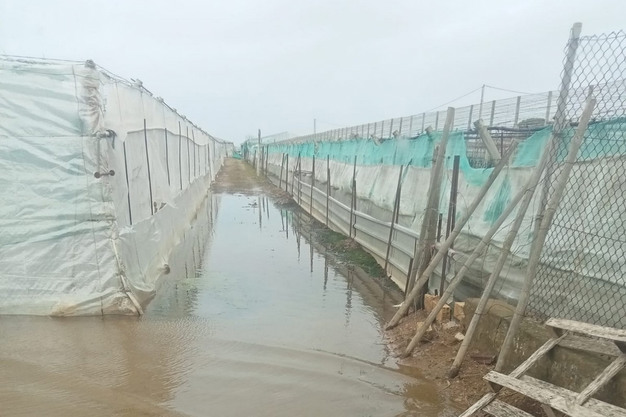 © Asociación de Productores Costa Noroeste de Cádiz
"This is a problem we have been dealing with for more than twenty years. The association was founded precisely to try to solve it, working with different public administrations, and although the solution is close, the works that would allow proper drainage of plots that flood whenever it rains have not yet been carried out."
Greenhouses hit at a critical moment
The storm has hit greenhouses hard, at a particularly sensitive time for the sector. "Right now we are in full production of many vegetables, including tapines, a very important product for the sector that is usually exported. Many greenhouses are torn open, with wire and plastic covers damaged, leaving crops completely unprotected. Tapín is a fragile plant, and those left without protection will be badly affected," the farmer explains. "And we must remember that in addition to production losses, farmers will also have to bear the cost of repairing greenhouse damage."
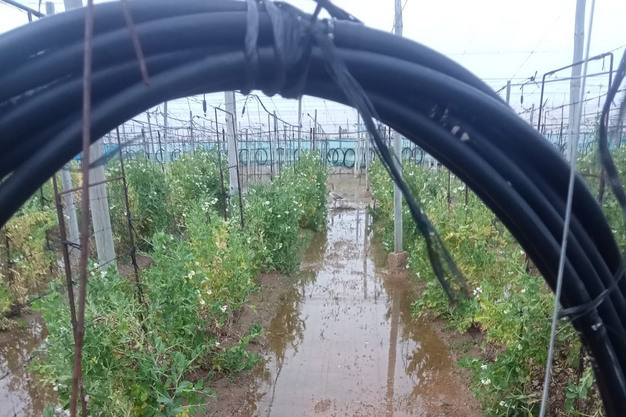 © Asociación de Productores Costa Noroeste de Cádiz
After Leonardo, "a swarm of storms that will give us no respite"
While rainfall associated with Storm Leonardo eased slightly this morning in western Andalusia, strong winds continue to blow and farmers remain alert, following instructions from authorities and waiting for weather conditions to allow access to fields so that damage can be assessed more accurately.
Caution remains essential due to the risk of flooding and strong winds expected in the coming hours across large parts of Andalusia. Authorities report that there are already thousands of evacuees from towns and rural settlements in flood prone areas of Cádiz, Málaga and Jaén, roads cut off by overflows and flooding, and both high speed rail services and the maritime connection between Spain and Morocco have been suspended, according to the Port Authority of Algeciras.
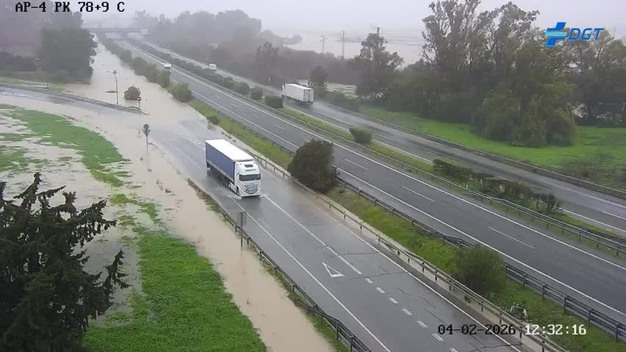 © DGT
© DGT
According to the Red Hidrosur, by 12:00 midday there were eight rivers at red alert level across the provinces of Cádiz and Málaga, five of them in Málaga.
In Málaga, after several years marked by drought, the sudden shift in the water situation is having uneven effects depending on crop type and location. "We are coming off several years of drought, with some areas barely reaching 350 to 400 litres annually," explain representatives from UPA Málaga. "Water is always necessary, but there are times, like now, when it creates complications."
"In horticultural areas such as Antequera, the situation is particularly delicate for crops sown directly in the soil, such as carrots, because there are areas where the land simply cannot absorb any more water." Excess moisture is hindering plant development and preventing access to plots, compromising the viability of part of the production.
"In crops such as avocado or mango, which had been suffering more severely from accumulated water stress in previous seasons, the rain is being welcomed," they note. "However, in the case of traditional olive groves, the impact of the storm has been significant. We have between 40% and 50% of the olives on the ground. That fallen fruit can be collected, but it will end up being used for oil of lower quality categories than extra virgin."
Citrus crops have also not escaped the consequences of the adverse weather. "In December, some areas of the Guadalhorce Valley already recorded hail episodes that affected both oranges and lemons. Fortunately, the damage was not widespread," they explain. "Now, the current waterlogging of fields, together with the rain that is forecast, will prevent harvesting from being carried out normally on many farms."
The Andalusian regional government has warned that after the rainfall expected on Wednesday and Thursday, another front is likely to arrive that will "bring a new atmospheric river" between Saturday and Monday.
A scenario is therefore expected involving "a swarm of storms that will give us no respite", the regional government has stated, casting uncertainty over the consequences that successive weather events may have on Andalusia's agricultural fields.