Agdia has announced the commercial launch of a field-deployable rapid molecular test kit on their AmplifyRP® XRT platform for dual onsite detection of Beet pseudoyellows virus (BPYV) and Strawberry pallidosis-associated virus (SPaV).
For growers who prefer to send plant samples to Agdia for analysis, this product will also be used by their Testing Services diagnostic laboratory, where customers receive guidance on crop screening and rapid turnaround time of test results.
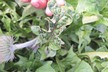
 © AgdiaInterveinal chlorosis on cucumber leaves
Beet pseudoyellows virus (BPYV)
Beet pseudoyellows virus is a plant pathogenic virus in the Crinivirus genus (Closteroviridae family) and it is the causal agent of 'cucumber yellows' and 'muskmelon yellows'. While over 30 species of plants from various families are considered susceptible to infection, BPYV is best known for causing significant economic losses in cucurbit greenhouse production (cucumber, melon/cantaloupe, squash, etc.) Other notable susceptible species include strawberry, lettuce, carrot, spinach, beet and multiple ornamental species.
The virus is transmitted in a semi-persistent manner by the greenhouse whitefly (Trialeurodes vaporariorum). It is not transmitted through seed and has only been shown to be mechanically transmitted in a lab setting.
Symptoms of BPYV include chlorotic (yellow) foliar spots, stunting and interveinal chlorosis of older leaves. Areas with interveinal yellowing eventually display thickening characteristics and become necrotic.
Interveinal chlorosis caused by BPYV closely mimics visual symptoms of nutrient deficiency (i.e., magnesium). Such symptoms can also be mistaken for those caused by other cucurbit-infecting viruses transmitted by aphids, thus highlighting the importance of incorporating molecular diagnostics into growing operations to accurately inform pest management strategies. Such strategies include insecticide applications, insect netting and removal of infected plant material.
Strawberry pallidosis-associated virus (SPaV)
Strawberry pallidosis-associated virus (SPaV) is another viral species from the Crinivirus genus that is best known as a causal agent of virus decline of strawberry. This viral species has a narrower host range than BPYV. Susceptible hosts are limited to species closely related to strawberry in addition to several other weed species.
The greenhouse whitefly (Trialeurodes vaporariorum) is the primary transmission vector of SpaV.
Strawberry plants infected with SPaV alone are typically symptomless until infected with another virus. This can result in confusion when trying to correlate specific virus infection with vector populations. If plants are infected with SPaV by whiteflies early in their growth cycle, the same vector may not be present when a secondary infection (such as aphid-transmitted viruses) occurs and disease symptoms first become visible. Such symptoms include: red- or purple-colored leaves, stunting, fragile roots with reduced absorption characteristics and significantly reduced fruit production.
As with other Criniviruses, symptoms of infection are similar to those observed with nutrient deficiency and other diseases, which makes visual diagnosis unreliable.
Effective clean stock programs rely heavily on whitefly exclusion and regular diagnostic testing to ensure clean mother stock.
Extensive validation studies were conducted to demonstrate fitness for purpose of the new rapid, field-deployable molecular assay developed by Agdia for dual detection of BPYV and SPaV:
For BPYV detection, the assay showed a diagnostic specificity of 100%, correctly identifying all 243 true negative samples. No cross-reactivity was observed with other pathogens evaluated during product validation. The assay detected 151 of 159 positive samples, resulting in a diagnostic sensitivity of 95%.
For SPaV detection, the assay also demonstrated a diagnostic specificity of 100%, with all 255 true negative samples correctly identified and no cross-reactivity observed during validation. It successfully detected 154 of 157 positive samples, yielding a diagnostic sensitivity of 98.1%.
For more information:
Agd ia
ia
52642 County Road 1
Elkhart, IN 46514
phone 1-574-264-2615
fax 1-574-264-2153
[email protected]
www.agdia.com