Researchers from INIA Quilamapu have begun an unprecedented biological prospecting initiative in areas of the Ñuble Region foothills that will be flooded in the future, with the aim of identifying, classifying and conserving genetic resources of patrimonial value and multiple potential uses. INIA itself already uses some of these resources as bio inputs to replace chemical products.
This significant scientific effort to conserve native microorganisms is taking place in what will become the flood zone of the future Zapallar Reservoir, on the Diguillín River, where construction works are expected to begin shortly between the municipalities of Pinto and El Carmen, in the Ñuble precordillera.
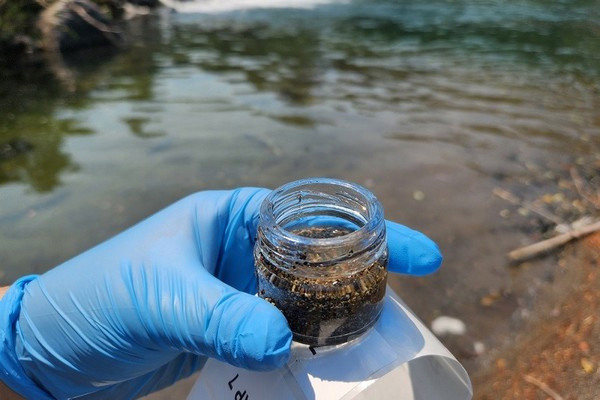 © INIA
The team of professionals involved is part of the Microbial Genetic Resources Bank, a pioneering unit in Latin America that has been dedicated since 2012 to the recovery and preservation of microorganisms, fungi and bacteria, that make up Chile's national heritage.
The regional director of INIA Quilamapu, Javier Chilian, explained that the bank houses the Chilean Collection of Microbial Genetic Resources (CChRGM), safeguarded by INIA in Chillán, and that it operates under strict protocols required by the Budapest Treaty, to which Chile is a signatory. This treaty simplifies the patenting of biotechnological inventions.
He added that INIA has a state mandate to safeguard Chile's genetic resources, a mission that includes both plant species, such as seeds, and the microorganisms present in natural ecosystems across the country.
In coordination with the environmental team of the Zapallar Reservoir territorial unit of the Directorate of Hydraulic Works (DOH), INIA Quilamapu researchers surveyed two areas that will end up tens of metres underwater, in order to collect initial soil samples. Each of these samples contains millions of microorganisms.
Javier Chilian stressed that each scheduled visit is strategic, noting that "if we consider that this area will become part of the flooded reservoir bed, those microorganisms will be lost, so we are trying to safeguard them for the future, for scientific purposes and uses."
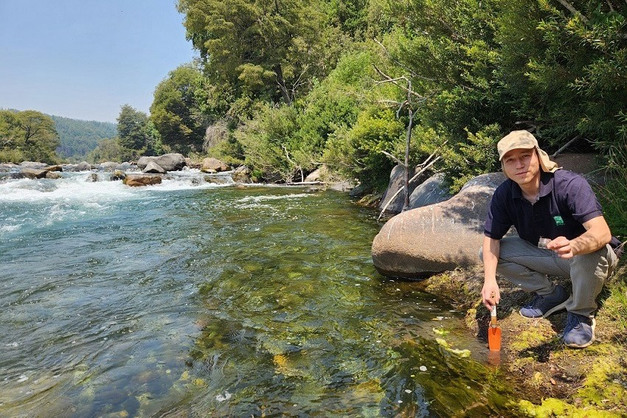 © INIAJean Franco Castro, curator of the INIA Microbial Genetic Resources Bank.
Agricultural uses and applied science
"The work consisted of collecting samples associated with native plants and the riverbed, in order to isolate microorganisms native to the site and preserve them in the INIA Quilamapu Microbial Genetic Resources Bank," explained Jean Franco Castro, curator of the unit.
The bioengineer and PhD in science added that the initiative is not limited to biodiversity conservation, but also seeks to open up new opportunities for applied science. "Once isolated, we store them in the long term, which is the mission of the bank, and then carry out studies associated with them." In this sense, he noted that the work creates opportunities to find biotechnological solutions to a range of current societal challenges.
Among the potential applications, he highlighted the development of bio inputs for agriculture, which can act as plant growth promoters and as biological alternatives for pest and disease control, replacing chemical products, practices that are increasingly in demand in Chile and globally.
Naturally adapted to extreme conditions
One of the main strengths of these microorganisms lies in their local origin, the INIA researcher emphasised. "By developing in the Ñuble precordillera, they are naturally adapted to demanding environmental conditions, such as summers with high solar radiation and elevated temperatures, and cold winters."
He added that this adaptation could be key to their use in agricultural systems that must also cope with extreme conditions, helping to strengthen productive resilience.
The Zapallar Reservoir will be built using the waters of the Diguillín River and will be primarily intended to irrigate 10,000 hectares of agricultural land, benefiting 2,500 farmers in the municipalities of Pinto and El Carmen. It is expected to enter into operation in 2030.
Source: inia.cl