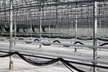
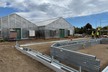
Last year, Forte Information Communication Technologies and Defense Industry Inc., which operates in the fields of information communication technologies and defense, ventured into hydroponic agriculture by establishing a strawberry greenhouse on a 5-hectare site in the Karatas district through its subsidiary.
Strawberry production in the hydroponic greenhouse involves analyzing various data points, including temperature, pH value, and humidity, using drones, high-resolution cameras, and sensors.
The AI-driven application allows for close monitoring of strawberries' disease, nutrition, and harvest status based on analyzed data. In the greenhouse, where every step from production to harvest is closely observed, 30% of the 450 tons of strawberries harvested from November 2024 to July 2025 were dispatched to the UK, Malaysia, Singapore, Saudi Arabia, Russia, Kazakhstan, and Mauritius.
Murat Karakus, who serves as Sales Director at Cetwell Information Technologies and Agricultural Systems Consulting Services Inc., informed the press that agriculture is one of the most effective fields for applying artificial intelligence, which has recently become part of daily life.
Karakus, stating that they incorporate artificial intelligence into all facets of their greenhouse, continued: "Applications of artificial intelligence in agriculture are starting to yield advantages for us. At first, we noticed higher yields as a result of the software and technological enhancements we incorporated into our fertilization systems. Our field employees are represented by the sensors and cameras in the greenhouse. Thanks to their provision of real-time data, we can intervene in numerous values requiring immediate monitoring—such as the quantity of fertilizer used, the mineral type to apply, temperature, humidity, and water pH. By using this technology, we observe that yields are rising even more.
Karakus mentioned their goal of raising export rates to 50% and noted their commitment to further investing in greenhouses that utilize this technology.
Source: AA