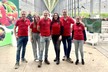
Since 5 September 2025, Greenyard has formally delisted from the stock exchange following a takeover by the Deprez family and Solum Partners. The move came after years of internal deliberation about whether a listing still added value. "In the end, we determined that a stock market listing no longer supported our company's development," explained Francis Kint and Charles-Henri Deprez, CEO and CFO of Greenyard, who, together with Daniel Sachs of Solum Partners, talk about the choice, the dynamics surrounding the stock market exit, and the future strategy.
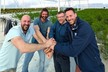
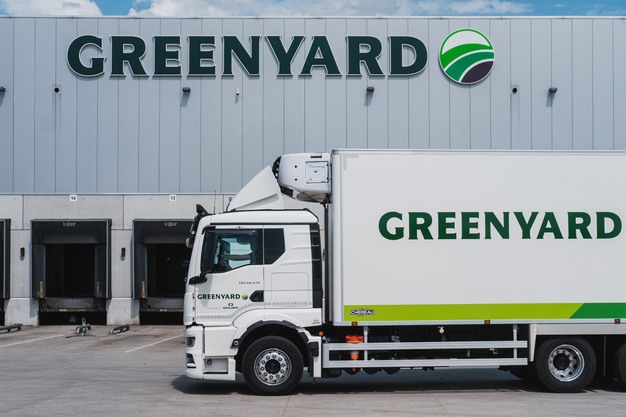 © Greenyard
The decision to go public was therefore a conscious one. "In theory, a stock exchange offers access to capital, visibility, and a stable investor base. In practice, however, we experienced a different effect," Charles-Henri interjects. According to management, the stock market context increasingly clashed with the way Greenyard approaches its long-term strategy. "This is not unique to us. The European mid- and small-cap market has been struggling for years with low liquidity and limited interest from large institutional investors. As a result, many shareholder bases consist largely of retail investors, leading to a highly volatile share price and strong sensitivity to short-term reactions."
That volatility created additional pressure. "We noticed that almost every communication, whether positive or negative, was interpreted negatively by the market. That created noise and made it difficult to make strategic moves without immediate pressure."
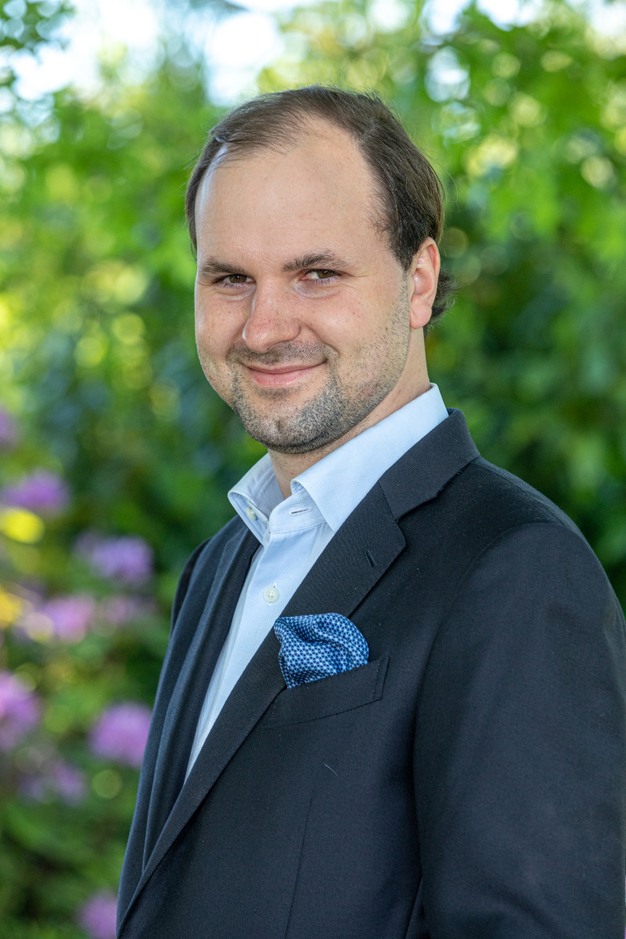 © GreenyardRight Charles-Henri Deprez
Long-term vision clashes with stock market logic
That tension weighed even more heavily because Greenyard is a family business. "As a family business, we think in generations," Charles-Henri stresses. "Our strategic decisions often only show their full impact after five or ten years, while stock market logic focuses mainly on quarterly reporting. That area of tension continued to grow. That is why we already drew the internal conclusion three years ago that the stock market was limiting us rather than strengthening us. The exit was therefore not a sudden decision, but the result of a long and well-considered process."
In Solum Partners, Greenyard found a shareholder that shares its long-term vision. Moreover, discussions with Solum go back much further than the recent acquisition. Hein Deprez, founder and executive chairman of Greenyard, and Solum have known each other for 10 years. Three years ago, Hein Deprez's initiative to remove Greenyard from the stock exchange began to take shape, and discussions gained momentum. "We still know Solum from their role within the Harvard Management Company. That gave us the time to work, without pressure, towards a structure that was right for all parties."
Peace of mind with customers and suppliers
Since the stock market exit, Greenyard has experienced greater calm within the organisation in particular. Francis explains: "Day-to-day management can once again fully focus on customers, growers, and operational efficiency, without the constant pressure of public reporting." Progress has also been made in terms of governance. "The agreements between the family, Solum, and management are clearly defined, which not only speeds up but also facilitates decision-making."
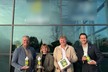
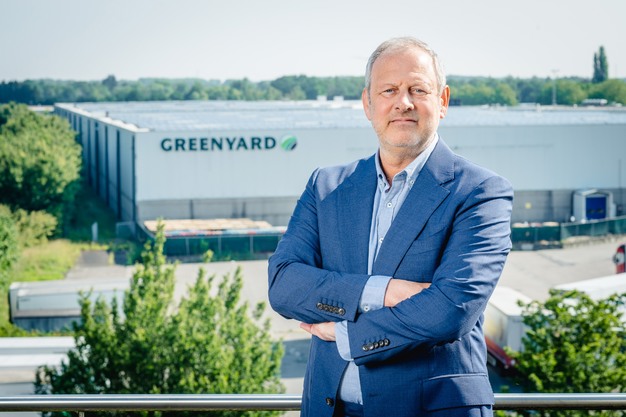 © Greenyard
Francis Kint
Reactions from customers and suppliers were also predominantly positive, they indicate. "Major customers naturally want clarity on the shareholder structure, because we work intensively with them and because they depend heavily on reliable and stable partners. We therefore informed them transparently."
Questions about the entry of a partner like Solum, which was relatively unknown to them, also quickly disappeared, according to management. "Once customers gained insight into their background, investment philosophy, and experience within the food and agri sector, this turned into a positive sentiment." Suppliers reacted in a similar way. "Cautious at first, but eventually recognition that this structure offers peace of mind and continuity prevailed."
There were no concerns about reduced transparency now that Greenyard has been privatised again, according to management. "Our transparency towards the stock exchange has fallen away, but towards customers and partners it remains unchanged. The more integrated we work with a customer, the more information we share. The same applies on the supplier side. We continue to offer openness where it is operationally relevant. The exit does not change our forms of cooperation."
Sector partner, not a classic financial investor, but rather as a partner. Since 2016, we have consciously chosen to invest exclusively in food and agribusinesses."
Right Daniel Sachs
 © GreenyardAnd Solum? Was it still a difficult decision for them to take this step? "As a team, we have been working globally in food and agribusiness for more than 20 years," explains Daniel Sachs, the investment partner. "We are also not seen within the sector as a traditional
That focus was reinforced when Solum split off from the Harvard Management Company in 2020. "That makes us more likely to be seen as a sector partner in the market. We bring not only capital, but also knowledge of retail models, production efficiency, cultivation structures, and technology. It is also one of the reasons why we saw an extremely strong partnership opportunity in this move with Greenyard. At the same time, it lowers the threshold for customers and suppliers to view us as a stable shareholder."
Cultivation companies reintegrated within Greenyard
The stock market exit coincides with a period in which the sector is under pressure from weather conditions, geopolitical uncertainty, rising costs, and changing regulations. At the same time, demand for fresh and healthy produce is structurally growing. Did this present additional challenges to the process? "We do not see this complexity as a threat, but as an opportunity to further professionalise the chain," Francis assures.
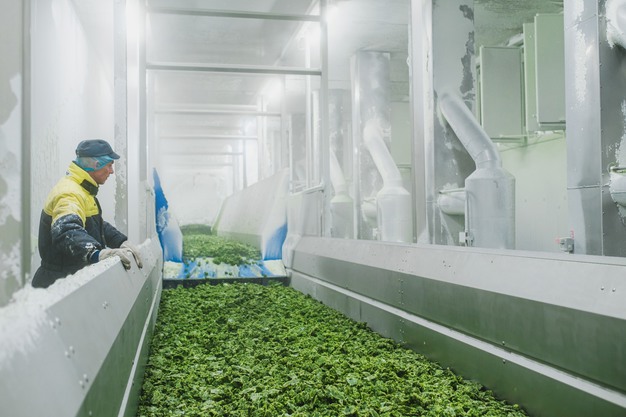
The decision to reintegrate a number of cultivation companies within Greenyard also fits within that framework. "We have announced that a number of cultivation companies that were previously positioned outside the group will be reintegrated within Greenyard. Own cultivation reduces our dependency, improves quality, and makes our deliveries more predictable. I have worked with that integrated structure in the past and know how valuable it can be."
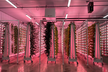
 © Greenyard
The private framework offers additional scope in this regard. "The biggest advantage of privatisation is increased strategic freedom. We can develop projects that require a lot of time without having to explain them publicly at an early stage. Governance is simpler, the reporting burden lower, and the quality of decision-making higher. For investments in digitalisation, logistics, or international growth, this environment works more efficiently. Cooperation between shareholders is also simpler and more focused."
U.S. market development
For the future, the partners therefore see Greenyard's role within the chain continuing to evolve. "Retailers, including discounters, want to be increasingly strong in fruit and vegetables. That makes them more sensitive to fluctuations in yield, weather conditions, and logistics availability, so we, as Greenyard, are increasingly shifting towards a connecting role. We make those fluctuations manageable by planning volumes better, spreading risks, and responding more quickly to changes in supply and demand."
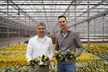
 © Greenyard
With the presence of Solum, the partners also see growth opportunities in North America. "Our historical operations in South America and Africa are mainly linked to our cultivation companies. Those markets remain relevant, but currently represent a smaller share of total sales. That said, we will always keep our eyes open for future opportunities in Latin America and Africa, where we have been present in the past. Geographically, the focus remains primarily on Europe and North America. Our presence in the U.S. has existed for years, and Solum's U.S. background strengthens that position and ensures that we will strategically assess how to further develop it."
"The strategic exercise for the coming years is fully underway. We are looking at how we can further strengthen our model, how the reintegration of cultivation activities should be structured, and what investments are needed to make the chain more efficient and robust. Our horizon is five to ten years, with clear ambitions for scale, quality, and international expansion."
For more information:
Greenyard
[email protected]
www.greenyard.group