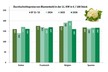
The tomato produced in the Netherlands has increased its presence in the German market during the winter months, a period traditionally one of Almeria's main commercial strongholds. This is reflected in an analysis based on Eurostat and Customs Department data, recently published by Juan Carlos Pérez Mesa, a professor at the University of Almeria.
Historically, Almeria's greenhouse output peaked in December, January, and February, while Dutch supplies dropped as temperatures fell. Consequently, Almeria became the primary tomato supplier for German supermarkets. This pattern remained until the 2022-23 season, when a noticeable shift began.
Since then, Dutch exports have increased more rapidly than Almeria's during winter, despite the typical drop in Northern Europe's production caused by low temperatures. Last season, the Netherlands slightly outperformed Almeria tomatoes in December and January, with a more noticeable difference emerging in February.
Almeria's relative decline isn't due to a decrease in total exports. Last season, tomato exports from Almeria to Germany rose by 4.1% to 148.9 million kilos, up from 143.1 million the previous year. This increase is even more significant when compared to 2023, when exports slightly surpassed 125 million kilos. Nonetheless, growth in the Netherlands has been much stronger, which has diminished Almeria's leading position in the German market during winter.
This development marks a new setback for the tomato sector in Almeria, which has been losing cultivation area in recent years due to various factors. Meanwhile, the Netherlands is increasing its share in Northern Europe, and Morocco in France and the UK, all of which were once traditional destinations for tomatoes from Almeria.
Source: diariodealmeria.es