Labor is typically the highest cost in agriculture, accounting for around 60% of total production costs in high value crops such as fruit and vegetables. While this percentage varies depending on crop intensity, mechanization, and production systems, labor remains a decisive factor for farm profitability. As a scarce resource, efficient labor management, and helping workers understand which tasks they perform most efficiently, is key to optimizing this direct cost of agricultural activity.
With this objective, Robonity was founded in Almería in 2019, aiming to apply artificial intelligence and robotics, developed over years in highly demanding technological environments, to one of the most strategic sectors in southeastern Spain, agriculture. The project is led by Ramón González, a computer engineer with a PhD in artificial intelligence and robotics, who previously worked at MIT and collaborated with NASA before returning to Spain to develop his own company.
 © Robonity
"Coming back and starting a company was a way to give something back to my country, because all my training was possible thanks to public universities and scholarships," explains González, CEO of Robonity, whose technological initiative is supported by more than ten patents.
Mobybuk, digitizing daily farm operations
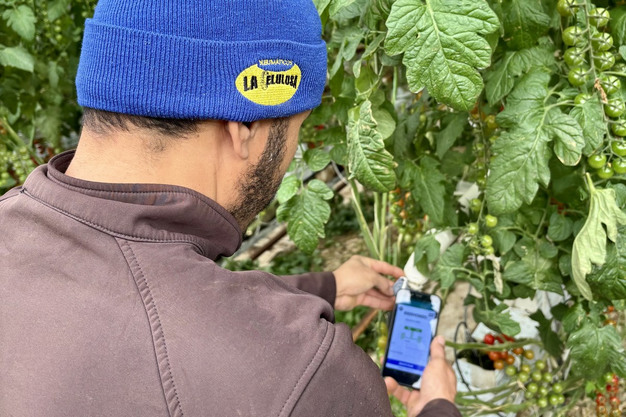
At the core of the project is Mobybuk, a platform designed to digitalize the daily management of agricultural operations. "Our mission is to ensure that farm tasks are recorded digitally, allowing growers to make data driven decisions," says González.
 © Robonity
Mobybuk is structured into different modules. On the one hand, mobile applications allow real time data collection in the field, recording tasks performed and time spent by each worker. On the other, Mobybuk Office serves as the analytical environment where this data is transformed into operational information.
"Growers do not just want to know how much they spend on labor per crop, but which specific tasks concentrate those costs, harvesting, leaf removal, trellising, or pruning," he explains. "The level of detail provided by Mobybuk allows costs to be compared across crops, seasons, and work teams, enabling more accurate future planning."
Given that labor is one of the main costs in intensive agriculture, any optimization in this area has a major impact on farm profitability, González adds.
Based on Robonity's experience, the use of Mobybuk has enabled clients to reduce labor costs by between 10% and 30%. "These are not general estimates, but real figures calculated farm by farm," he stresses. "Each operation is different, and while average cost statistics exist, profitability ultimately depends on individual efficiency."
Beyond direct savings, the platform also supports compliance with working time registration regulations and improves transparency in workforce management.
Visual design with pictograms and seven languages
Usability has been a key development focus for Mobybuk. The platform is designed for agricultural environments with diverse workforces, where Spanish is not always widely spoken. "If you need a master's degree to use a tool, that tool is useless," González notes. For this reason, Mobybuk relies on pictograms and a very simple visual interface, available in the seven most common languages used in Spanish agriculture.
Within the Mobybuk ecosystem, Robonity has also developed Mobybuk Jobs, a module aimed at facilitating the recruitment of agricultural workers. The tool acts as a meeting point between farms and job seekers, filtering by geographic area and preferences.
"Many growers told us they needed workers but did not know where to find them," González recalls. "Through the platform, producers can identify candidates interested in working in their area and contact them directly, while always maintaining data privacy."
AI training for growers
Alongside its technological development, Robonity has launched a series of free workshops on artificial intelligence and data analytics for growers and cooperatives in the Almería province over recent months. These two hour sessions cover both the practical use of AI tools and the importance of measuring and analyzing data in farm management.
"The response has been surprisingly strong, with more than 40 growers attending some sessions," says González. "This shows that the sector has a genuine interest in understanding how technology can help improve efficiency."
"This Thursday, for example, we will be delivering the course at the Murgiverde cooperative, where almost 50 members have already confirmed attendance, and demand for this type of training continues to grow."
 © RobonityFor more information:
Robonity
Roquetas de Mar, Almeria, Spain
T. +34 623 307 280 / +34 722 863 992
[email protected]
www.robonity.com/