Logistics has become a more visible part of running a growing operation. Changes in freight pricing, transport availability, and storage space requirements all influence how inputs move through the supply chain. While these pressures are often discussed in relation to finished plants or harvested crops, they usually begin much earlier, starting with growing media.
The way growing media is packaged and handled affects transport efficiency and storage planning, which in turn shapes labor needs and cost per unit. As logistics costs continue to rise, many growers are taking a closer look at how different growing media options fit into their production and distribution workflows.
Where logistics and growing media intersect
Growing media is typically one of the first inputs to arrive at a growing operation, meaning it begins influencing logistics decisions early. Loose, low-density substrates take up significant space during transport, limiting how much usable material can be shipped at one time. For operations running continuous production, this often results in more frequent deliveries to maintain supply.
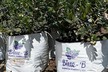
Once materials arrive on site, storage quickly becomes part of the equation. Bulk bags require floor space and stable conditions to maintain quality. When delivery schedules shift or materials remain unused longer than expected, moisture exposure and gradual degradation can become more difficult to manage, particularly in facilities where space is already limited.
As operations expand or begin supplying multiple locations, these challenges tend to appear more frequently in day-to-day planning and coordination.
Logistics challenges associated with loose fill growing media
Loose fill substrates remain a familiar input across many growing operations. They are used in a wide range of crops and integrate easily into different tray and container systems, which explains their continued popularity. In practice, however, they often require additional steps before planting can begin.
Fertilizer is commonly added on site, and material settling during transport and handling can affect consistency from one batch to the next. Once bulk bags are opened, timing becomes more critical. Storage windows narrow, and inventory planning needs to stay closely aligned with production schedules.
From a logistics perspective, loose fill substrates occupy more space relative to the amount of usable material they provide. This limits shipment volume and increases storage requirements, influencing delivery frequency and handling needs as operations scale.
Ready-to-use growing media and transport efficiency
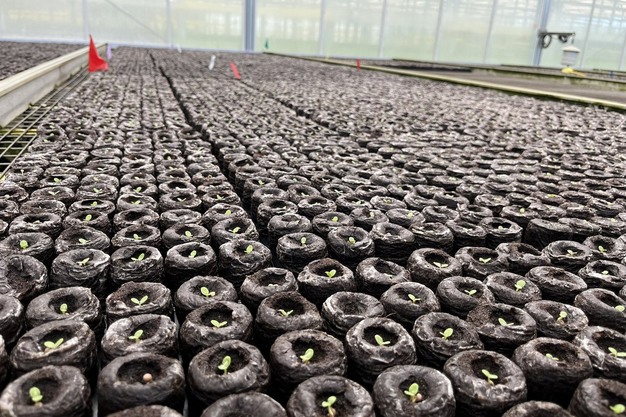
Ready-to-use growing media formats take a different approach. Products such as Jiffy Pellets arrive compressed, pre-formed, and ready for use, without the need for on-site mixing or fertilizer blending.
Because Jiffy Pellets are compact and high-density, they make more efficient use of transport space. In practical terms, one truckload of pellets can replace up to four truckloads of loose fill substrate. This changes how deliveries are scheduled and how much space is required to receive and store incoming material. For growers operating across multiple sites or managing longer transport routes, this can influence logistics planning throughout the season.
 © Jiffy International
Growing media storage, shelf life, and inventory planning
Storage is another area where growing media format becomes important. Loose fill substrates stored in bulk bags are more sensitive to moisture and changing conditions, which can shorten the window between delivery and use. As a result, deliveries and planting schedules often need to be tightly coordinated.
Jiffy Pellets are more compact and designed for longer-term storage, with a shelf life of up to two years when stored correctly. Their packaging allows for easier stacking and movement within storage areas, giving growers more flexibility when managing inventory across production cycles.
Handling requirements differ as well. Because Jiffy Pellets arrive ready to use, fewer preparation steps are needed before planting. This can help ease pressure during peak periods without changing crop management practices.
Growing media structure, consistency, and pot replacement options
The physical structure of growing media affects both logistics and early plant development. Loose fill substrates do not have a fixed form, so density and plug shape can vary after filling, depending on how the material settles and is handled.
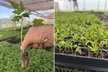
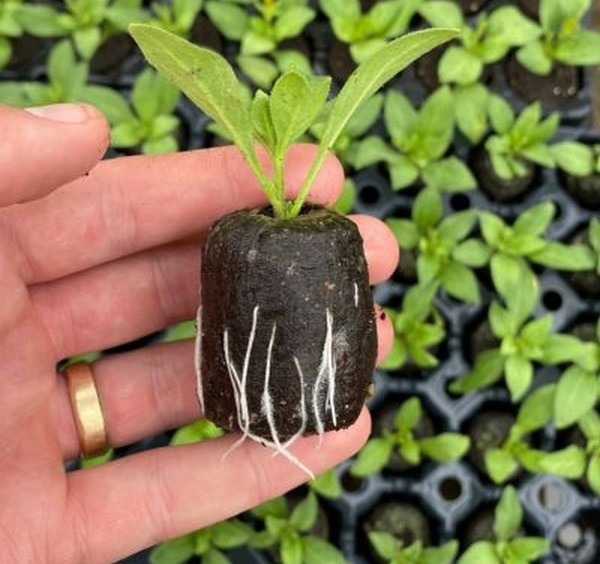
Jiffy Pellets are held together by a fine net that helps them retain their shape as they expand. This results in more uniform plug sizes, minimal debris, and more consistent root environments across batches. In some crops, pellets can also replace small containers, such as 2-inch pots used in greens or ornamentals, reducing the number of individual containers moving through the system.
Paper pots can offer a similar alternative in certain cases, although their scalability and durability often depend on supplier availability and how well they withstand handling.
Heat treatment, media preparation, and contamination risk
Production methods also influence how growing media is prepared on site. Jiffy Pellets are manufactured at temperatures up to 108 °C, have very low humidity levels compared to loose fill substrates, and are regularly tested by independent laboratories to confirm minimal contamination levels.
Loose fill substrates typically require additional sterilization steps after delivery, with results depending on how consistently those steps are applied. Differences in preparation requirements can affect labor planning and scheduling, particularly in operations focused on repeatability and standardization.
 © Jiffy International
Transport efficiency and profit per container for growing media
Growing media format can influence logistics outcomes before production even begins. Transport efficiency becomes clearer when viewed at the container level. Due to their high density, Jiffy Pellets allow a significantly higher number of usable units per container.
Loose fill substrates occupy more space and offer lower density, increasing freight costs per usable unit and reducing transport efficiency.
Aligning growing media selection with logistics and supply chain realities
Growing media has traditionally been selected based on performance during production. More recently, growers have begun evaluating these choices through a broader lens, including how materials move through the operation before planting starts.
As logistics becomes a more prominent part of day-to-day planning, the fit between growing media and existing workflows is increasingly part of the discussion. In some cases, familiar loose fill options continue to make sense. In others, ready-to-use formats may better align with current logistical constraints and supply chain realities.
For more information:
Jiffy Products International
Tel.: +31(0)78 2062200
[email protected]
www.jiffygroup.com