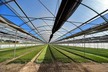
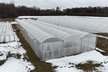
In the village of Bila Krynytsia, Zhytomyr region, one of Ukraine's few industrial hydroponic farms has completed its transition from a distribution model to full-scale production focused on HoReCa and retail.
EFM LLC originally operated as a marketplace for fresh greens, sourcing products from external growers and delivering them directly to consumers. The company later abandoned this model due to quality instability and dependence on third-party suppliers. "When it is not your own production, you cannot control the result. We are building a long-term business, so reliability and consistency are critical for our clients," said Ivan Fryz, co-owner of EFM LLC. "That is why we moved to our own production under the 'Zelena' brand."
Lettuce remains the core crop due to strong market demand. Rocket and spinach were tested but proved less suitable for hydroponic cultivation, while herbs are grown mainly to order. The farm's main variety is Lugano lettuce, a type of Lollo Bionda. At the same time, the company is expanding its assortment with less common varieties such as frisée, Turin romaine, Boston, and iceberg lettuce to create a differentiated offer.
Seeds are supplied by Dutch breeder Rijk Zwaan. The average growing cycle is 45 days, extending to up to 52 days during the cold season. Sowing and harvesting take place on a weekly basis. The farm currently operates 100,000 growing slots, harvesting 400–500 kg of lettuce per week. In the warm season, production is expected to reach 15–20 tonnes per month.
Sales are mainly directed to restaurants, but retail is gradually expanding. Mixed lettuce packs (125 g) are supplied to retail chains under the "Zelena" brand. The current sales structure is about 70% HoReCa and 30% retail, with retail considered more stable, especially during power outages.
Total investment in the project is около $400,000, with a projected payback period of three years. Electricity and heating remain the main cost drivers. The farm operates under scheduled power supply and uses an industrial generator during outages caused by the war. "We try to keep our prices stable. Planned increases are communicated to clients in advance," Fryz noted.
According to the company, hydroponic production in Ukraine remains largely regional due to logistics costs. Imported lettuce may appear cheaper, but quality losses during transit often result in substantial waste. Demand for fresh greens is developing slowly amid falling purchasing power during the war. "For many consumers, lettuce is still not a basic product," Fryz added.
From February, the farm plans to launch guided visits to demonstrate modern hydroponic production and increase consumer awareness of how fresh greens are grown.
Source: agroportal.ua