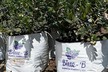
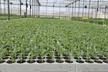
"Nursery quality is playing an increasingly central role in the competitiveness of horticultural production. Various field experiences confirm that seedlings can affect final yields by up to 40%, influencing uniformity, continuity of production and the ability of the crop to react to stress. Productivity is built from the very first days of a plant's life. The use of certified seeds, structured control protocols and batch traceability make it possible to guarantee health and homogeneity, two key factors for a correct development of the root system and a stable vegetative response after transplanting," reports Giovanni Sessa, owner of the Sicilian 3esse Vivai.
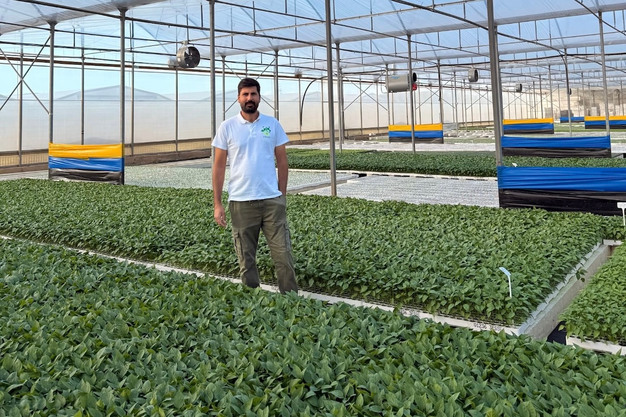 © 3ESSE VIVAI SRL SOC. AGR.Giovanni Sessa, owner of the Sicilian 3esse Vivai.
Strong roots and natural plant physiology
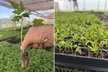
One of the most relevant parameters for production performance is the quality of the root system. Preserving the plant's natural physiology by avoiding interventions that can artificially alter growth allows for faster rooting and a balanced vegetative-productive structure. In-house tests conducted by 3esse Vivai have shown that, under appropriate transplanting conditions, rooting takes place within 12 hours, significantly anticipating vegetative recovery compared to the most common standards.
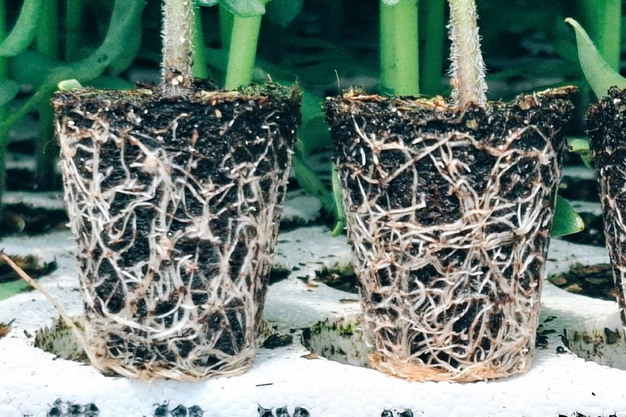 © 3ESSE VIVAI SRL SOC. AGR.
Mycorrhizae and rhizosphere bacteria: advanced biological support
A distinctive aspect of the production approach is the use of mycorrhizae and selected rhizosphere bacteria. The aim is to promote an active root microbiome, improving water uptake, stress resistance and growth continuity.
This bioactivation supports plant development without resorting to techniques that artificially modify the vegetative structure, maintaining harmonious and more responsive growth after transplanting.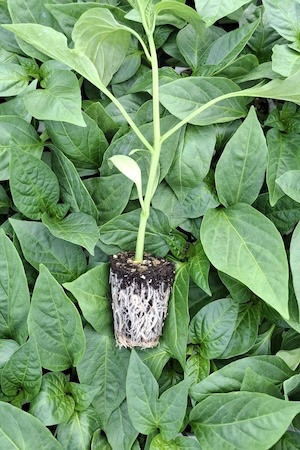 © 3ESSE VIVAI SRL SOC. AGR. "Substrate quality and nutrition management directly influence seedling firmness and vigour. Homogenous substrates, daily monitoring of EC and pH, and species-calibrated nutrient protocols make it possible to obtain batches ready for immediate and uniform rooting. In addition, advanced microclimate management in the nursery (i.e. light, ventilation, humidity, temperature) avoids early stress and allows the production of highly uniform batches. This element is increasingly demanded by retailers and farms working with precise commercial schedules, reducing waste and improving the efficiency of operations."
The impact on final yields
The sum of the effects of a high quality seedling is expressed throughout the crop cycle:
- reduced failures (-5/10%)
- earlier entry into production by up to one week,
- better resistance to climatic stress (+10/15% productivity in critical periods),
- increased marketable fruit (+10/15%).
"The above-mentioned factors explain how the nursery stage can affect the final production result by up to 40%. So, in conclusion, we are convinced that seedling quality is a real strategic factor for the entire crop cycle. The experience of 3esse Vivai shows how the care of natural physiology, the targeted use of useful microorganisms and advanced technical management can significantly improve crop performance from the very first hours after transplanting."
For more information: © 3ESSE VIVAI SRL SOC. AGR.
Giovanni Sessa
3esse Vivai Srl
Via Alessandria 319
97019 Vittoria (RG) - Italy
+39 0932 184 7723
+39 334 748 3284
[email protected]
www.treessevivai.it