Plasticulture has become one of the pillars of modern intensive agriculture. In just five decades, the use of agricultural films and agrotextiles has reshaped production systems worldwide, boosting yields and enabling farming models that are now replicated across multiple continents. NaturPlás, a company specialized in the manufacture of agricultural films and the commercialization of agrotextiles for intensive crops and fruit production, has been part of this transformation.
 © NaturPlás
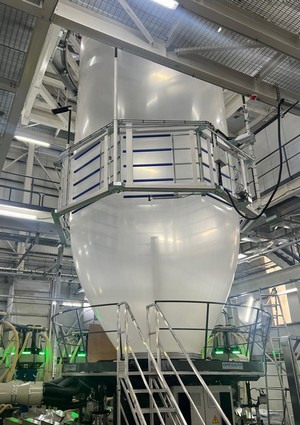
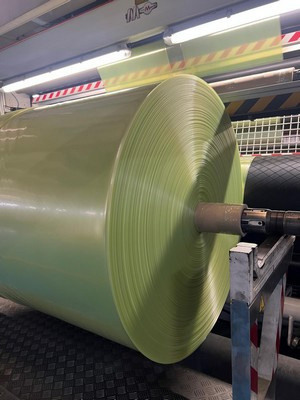
"NaturPlás operates its own extrusion machinery to manufacture the products it commercializes, all designed, developed, and launched under internal quality standards," explains Francisco Cirera, the company's commercial director. "Our goal is customer satisfaction through added value, supported by the experience we gain from operating at the heart of intensive greenhouse agriculture."
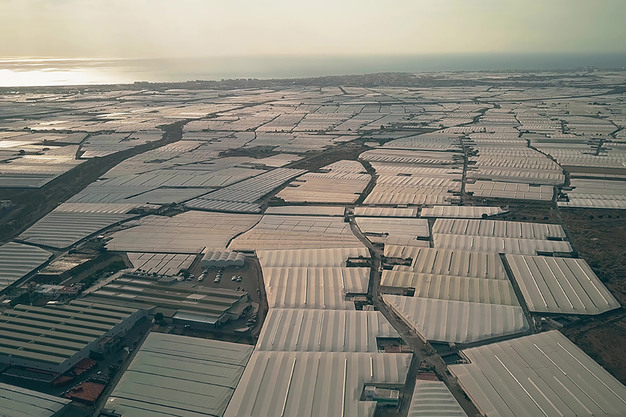
The expansion of intensive agriculture in Almeria during the nineteen seventies marked a turning point that later spread globally. According to the most recent satellite analyses, greenhouse production now covers around 1.3 million hectares worldwide, placing Spain as the second country globally in terms of covered growing area, behind only China. While plastics are central to this production model, agrotextiles play an increasingly strategic role.
From physical protection to light spectrum management
Traditionally, agrotextiles in greenhouses were mainly used in internal structures or movable elements, accounting for roughly ten percent of total materials. In open field agriculture, they served primarily as physical barriers against insects or adverse weather conditions such as hail or heavy rain. Today, their role is expanding toward light spectrum management. "We are clearly seeing an evolution," Cirera explains. "Agrotextiles are no longer just protective elements, they directly influence light quality."
Photoselective textiles capable of converting direct light into diffuse light and modifying ultraviolet and photosynthetically active radiation are gaining relevance in intensive farming systems. NaturPlás already commercializes these solutions and continues developing materials that improve durability and lifespan while optimizing how plants interact with solar radiation.
"Our technical team works both in the field and in the laboratory to improve material performance and light interaction, which leads to more uniform photosynthesis and better crop behavior," Cirera notes.
 © Alexey Novikov | Dreamstime
Plasticulture as a driver of global food production
Plasticulture, as a discipline, is relatively young. "We are talking about the last fifty years," Cirera says. "Previous generations practiced intensive agriculture without meshes or plastics, yet within just a few decades the southern Spanish model, from berries in Huelva to vegetables in Granada, Almeria, and Murcia, has become an international benchmark."
In recent years, this model has expanded rapidly in Latin America, Africa, and Asia. Greenhouse technology is relatively accessible and offers a high return on investment, often doubling yields compared to open field production. As a result, the Almeria model has been replicated worldwide.
 © NaturPlás
However, local soil and climate conditions play a decisive role. "Altitude, solar radiation intensity, and climate determine material design. Manufacturers adapt plastics to achieve the right balance of light diffusion, thermal behavior, and UV resistance for regions ranging from the Sahara to northern Europe," Cirera explains.
"Today, modern agriculture cannot be understood without plastics or agrotextiles," Cirera emphasizes. "They have increased productivity and, as a result, helped democratize access to food."
While Spain, and particularly Almeria, has developed efficient plastic waste management systems, Cirera stresses that the global challenge lies in extending proper collection and recycling practices everywhere. A plastic film that has completed its greenhouse life cycle should not be considered waste.
"It is a raw material with value," he underlines. "Existing collection systems, proper use, reprocessing, and reintegration into the production chain allow plastics to have a long and extended lifecycle." According to Cirera, the sector is at a critical point. "We are in a position to do things right, which is why it is essential to strengthen recycling and transformation projects that already exist."
 © NaturPlásFor more information:
NaturPlás Plásticos Agrícolas S.L.
Autovía A-7, km 410, 5 (service road)
Paraje los Hornillos
04700 El Ejido - Almería.
T. +34 950 48 29 40
[email protected]
https://www.naturplas.com