Assisted pollination is gaining relevance as a technical tool in crops where natural pollination does not always deliver consistent results. Limited activity of bees and bumblebees under certain climatic conditions is pushing growers to look for complementary solutions that help secure fruit set and production uniformity.
In response to this need, Spanish company Bisari has developed an assisted pollination system based on electrostatic technology. Rather than replacing natural pollinators, the system is designed to support them in situations of environmental stress, improving the efficiency of the reproductive process.
 © Bisari
Electrostatic technology applied to precision agriculture
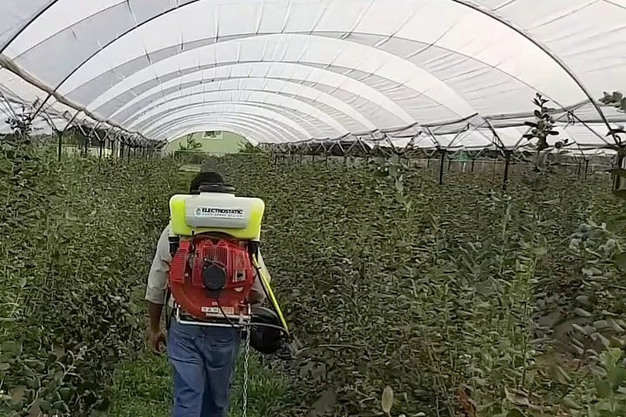
Bisari's technological foundation, led by Dr Eva Sánchez, is based on electrostatic spraying, a system that electrically charges droplets during application so they are attracted to the neutral charge of the plant. This results in better adhesion, more uniform coverage and significantly higher efficiency compared to conventional spraying systems.
"Electrostatic spraying represents a modern precision agriculture approach," the company explains. The technology is supplied by Martignani, Bisari's official partner and one of the international benchmarks in this field, with patented systems and a long track record in agricultural applications.
 © Bisari
Bisari was founded around ten years ago, building on earlier developments linked to agricultural research. "We initially applied electrostatic technology to crop treatments, but at that time it was still relatively unknown in Spain," the company notes. "From there, the idea emerged to transfer this technology to the field of assisted pollination."
Since then, Bisari has focused its activity on electrostatic assisted pollination, working mainly with cooperatives and large scale producers looking to ensure pollination in crops where assistance is required.
A full service approach, from pollen to fruit set
Bisari's offering goes beyond pollen application. The company provides an integrated service that starts with pre flowering stimulation and covers the entire artificial pollination process.
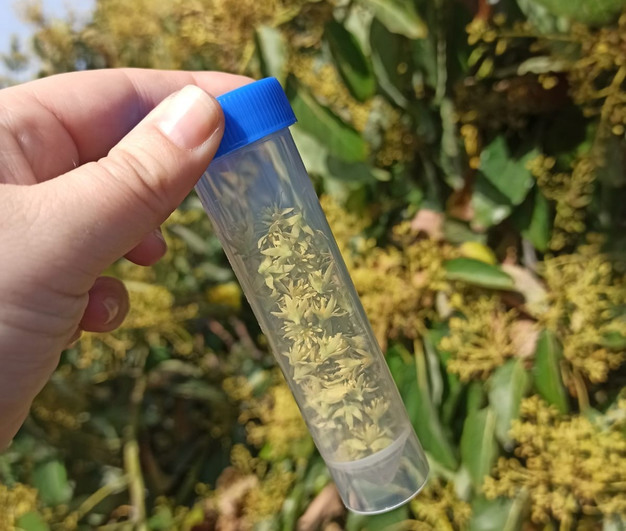
This includes pollen collection and characterisation according to flower type, its conservation, and the design of a crop specific liquid matrix. The matrix performs three key functions: it acts as the application medium, maintains the osmotic conditions required to preserve pollen viability, ensuring fully viable pollen, and incorporates pollen tube activators.
"As a result, the pollen reaches the flower in optimal condition, ready to develop the pollen tube upon contact, leading to fruit set and subsequent fruit development," the company explains.
 © Bisari
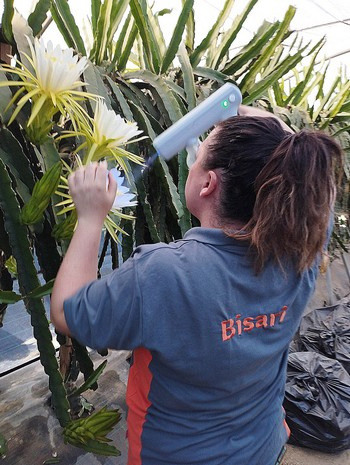
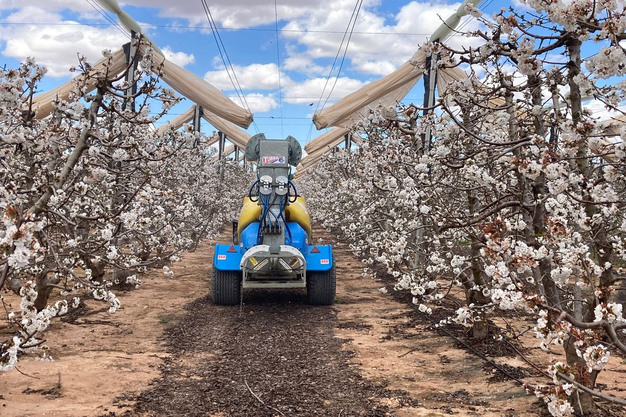
Pollen application is carried out using electrostatic mist blowers and drones. Bisari is currently working on the development of proprietary technology to equip drones with electrostatic systems, expanding their use both in open field conditions and in more complex environments.
Crops currently using Bisari's electrostatic pollination include stone fruit, avocado, pistachio, almond and kiwi. The company is also targeting protected production systems, where it sees potential to offer a differentiated service.
 © Bisari
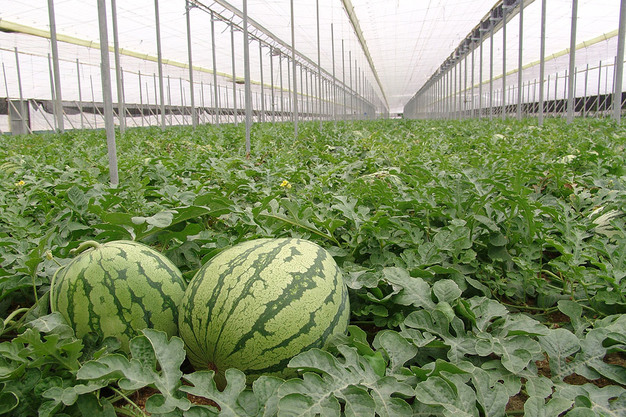
"While open field applications are generally more straightforward, one of our main technological challenges is adapting the system to greenhouse production," the company says. "We have already carried out trials with electrostatic cannons in watermelon crops with very positive results, and we have requested specific drone developments for use under cover."
 © Josesalmeron | Dreamstime
A key complement under adverse climatic conditions
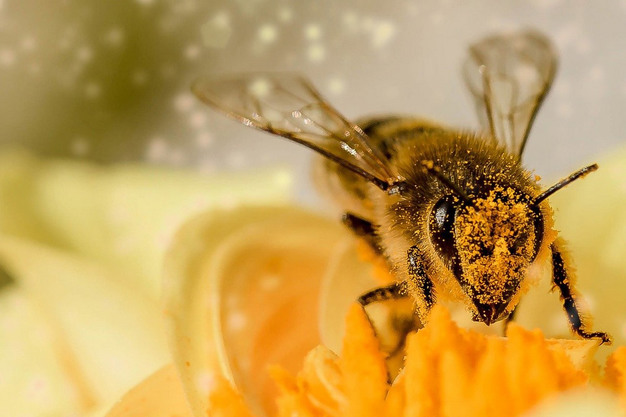
Bumblebees are highly effective pollinators, but they have clear limitations. At temperatures above 30 to 35 °C they tend to stop activity, while below 10 °C their performance drops significantly. Strong winds, heavy rain, low light levels or excessive direct sunlight also restrict their activity.
In early greenhouse crops pollinated towards the end of winter, low light and low temperatures can severely reduce the effectiveness of bees and bumblebees, directly affecting fruit set. At the end of summer, high temperatures inside greenhouses also pose a challenge, increasing the risk of overheating for pollinator colonies.
 © Bisari
"In these situations, electrostatic assisted pollination becomes a key technical support, improving fruit set, uniformity and production stability, particularly in crops where securing fruiting is critical," Bisari explains.
The company stresses that its technology is not intended to replace natural pollinators, but to complement them under adverse climatic conditions, in line with current environmental regulations and ecosystem protection goals."
 © BisariFor more information:
Bisari Agroinnovation
Polígono Industrial Juncaril, C/ Loja, s/n
18220 Albolote, Granada
Joseph de la Torre
T. +34 682 02 73 79
[email protected]
https://bisari.es