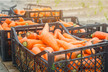
Businesses in the United Kingdom that invested heavily in border inspection facilities are seeking compensation from the government as negotiations progress on an agri-foods agreement with the European Union.
Since the UK left the EU, companies importing plants and fresh produce from the bloc have developed in-house inspection sites, known as control points, to manage border checks introduced after Brexit. These facilities were designed to reduce delays and costs linked to official border control posts, including the government-run site at Sevington in Kent.
As the UK and EU discuss a sanitary and phytosanitary agreement, which is expected to remove most checks on food imports from the EU, business owners are concerned that these privately funded control points may no longer be needed. Several firms report having invested from several hundred thousand U.S. dollars to several million U.S. dollars to build and operate the facilities.
Fresh Produce Consortium CEO Nigel Jenney said members invested "anything from a few hundred thousand to several millions" to handle checks on imports of fresh fruit, vegetables, and cut flowers. "In good faith, the industry proactively responded to the requests of government; and now it's been hung out to dry, costing modest family businesses huge amounts of money," Jenney said.
One of the affected companies is Provender Nurseries, a plant wholesaler importing around 80 per cent of its stock from the EU. In 2024, the business spent about £250,000 to convert a general-purpose barn into a control point, equivalent to approximately US$317,500. The project followed three years of administrative preparation.
At the company's site in Swanley, Kent, workers were unloading a shipment of trees from Italy for inspection. Provender's site operations manager, Stuart Tickner, said the prospect of an SPS agreement created mixed outcomes for the business. "I fully support and back up the SPS agreement," Tickner said. "But at the same time, we've spent a lot of time, money, and effort to achieve it [the control point]. So it's gutting that it's got to go."
Industry participants say the situation raises questions about how policy changes affect private investment decisions linked to post-Brexit trade. Growers and importers supplying plants and fresh produce are now assessing whether compensation mechanisms will be considered if facilities become redundant under the new agreement.
Source: Politico