The first Agreen Challenge (Agreen Défi) was held during the SIVAL trade fair on January 13th, 14th and 15th at the Parc des Expositions in Angers. The hackathon brought together students, teachers, professionals and players in agricultural innovation. The aim was to come up with practical, effective solutions to real problems faced by companies and professionals of the specialized plant sector.
For 48 hours, multi-disciplinary teams worked together to design prototypes and proofs of concept (POC). The aim of the event was to develop solutions directly adapted to the needs of the field, at the heart of the trade show dedicated to the specialized plant sectors.
 © Agreen Startup
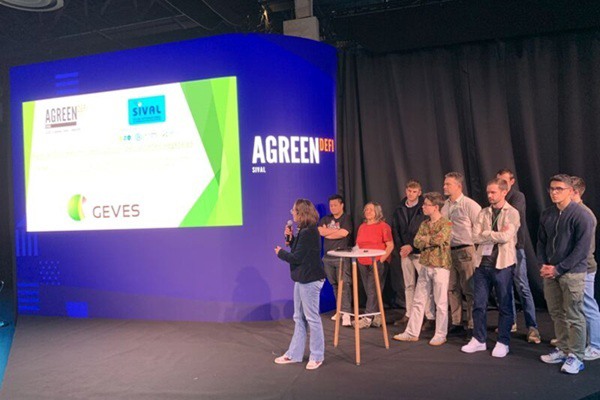
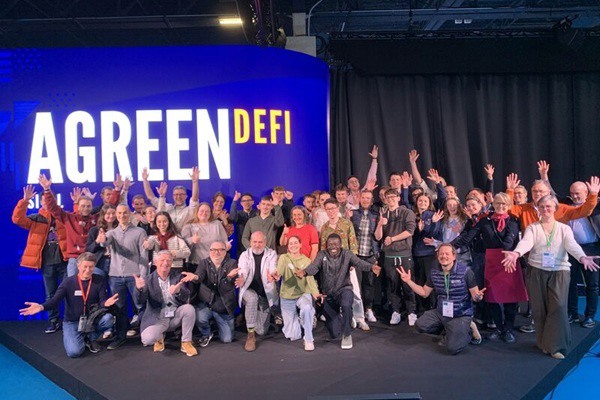
Agreen Challenge brought together 40 student-experts in digital technologies or agronomy from ESA, Audencia Business School, ESAIP, Polytech Angers, Epitech, IUT Angers-Cholet, The Pouillé Campus and ESEP, divided into 5 teams. After two days of intensive work, the teams came up with a solution to each of the problems submitted.
5 innovative projects
While there is still room for improvement in some areas, the solutions presented are already operational. These projects were presented to a panel of judges made up of professionals, experts in innovation and digital technologies, as well as representatives of the sector.
AI and data as enablers
The projects presented placed artificial intelligence, data and digital tools at the heart of their solutions, demonstrating their potential to improve business performance (time savings, data management, decision support, networking...).
5 issues
5 solutions
● CPVO - OPVO
Community Plant Variety Office
Problem: find an effective solution of dynamic analysis of applications for plant variety protection in the European Union to better understand their evolution, in particular the drop-out phases.
Proposed solution: digital monitoring tool with modelling and design to track changes. An
An interpretation module is also proposed via an AI-generated report.
CPVO: https://european-union.europa.eu/institutions-law-budget/institutions-and-bodies/search-all-eu-institutions-and-bodies/community-plant-variety-office-cpvo_fr
CPVO: https://cpvo.europa.eu/en
● GEVES
Variety and Seed Study and Control Group
Problem: How to automate the evaluation of new plant varieties and identify existing varieties listed by the variety registration offices (varieties are listed on websites via PDFs and currently incorporated into the GEVES database).
Proposed solution: digital application for collecting and extracting data from the websites of the census offices in a uniform manner for integration into a GEVES database. Parallel creation of a module to query this database to enable comparative work.
GEVES: https://www/geves.fr/
● CTIFL
Interprofessional Technical Center for Fruit and Vegetables
Problem: How to develop a forecasting model for greenhouse tomato capable of using
climate and crop management data to estimate harvest volumes at +2 and +4 weeks.
Proposed solution: Development of a hybrid approach combining a physiological model (TOMSIM) and Machine Learning models to predict greenhouse tomato yields at +2 and +4 weeks. The physiological model is used to understand the biological mechanisms of yield, while the Machine Learning model uses historical and agronomic data to improve the accuracy of forecasts, by integrating the delayed effect of climate. All this is brought together in an interactive simulation interface, to test scenarios, adjust parameters and compare results based on CTIFL data.
CTIFL: https://www.ctifl.fr/
 © Agreen Startup
● GAIAGO
Challenge: Use OCR (optical character recognition) technology to automatically digitize soil analyses from photos or scanned documents, integrate them into a database and generate tailored recommendations for farmers.
Proposed solution: AppliSol, an application that can take a photo of a soil analysis, extract and standardize this information, as well as provide farmers with precise recommendations on the solutions to be deployed. It also makes it easier to interpret the results internally.
GAIAGO: https://www.gaiago.eu/
● Les Cols Verts
Issue: Meeting the growing demand for retraining, the labor requirements in certain sectors, while at the same time making the training on offer easier to understand.
Proposed solution: the OYA application, which makes it possible to analyze the profile of a candidate for retraining and guide them towards a profession and/or training course appropriate to their project and values. This application can also be used to create a community.
Les Cols Verts: https://www.lescolsverts.fr/
A bridge between training, innovation and the professional world.
By being at the heart of SIVAL, the Agreen Challenge has encouraged exchanges between students, companies and players in the specialized plant sectors. This new event is an exhibition of innovation and solutions for the future of the specialized plant sectors, serving as a laboratory of ideas and revealing profiles capable of designing innovative, operational solutions for the future of the plant sector, in record time.
Agreen Challenge has established itself as a key event that promotes the integration of new digital technologies at the service of specialized plant companies.