Greenhouse digitalization is advancing at different speeds depending on farm size, but the objective is the same across the board: produce more efficiently, using fewer resources and with greater control. Sensor technology, automation and, increasingly, artificial intelligence are becoming key tools in protected horticulture, particularly in regions such as Almeria, Granada and Murcia.
 © Invernadero Inteligente
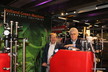
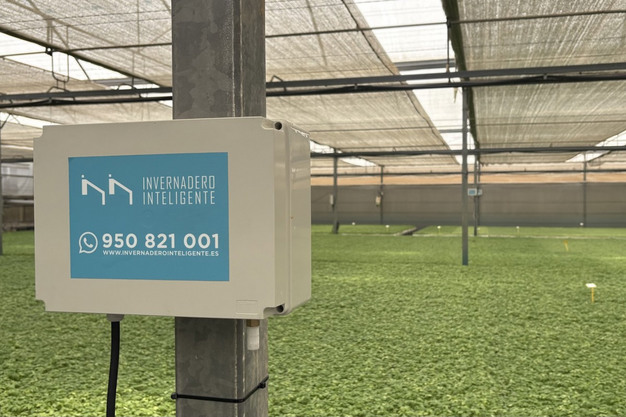
"Invernadero Inteligente is essentially an engineering company," explains Francisco Gutierrez, CEO of the project, which works with small family growers as well as medium sized and large operations, and with the auxiliary industry. "We are present throughout the entire life cycle of the plant, from the seed and nursery stage, through the greenhouse, all the way to the cooperative."
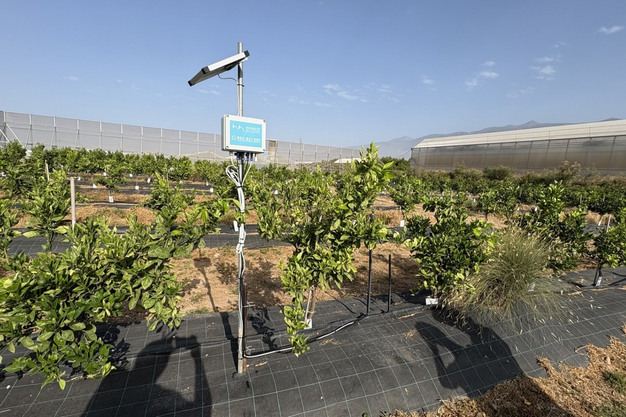
One of the company's main areas of focus is the development of packaged solutions designed specifically for family farms of one or two hectares, which are very common within the Almeria production model. "We offer field tested products, with sensor systems that provide growers with the information they need to improve crop performance."
"These systems focus on controlling critical crop parameters, such as vapour pressure deficit and soil water requirements. Based on this data, and using artificial intelligence algorithms, growers receive clear guidelines for irrigation, ventilation and crop management, as well as alerts on potential pest or disease risks linked to greenhouse climate conditions."
The goal is straightforward: simplify decision making. "There is no point in giving growers an overwhelming amount of raw data every day, because that does not help. We provide processed information, so decisions can be made quickly and easily."
 © Invernadero Inteligente
From sensorization to automation
The next step is greenhouse automation. At this level, a climate control system can collect around 10,000 parameters per hectare per day. "Once again, the key is simplifying the work of both the grower and the production manager."
"Using predefined set points, the system automatically manages ventilation, misting and irrigation, without the need for constant supervision. This not only improves production efficiency, but also supports work life balance and reduces the need for someone to be monitoring the greenhouse around the clock."
System integration
For medium sized companies, large scale farms and, in particular, nurseries and auxiliary industry players, the focus shifts to system integration. "Today there are many standalone systems that do not communicate with each other. Our role is to add a higher level layer that integrates them, collects all the data and allows them to be operated as a single system."
One recent project, carried out at a nursery in Murcia, made it possible to fully automate irrigation dosing without replacing the existing infrastructure. "We integrated irrigation machines that were 20 years old and dosing pumps that were more than 10 years old. Nothing was replaced, the systems were simply connected."
The result was lower costs, greater reliability and the release of labor for higher value tasks. "We moved from having one person manually adjusting pumps every few minutes to a system that executes the irrigation plan automatically."
Artificial intelligence in practice
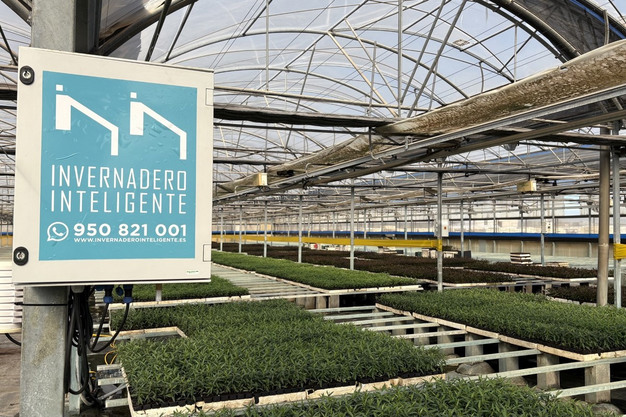
One of the most striking features of the system is its interaction through messaging. "The operator can send a voice message indicating the irrigation schedule by sector. The system interprets it, confirms it has understood correctly and executes it the following day."
 © Invernadero Inteligente
Francisco is keen to stress that artificial intelligence is not an empty buzzword. "AI is a real tool that detects deviations from normal patterns and flags potential errors before they affect production. We are not here to replace anyone, but to provide support. An irrigation mistake can cost thousands of euros, especially for small farms where margins are extremely tight."
Three stages in greenhouse evolution
Based on his experience, Francisco identifies three major stages in the evolution of protected horticulture:
- Sensorization, a relatively mature phase with strong adoption, driven by affordable solutions and fast returns
- Automation, currently expanding, particularly in medium and large operations and in the auxiliary industry, although with higher investment barriers
- Robotization, which will arrive in the medium to long term
"Companies have understood that the future is data driven, collecting it, organizing it and integrating all systems," Francisco concludes. "Invernadero Inteligente is there to support that process. We do not sell promises, but practical solutions that save money, reduce errors and improve production management."
 © Invernadero InteligenteFor more information:
Invernadero Inteligente
T. +34 950 821 001
www.invernaderointeligente.es