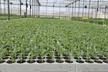
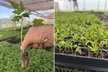
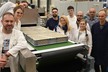
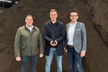
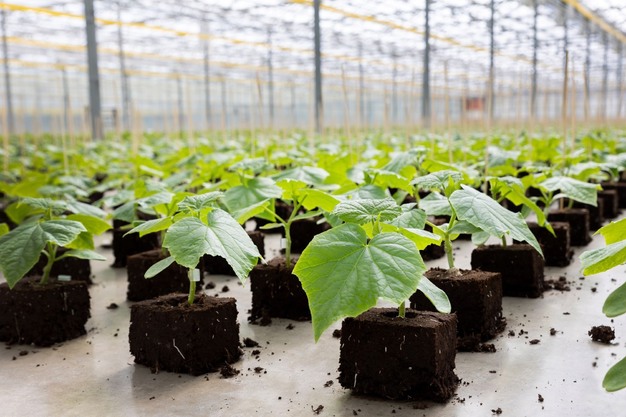
In the Netherlands, Globe Plant is restarting the production of vegetable transplants grown in soil-filled pots, using specialised machinery at its nursery. The company also operated these machines extensively in the previous autumn. According to managing director Vera Grootscholten, soil-grown transplants serve professionals across several segments, with particularly strong demand for vegetable plants grown in soil pots.
Soil pots for soil-based cultivation
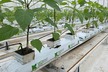
Most propagators still cultivate on rockwool and therefore order young plants raised in rockwool blocks. Globe Plant's propagation floors have recently been largely occupied by this type of production. However, a group of conventional propagators continues to cultivate directly in soil. For this cultivation method, they order plants grown in soil pots from Globe Plant.
"Growing plants in soil pots is something we have been doing for 65 years," Grootscholten said.
Globe Plant produces a wide range of warm-season vegetable transplants in soil pots, both grafted and ungrafted. This includes standard propagation of crops ranging from aubergines to cucurbits. The number of conventional growers in the Netherlands ordering soil pots for soil cultivation is gradually declining and has become relatively limited. "These are often propagators who produce one or two cycles of fruiting vegetables and then switch back to another crop in the soil," Grootscholten explained.
Internationally, Globe Plant serves a larger customer base for soil pots, particularly among conventional growers in countries such as Switzerland and Austria. "In those markets, growers are still more likely to cultivate directly in the ground," she added.
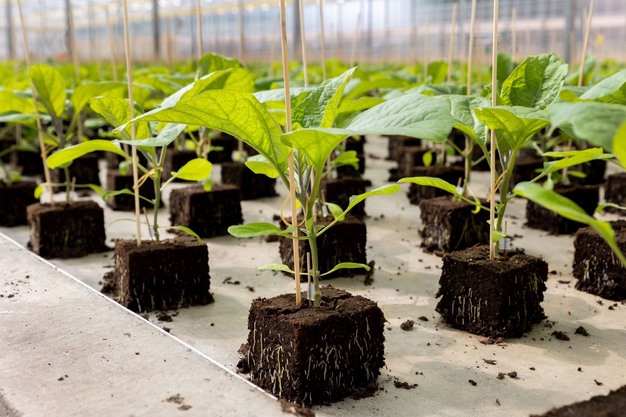 © Globe Plant (gn)
Soil pot on organic substrate
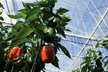
In recent years, especially sweet pepper propagators have been searching for alternative substrates due to root-related issues. Similar shifts have been seen in other crops, with many professionals switching to organic substrates. Some of these propagators are now also opting for young plants raised in soil pots, Globe Plant reports.
In addition to standard potting soil, the company has explored other raw materials. "Automating pots made from rice husks, perlite or coconut fibre is not always straightforward, but we have now developed workable solutions for these as well," Grootscholten noted.
From a nursery perspective, raising plants in rockwool blocks remains the easiest option, particularly in terms of automation and keeping propagation floors clean. With soil pots, some substrate can occasionally end up on the floor. "That does create additional cleaning work for us, but it does not cause any issues within our strict hygiene protocols, which also apply to alternative substrates," Grootscholten concluded.
 © Globe Plant
For more information:
Globe Plant
Tel.: +31 (0)181 409 090
[email protected]
www.globeplant.nl