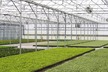
Established in 2022, the Stellenbosch Horti Demo Centre has become a key platform for advancing protected cultivation in South Africa. Founded as a consortium between Stellenbosch University and Dutch partners, with Delphy as project leader, the centre was initially designed to demonstrate the commercial viability of greenhouse production under local conditions.
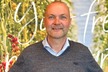
According to Dr Estelle Kempen of Stellenbosch University, the first two years focused squarely on practical application.
"We wanted to show that this type of infrastructure works in our climate and that it makes sense financially," she explains. "Growers are often sceptical because of the initial investment, so the goal was to demonstrate what you get back in terms of yield, water savings, reduced nutrient losses and lower insecticide use."
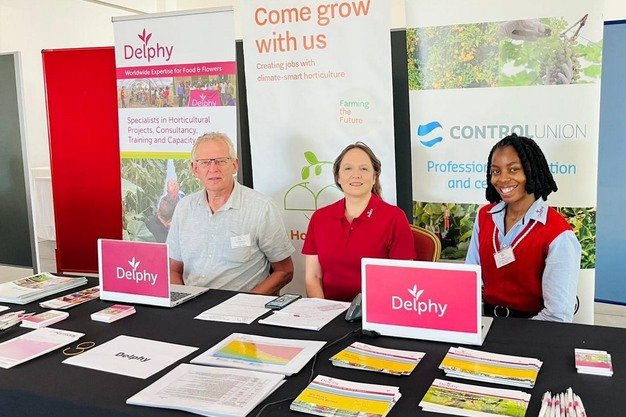
The applied trials during this phase provided growers with transparent production and cost data, helping to address concerns around return on investment. As a result, several commercial producers have since upgraded existing operations or launched new greenhouse projects informed by the centre's work.
 © Stellenbosch Horti Demo Centre
From demonstration to research
With successful commercial uptake, the Horti Demo Centre has gradually shifted towards more structured scientific research, while maintaining its demonstration role through open days and training events.
"From the university's perspective, research was always part of the long-term goal," says Dr Kempen. "What changed was that we developed a model where we could do statistically sound research while still answering practical, short-term questions for growers."
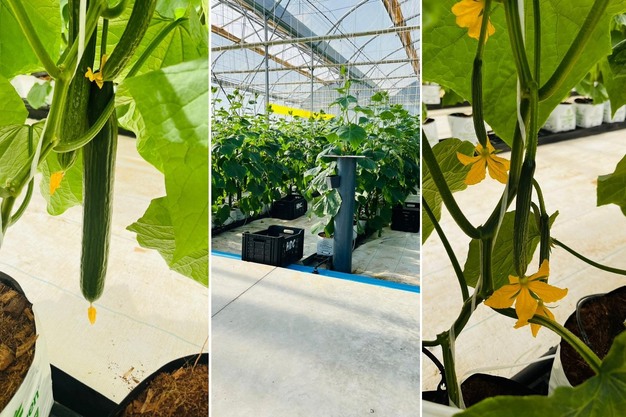
One of the centre's research projects is a fertiliser trial conducted in collaboration with Rijk Zwaan, focusing on cucumbers. This work evaluates fertiliser strategies across different cucumber cultivars to better understand cultivar-specific nutritional responses.
"You don't just have one cucumber recipe," Dr Kempen explains. "The aim is to understand how different cultivars respond and to adapt fertiliser strategies accordingly."
 © Stellenbosch Horti Demo Centre
In a separate research stream, the centre is conducting trials on biostimulants in hydroponic production systems. These trials assess whether biostimulant products provide measurable benefits when applied under controlled hydroponic conditions.
Initial results from the cucumber trials have shown clear responses to changes in nutrient ratios.
"We've seen that a lower nitrogen-to-potassium ratio improves crop life," Dr Kempen says. "It was expected, but it's valuable to see it confirmed under local conditions."
In contrast, biostimulant trials in hydroponic systems have not yet produced consistent effects.
"At this stage we haven't seen a significant impact, but we are repeating the trials," she explains. "Using the same products in a consistent way over time often gives clearer answers."
Water quality and plant monitoring form an important part of the research methodology. Standard laboratory analyses are complemented by sap analysis, with samples tested both locally and in the Netherlands.
"We compare laboratory sap analysis with handheld sap measurements taken on site," Dr Kempen explains. "If we can establish good correlations, it becomes a practical tool for growers to monitor nutrition more frequently and stay within optimal ranges."
Commercial integration and market relevance
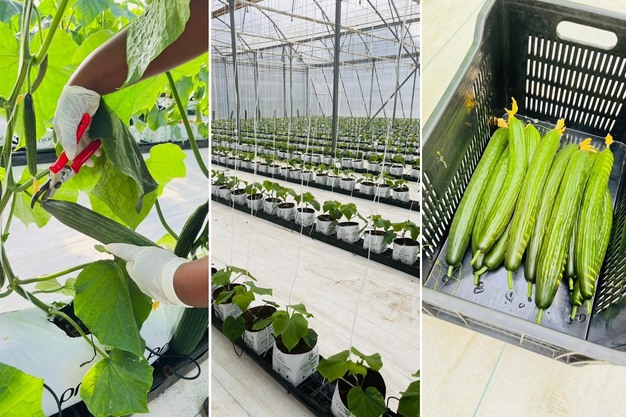
Despite its research focus, the centre operates trials on a semi-commercial basis to ensure economic relevance. Yield data, pack-out percentages and production costs are carefully recorded.
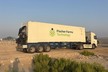
Produce from the Horti Demo Centre is marketed through Rennie Farms, which packs and distributes directly to Woolworths.
"Growers want to know if something is financially viable. By working through a commercial packhouse, we ensure the data reflects real market conditions."
Technical teams from Stellenbosch University and Rennie Farms collaborate closely, exchanging observations and advice throughout the season.
 © Stellenbosch Horti Demo Centre
Broader impact and expansion
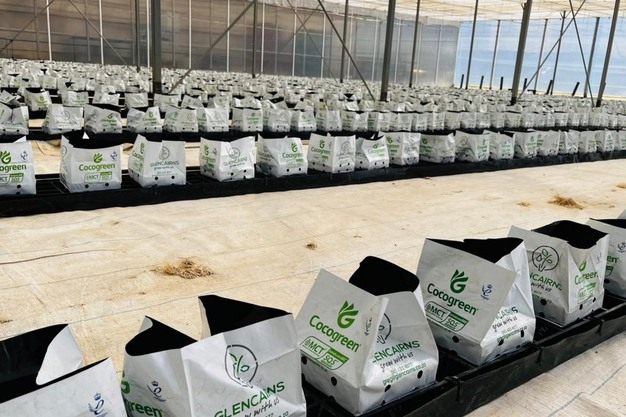
The centre's influence is extending beyond Stellenbosch. A related project in Grootvlei, supported by RVO (The Netherlands Enterprise Agency) and Eskom, aims to establish greenhouse production systems that support job creation in affected communities.
 © Stellenbosch Horti Demo Centre
"What we've learned here can inform new projects elsewhere," Dr Kempen notes, "especially when it comes to system design and management decisions."
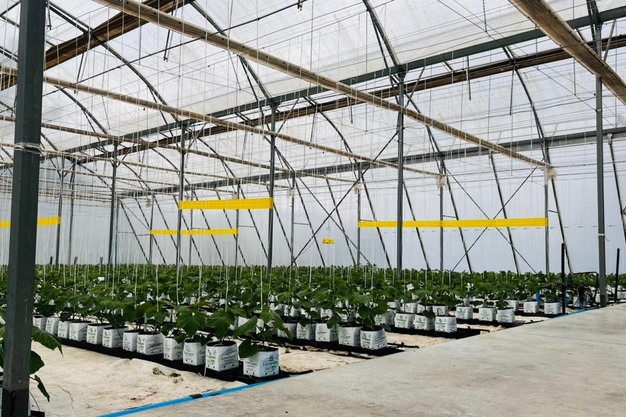
Education and training remain central to the centre's mandate. In addition to student training, the Horti Demo Centre hosts open days, workshops and short courses throughout the year.
"Our main objective is to demonstrate how to farm commercially in a greenhouse. That includes training systems, irrigation strategies and nutrient management."
 © Stellenbosch Horti Demo Centre
Delphy partnership and new crop focus
Dr Kempen now also plays a role in establishing Delphy South Africa, while continuing her academic work.
"I'm wearing two hats," she says, "but the collaboration between the university and Delphy has proven very effective."
This partnership is enabling expansion into new crops, including blueberries. Blueberry nutrition trials have been underway for the past three years.
"One of the key findings is that you can't reduce nutrition as much as we initially thought," Dr Kempen explains. "A well-optimised standard program is still essential."
An international blueberry workshop planned for April will bring together local and global industry players, with irrigation and nutrient management identified as key focus areas.
 For more information:
Dr Estelle Kempen
Horti Demo Centre
Email: [email protected]
https://hortidemocentre.co.za/