Tomato spotted wilt virus (TSWV) has caused significant problems for some fresh-market tomato and pepper growers in New Jersey over the past few growing seasons. Although the virus itself is not uncommon, the economic losses seen in recent years have been extensive.
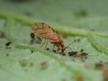
TSWV is vectored by several species of thrips, a common vegetable insect pest that appears to be increasing in abundance and is very difficult to control in vegetable production throughout the state. The most important vector is the western flower thrips, Frankliniella occidentalis. Its mode of transmission is persistent propagative, meaning thrips nymphs must feed on a TSWV-infected plant. After a short incubation period lasting from hours to days, the virus is then persistently transmitted for the remainder of the insect's life.
Importantly, TSWV cannot be passed from infected females to their eggs, and the virus is not transmitted through seed.
Both western flower thrips and TSWV have an extremely wide host range. Western flower thrips feed on tomato, pepper, onion, celery, cucumber, lettuce, potato, basil, and strawberry, as well as a wide range of herbaceous ornamentals such as impatiens, geranium, marigold, petunia, dahlia, gerbera daisy, and carnation. They also infest many common weeds including pigweed, chickweed, lambsquarters, thistle, and galinsoga. TSWV itself can infect more than 1,000 plant species across over 90 plant families.
In 2022, samples of a TSWV-infected fresh-market tomato variety carrying Sw-5b resistance were collected in southern New Jersey and sent for analysis. Results confirmed the presence of RB (C118Y) TSWV in the state. The strain identified in New Jersey closely resembled RB TSWV found in fresh-market tomatoes from Mexico and processing tomatoes in California, suggesting a high potential for widespread movement. Since 2022, isolated cases of RB-TSWV have been detected in New Jersey during each growing season.
So where do we go from here? Based on these isolated reports of TSWV occurring in resistant fresh-market tomato varieties, RB TSWV does not appear to be widespread across New Jersey at this time. However, this situation may change.
All vegetable growers, whether producing their own transplants or bringing them in, need to carefully evaluate their thrips monitoring and management programs during the winter and spring. A clean start is essential. Before transplant production begins, greenhouses and other holding structures should be thoroughly cleaned and disinfected, and weeds should be removed from inside and around these areas. Sticky cards should be used to monitor potential thrips carryover during the winter months, especially if any plant material is present.
Tomato and pepper transplants should never be produced or held in the same greenhouse as ornamental plants. Transplants brought in from outside sources should be segregated from in-house transplants, and different sources should be kept separate whenever possible. All incoming transplants should be carefully evaluated for thrips damage and treated immediately with an appropriate insecticide. Yellow sticky cards should be used continuously throughout the transplant production period to monitor thrips populations, and biological or natural control options should be considered where feasible.
In the field, silver reflective mulches have been shown to reduce thrips populations. Growers should develop a season-long insecticide program before the production season begins, starting with applications at transplanting and continuing with cover sprays through harvest. Regular scouting and the use of sticky cards are critical for monitoring thrips populations and feeding damage, and thrips injury on tomato and pepper fruit should be closely observed throughout the season.
Proper weed control is essential, as many weeds can harbor both the virus and infected thrips. This includes managing weeds within production fields as well as surrounding areas. Any suspicious plants should be removed before transplanting or early in the production season, particularly plants that show early stunting, to reduce within-field spread.
Growers should continue to use TSWV-resistant tomato and pepper varieties, while recognizing that their effectiveness is becoming compromised. Following best management practices and identifying weaknesses in production systems and thrips control programs will be increasingly important as growers adjust their management strategies heading into the 2026 growing season.
Source: Rutgers Plant Pest Advisory