After spending many years working outside the Netherlands, recently retired crop consultant Simon Voogt has seen greenhouse operations all over the world. Despite his international career, he has continued to closely follow developments in Dutch horticulture and the future of the sector, a contribution that reflects his views on those developments.
The Netherlands is a global leader in the greenhouse industry. Historically, the country's climate has been well-suited to protected cultivation, with moderate temperatures and sufficient annual rainfall. According to Voogt, these basic conditions remain favorable. "There is no doubt about that," he says.
During his years abroad, Voogt frequently observed how Dutch greenhouse knowledge and technology are applied worldwide. He was personally involved in this process through his work as a crop advisor. "The Dutch greenhouse industry is known for its high level of technological development and expertise. It is an exceptionally innovative sector."
Older greenhouses still have potential
The Dutch greenhouse industry began around a century ago, with a strong concentration in the Westland region. Today, this area is under increasing pressure from urban expansion, Voogt notes. "The Westland greenhouse area is effectively being squeezed. There is no longer space for the scale expansion that the sector needs."
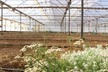
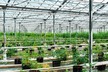
Current policy increasingly focuses on clustering greenhouses and relocating or removing isolated sites. In Westland, many greenhouses built in the 1970s and 1980s are still in use. "These structures do not have the height of modern greenhouses, but they are still very suitable for low-growing crops such as lettuce, endive, spinach, beans and strawberries," Voogt explains.
He also sees opportunities for crops with very short production cycles of 10 to 12 weeks, including mini cucumbers or medicinal cannabis. "All of these crops can be grown on substrates or even in NFT systems, both organic and conventional," he says. Voogt is less enthusiastic about using greenhouses for non-horticultural purposes such as caravan storage. "It is worth questioning whether growing suitable crops in these lower greenhouses could be more financially attractive than renting them out for storage."
Moving to the Maasvlakte
To create space for further development of the sector, particularly if greenhouse production in Westland comes under more pressure, Voogt points to the Maasvlakte as a potential alternative location. He refers to the area's history.
"In the 1970s, Maasvlakte 1 and 2 were constructed at the mouth of the River Maas. These land reclamation projects were created by building a ring dike and filling it with sand dredged from the North Sea," he explains. "Like the Delta Works, these projects were highly advanced engineering achievements carried out by Rijkswaterstaat."
Maasvlakte 1 became home to oil refineries, and during the 1970s, a pipeline was installed to supply CO₂ to the Westland greenhouse area. "The construction of this CO₂ supply under the Nieuwe Waterweg was a very positive development for Westland's greenhouses at the time," Voogt says.
The name Maasvlakte already indicates how flat the area is, he adds. "With a surface area of around 20 square kilometres, there is ample space for greenhouse development. Building greenhouses and installing growing substrates requires little investment in land levelling. Water and CO₂ are readily available. In addition, the Maasvlakte has much better access to major roads. The Westland area, by contrast, is poorly accessible and full of roundabouts, which seriously complicates heavy transport of horticultural products and supplies."
Advice: cluster and expand on the Maasvlakte
Voogt refers to reports from banks such as Rabobank and ING, which expect the Netherlands to play an increasingly important role in supplying the global greenhouse sector. These reports anticipate a reduction of 10 to 15 percent in greenhouse area, combined with further scale enlargement, initially mainly in vegetable production. According to Voogt, this scale enlargement will continue, but not within the Netherlands. "Our country is simply too small and too full."
His recommendation for Dutch horticulture is therefore to develop concentrated production locations in provinces that are most suitable. Land reclamation from the North Sea is, in his view, also a serious option. "If it were up to me, construction of Maasvlakte 3 would start, with at least 1,000 to 1,500 hectares reserved for greenhouses."
The newly reclaimed land currently under study (link in Dutch), which could provide around 1,000 hectares, does not need to be used exclusively for expansion, Voogt notes. Part of it could also replace greenhouses in Westland that need to make way for housing development. "Those homes are necessary to accommodate population growth," he says. "At the same time, this will increase demand for greenhouse products, including flowers and plants. There will also be sufficient labour available for greenhouse work, although automation will continue to increase."
For year-round production of crops such as tomatoes, cucumbers, peppers and aubergines, Voogt believes the future lies further south. "For twelve-month production of these vegetable crops, sunlight is the limiting factor in the Netherlands. Large-scale production will increasingly shift to southern Europe. France, Spain and Morocco will become leading producers," he concludes. "I have seen the same development on the other side of the Atlantic, where Mexico has become the vegetable garden of the United States."
Simon previously wrote about, among other things, light, water, oxygen in irrigation water (first two links in Dutch), and CO₂ and his experiences with it in international horticulture over the years.