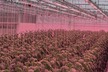
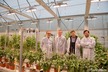
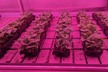
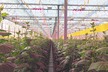
Delphy is a horticultural research centre in the Netherlands, running commercial-scale trials to optimise greenhouse crop production. In tomato cultivation, lighting strategy plays a crucial role in balancing yield, fruit quality, and energy cost. While dynamic light strategies offer flexibility in cultivation, their impact on photosynthesis and crop health in the greenhouse is not fully understood.
Previous studies have shown significant differences in the impact of consistent versus dynamic light conditions on the regulation of photosynthesis (Lawson, 2017). Fluctuations in LED intensity, such as those introduced by dynamic lighting, may reduce photosynthetic activation and cause up to 20% less carbon gain than expected. However, dynamic lighting can improve operational flexibility and reduce electricity use during peak times.
Introduction
In this trial, Delphy compared a fixed lighting regime with a dynamic strategy, aiming to evaluate differences in plant light efficiency, brix, and yield across both winter and spring conditions.
The fixed lighting used typical LED lighting before sunrise, whereas the dynamic lighting dimmed the lights to maintenance respiration for three hours during peak electricity prices (6–9 am). Both compartments received the same total daily light integral (DLI) by increasing the dynamic lighting intensity during non-dimmed periods. The key research question was whether short-term energy savings might come at the cost of long-term crop performance.
Gardin sensors were used to provide real-time, plant-level data throughout the experiment. By tracking photosynthetic efficiency, Gardin provided a continuous view of how the plants were responding to each light strategy. The Gardin Plant Indicators gave insights into crop health, balance, and productivity.
Results & discussion: Fixed lighting improved photosynthetic efficiency at all light intensities
Gardin measured the photosynthetic efficiency (Fq'/Fm') of each treatment through winter and spring 2025. Light curves for each season and treatment showed that plants receiving fixed lighting were more efficient at all light intensities (Fig. 1).
These measurements align with previous research by Lawson et al., showing that more stable light exposure allows plants to invest energy in optimal photosynthetic function. Specifically, this includes greater development of electron transport proteins, which significantly increase assimilation rates at saturating light and CO₂ (Vcmax, Jmax).
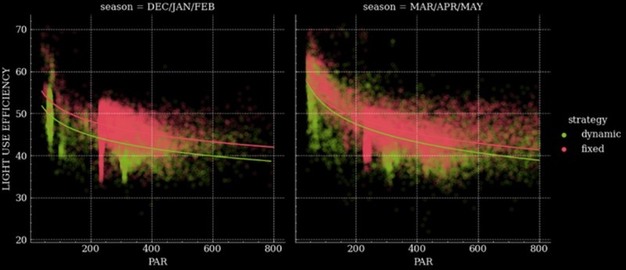 © GardinFigure 1. Light use efficiency (Fq'/Fm') over different light levels (µmol/m²/s) in tomato plants. Left: December to February data. Right: March to May data. Fixed lighting = red, dynamic lighting = green. Fixed lighting efficiency was higher at all light levels.
Plant data collected by Delphy researchers showed that fixed lighting plants were 5% more efficient at converting light into sugars, measured as Brix per DLI (Fig. 2). This provides further evidence that fixed lighting allows the plant to allocate more energy to light conversion than dynamic lighting.
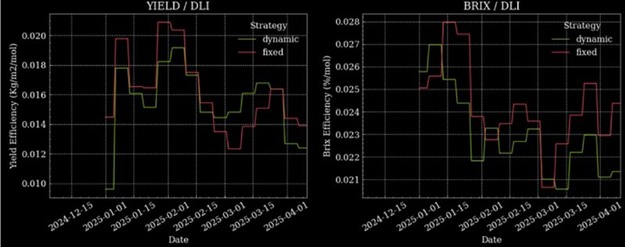 © GardinFigure 2. Left: Yield efficiency (kg/m²/mol) from December to April in dynamic (green) and fixed strategies. Right: BRIX / DLI (/mol) from December to April in dynamic (green) and fixed strategies. The fixed strategy generated 5% more brix per mol.
Real-time detection of crop imbalance
In February, Gardin detected a 30% drop in crop balance in the fixed lighting crops, which aligned with a 30% drop in yield during the same period (Fig. 3). Prior to this imbalance, the fixed lighting treatment had an 8% higher yield and equal brix compared with the dynamic strategy.
This imbalance, related to the plant's source–sink dynamics, may have redirected assimilates toward sugar concentration rather than fruit development, resulting in the yield reduction. The dynamic lighting crop group experienced a smaller swing in balance and subsequently produced a higher fresh weight but lower brix in early March.
 © GardinFigure 3. Left: Gardin Plant Balance. Middle: Delphy tomato yield. Right: Delphy tomato brix. Crop imbalance reduced fixed-strategy yield by 0.3 kg/m².
Photosynthesis impact clarified
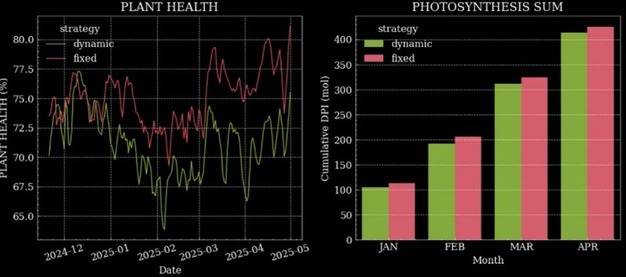
Gardin data showed that the fixed lighting strategy resulted in 4% more photosynthesis (Fig. 1), driven by higher light use efficiency at all light intensities. This was reflected in higher plant health (Fv/Fm) values for the fixed strategy, suggesting that a stress response was triggered under dynamic lighting. This is consistent with the hypothesis of reduced investment in electron transport proteins under fluctuating light conditions.
Despite similar final yields between the two groups, Gardin's findings support the hypothesis that the fixed lighting strategy produced more sugars and used light energy more efficiently.
 © Gardin
Conclusion
This trial demonstrates the value of plant-driven data in refining crop strategies. Measurements of plant photosynthesis provide critical insight into the trade-off between short-term energy savings and long-term plant performance.
The results highlight a clear balance between the higher photosynthetic efficiency of fixed lighting and the lower operational costs of dynamic lighting. Whether a 4% increase in photosynthesis outweighs a few hours of reduced LED costs will depend on the specific situation, growing season, and priorities of each grower.
Using Gardin, researchers gained real-time insight into crop health, balance, and productivity. Gardin revealed hidden stress and efficiency losses that affected the tomato harvest. For commercial growers, this study shows how physiological feedback from the crop itself can support smarter, more profitable lighting decisions in the future.
For more information:
Gardin
Email: [email protected]
www.gardin.co.uk