Exotic fruits in Kazakhstan are no longer a rarity. Across the country, farmers and entrepreneurs are successfully cultivating crops once considered impossible for the local climate. These projects rely on technology, careful planning, and consistent effort rather than individual experiments.
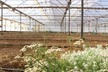
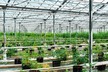
In the village of Avat, Almaty region, a modern greenhouse dedicated to lemon cultivation covers one hectare. Established by entrepreneur Yuri Paskalov, it currently hosts 1,200 lemon saplings. The greenhouse operates year-round, maintaining stable temperatures through advanced heating and cooling systems, and uses drip irrigation fueled by natural gas. The first harvest is expected in two years, with initial yields of 25–30 kg per tree, eventually reaching up to 100 kg. Plans include expanding the complex to five hectares.
In Kyzylorda, agronomist Akerke Tajekeeva manages three experimental greenhouses at the Bolashak University, growing lemons, bananas, mangoes, papaya, and kumquat. Her work focuses on testing new varieties before large-scale cultivation. Tajekeeva emphasizes that each plant requires careful care and attention. For example, banana trees produce fruit from their base after initial harvests, while papayas grow quickly but fruit sparingly. Citrus hybrids must be carefully irrigated to prevent cracking, and all crops require precise sunlight and planting schedules.
In southern Kazakhstan, a five-hectare greenhouse grows bananas, even producing in winter, supplying major city markets.
In the Mangistau region, a pilot project successfully established 2,000 olive trees, demonstrating the potential for exotic crops to adapt to challenging environments.
Similarly, in the Tyulkubas district of Turkestan region, wild pistachio trees have long thrived in mountain gorges, producing up to 3 kg of fruit per bush. In Aбай region, school greenhouses cultivating tropical fruits serve as educational and research platforms, combining learning with sustainable agriculture practices.
Source: www.inform.kz / el.kz / regtv.kz