Recent applied trials initiated by Tom Murray, Technical Manager: Fresh Fruit and Horticulture at Woolworths South Africa, are providing new insight into how light frequency, trap placement, and operating schedules can significantly influence insect pest capture in protected cropping systems. Conducted with research partners and growers, the work focuses on refining light-based attraction systems for key greenhouse and field pests, including thrips, Tuta absoluta, and several moth species.
While the trials are now gaining momentum, Murray explains that the concept has been in development for over a decade. "I started working with lights about ten years ago, but at the time it was simply too expensive — around R100,000 for a single light bulb," he says. The rollout of LED lighting across Woolworths stores from around 2023 changed that equation, making frequency-specific lighting more viable.
This shift led to a collaboration with Alan Starke of Oasys IPM Lighting Solutions, whom Murray credits as instrumental in moving the idea forward. "Alan is the lighting guru," he says. "He's the one person who didn't laugh when I suggested making lights tuned to very specific insect frequency preferences."
At the core of the work is the principle that insect pests respond not just to visual cues, but to highly specific light frequencies. "We've been playing with frequencies preferred by different pest species," Murray explains. Rather than relying solely on passive sticky cards, the trials combine tuned light sources with sticky or net-based collection systems to better understand insect behaviour and improve monitoring efficiency.
 © Woolworths
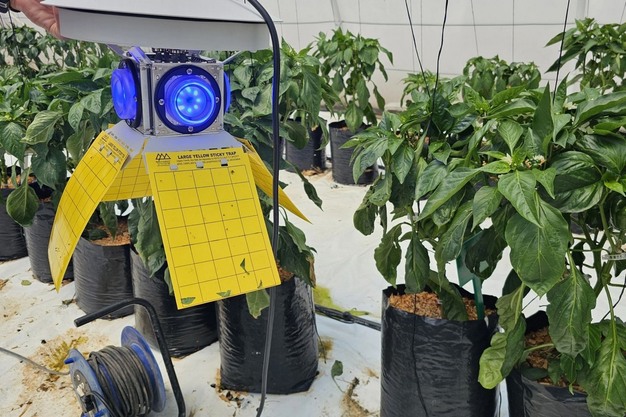
Thrips trials in greenhouse conditions
One of the most advanced trials targets thrips, a persistent and economically significant pest in greenhouses. The initiative was driven directly by grower demand. "A blueberry grower requested the thrips light, so we built one to trial in the SUN greenhouse."
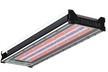
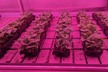
The work is being conducted at Stellenbosch University's Welgevallen Experimental Farm. A custom-designed thrips-specific light was installed above yellow sticky cards, deliberately replacing the more commonly used blue cards. "We are deliberately using yellow sticky traps instead of blue," Murray notes, adding that white would have been preferable but was unavailable at the time.
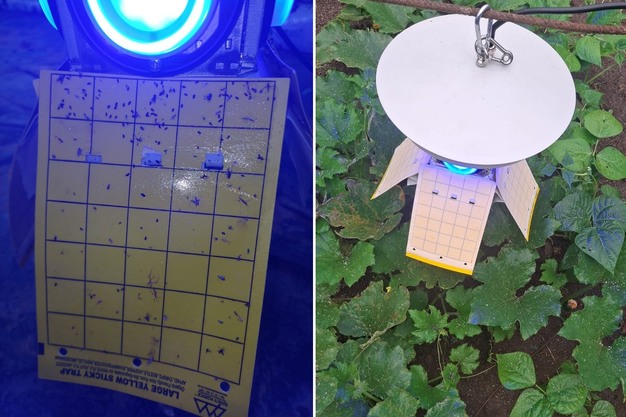
A key outcome has been a clearer understanding of thrips' dorsal light response (DLR). "The diameter of a thrips dorsal light response is quite small," he explains. By positioning traps directly beneath the light source, the team recorded significantly higher capture rates. "This confirms that it is the light attracting the thrips, rather than the sticky card itself."
Most thrips were found directly below the light, highlighting the importance of precise trap placement. For greenhouse operators, this means trap positioning and efficiency can be improved without increasing trap numbers.
 © Woolworths
Bulk of the catch immediately below the light
Expanding into moth pest species
Beyond greenhouse thrips, Murray's work extends into moth pests affecting protected and open-field crops. "I was initially looking at green stinkbug, but then got sidetracked into Tuta," he says.
Research shows that many moth species share similar frequency preferences. "The moth pest species generally respond to the same frequencies," Murray explains. As a result, a single light design aimed at Tuta absoluta has also attracted bollworm, macadamia nut borer (MNB), and diamondback moth (DBM).
Field trials are underway in several locations. In Ofcolaco, a pan light is being used to assess attraction of fall armyworm (FAW) in sweetcorn. Another unit has been deployed with the Sugar Association in Mt Edgecombe to evaluate attraction of Eldana saccharina in sugarcane.
Non-target impacts, particularly on pollinators, were a major consideration. "We were very concerned about bees," Murray says. "We didn't want to attract or kill them." This risk was mitigated by running the lights only at night. "Fortunately, bees sleep at night, so it hasn't been a problem."
 © Tom Murray
Trap design and operating schedules
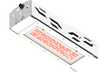
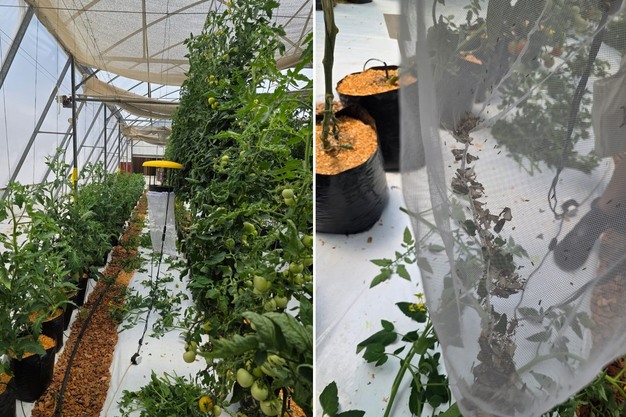
At Stellenbosch University, trials include sticky cards as well as light, fan, and bag trap systems, with strong catch results when operated continuously. However, continuous use may not be necessary in commercial systems.
"For moths, we really only need the lights on from dusk to about 11pm, and again from around 4am to 8am," Murray explains. Programmable schedules could reduce energy use while maintaining effectiveness and limiting impacts on beneficial insects.
The trials are supported by academic assessment, with students quantifying catch data and behavioural responses. Together, the work demonstrates how long-term innovation, practical problem-solving, and academic evaluation can combine to deliver more precise and sustainable pest monitoring tools.
For more information: Tom Murray
Woolworths
Tel: +27 21 407 9111
Email: [email protected]
https://www.woolworths.co.za/