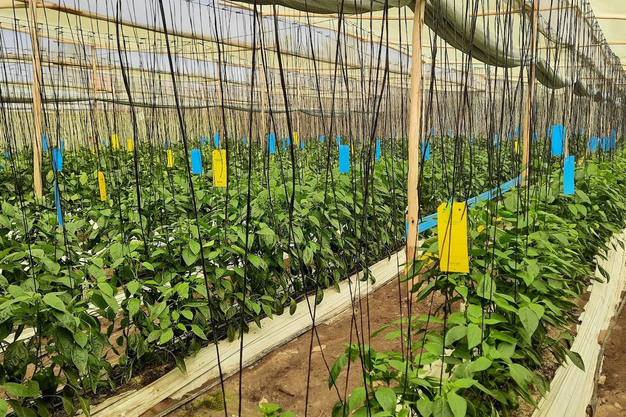
Intensive greenhouse agriculture continues to expand steadily in the far north of Chile. In the Arica and Parinacota region, one of the most arid areas on the planet, protected horticulture has consolidated itself as a strategic sector, both for its economic weight and for its ability to supply the domestic market out of season. In this modernisation process, the experience of Almería has become a key technical reference.
 © Corfo
From the Chilean Economic Development Agency Corfo, María José Moraga and Freddy Gutiérrez explain how the region is moving towards a more technical, professional and sustainable model, supported by public innovation programmes, international technology transfer and the gradual adoption of integrated pest management and biological solutions.
Technology absorption programmes: from observation to real implementation
Within Corfo's Innovation Department, the Technological Absorption Programme for Innovation (PATI) is being developed, with the aim of strengthening the productive and innovative capabilities of small and medium sized companies. "The programme seeks to improve productivity and competitiveness through the absorption of technology, whether new or not widely used at national level, as well as through the incorporation of good practices and new knowledge," explains María José Moraga.
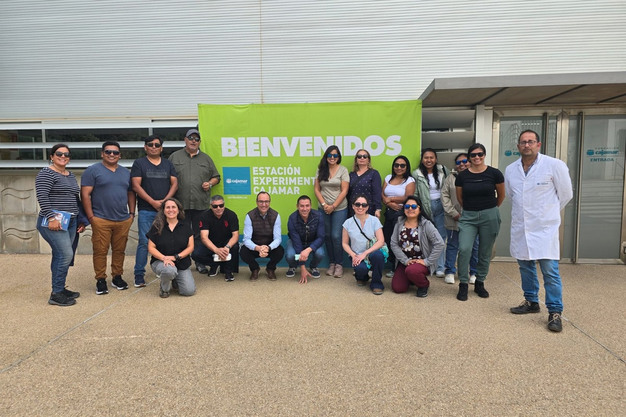
In 2025, this instrument enabled a group of 10 horticultural companies from Arica and Parinacota to take part in a technology mission to Almería, organised together with local technical entities. "The first stage was exploratory and took place in February 2025. Growers were able to see first hand how the Almería production system works, from the nursery stage to commercial and organisational aspects," she says.
 © Corfo
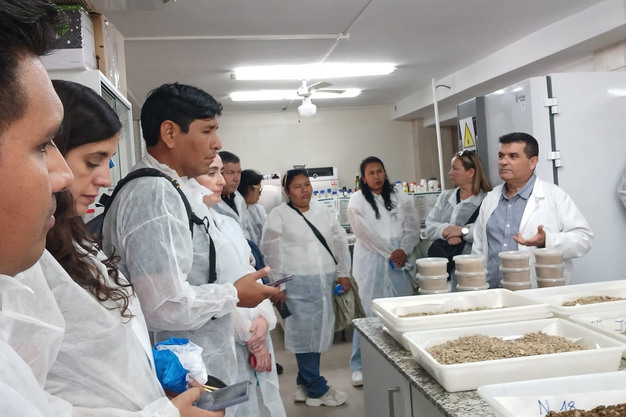
During the visit, the growers toured farms, technical centres and supplier companies, analysing greenhouse technologies, soil management, integrated pest control and marketing models. "Almería was a very well chosen destination because it has climatic conditions very similar to those of Arica and Parinacota, as well as almost identical crops: tomatoes, cherry tomatoes, courgettes and various cucurbits," Moraga adds.
 © Corfo
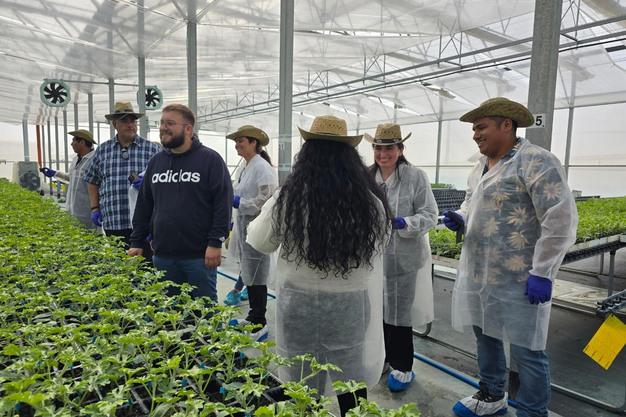
After completing this phase, the project has now entered the technology absorption stage. "It is no longer just about observing, but about implementing. Growers are now working with pathogen free soils, introducing new varieties, making structural improvements to greenhouses and adopting new technologies," she explains.
 © Corfo
Arica and Parinacota: intensive horticulture in the world's driest desert
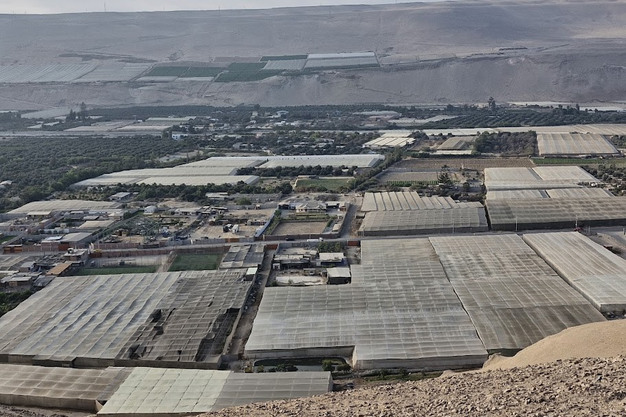
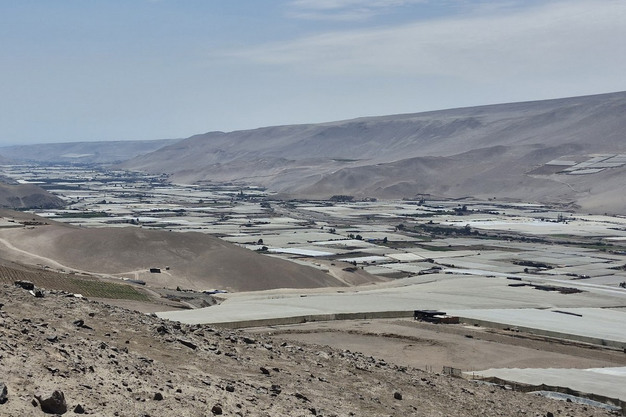
The Arica and Parinacota region has around 3000 hectares of intensive horticultural production. Located in the heart of the Atacama Desert, it combines exceptional solar radiation with stable temperatures for much of the year and water availability from the pre cordillera and the altiplano.
"Arica represents for Chile what Almería or Murcia represent for Europe," says Freddy Gutiérrez. "We are an out of season production area that supplies the Chilean market during winter, when other regions reduce their output."
 © Corfo
A decisive milestone came between 2004 and 2005, when Chile was declared free of fruit fly. "Until then, there were internal sanitary barriers that limited the movement of fresh produce from Arica to the rest of the country. Once these were removed, the sector experienced a real technological boom," Gutiérrez recalls.
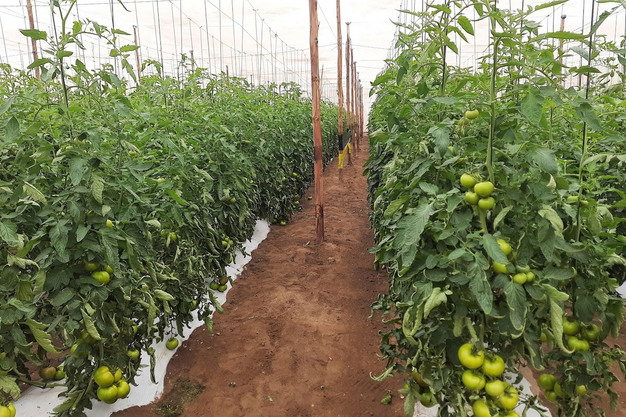
From that point on, the adoption of drip irrigation, netting, improved irrigation heads and more widespread use of greenhouses accelerated. "Today we are talking about tomato yields close to 300 tonnes per hectare, very high figures even by international standards," he stresses. "This profitability also explains the high value of agricultural land, with prices exceeding 300,000 dollars per hectare in areas such as the Azapa Valley."
Seeds, research and sector professionalisation
"Another key factor in the evolution of regional horticulture has been the arrival of major seed and research companies. Since the mid 2000s, companies dedicated not only to multiplication but also to advanced research and development phases have set up in Arica," Gutiérrez explains.
 © Corfo
Companies such as Corteva, Bayer and Fitó have taken advantage of the region's extreme conditions, including high salinity, water stress and the endemic presence of nematodes and other pathogens, to develop more resilient varieties. "If a material works in Arica, it is very likely to work in other parts of the world with similar problems," he notes.
"This industrial presence has had a direct impact on the professionalisation of the sector. Local agronomists, technicians and engineers have had to work with top level technology, from climate control systems to advanced automation, significantly raising the technical level of the region," he adds.
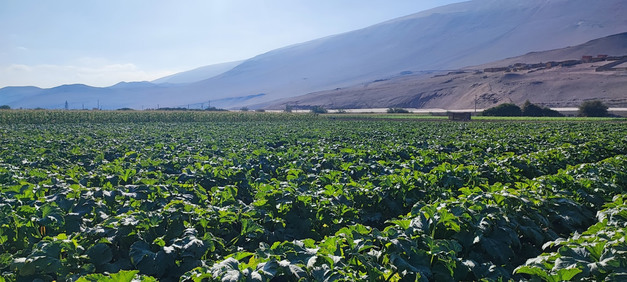
Despite these advances, the sector still faces major challenges. "One of the main issues is the high pressure from pests and diseases, favoured by stable climatic conditions and almost continuous production cycles. In Arica, crops are grown from March to December, with very short breaks, which leads to pest persistence and strong pressure on soils," Gutiérrez explains.
 © Corfo
"For many years, the model relied heavily on chemical control, with cumulative negative effects on soils and microbiology. That is why the sector is now looking towards biological control and integrated pest management. Today, implementing a full biological control programme can cost between 20,000 and 25,000 dollars per hectare, a much higher cost than in Europe," he acknowledges. "However, the change is already under way."
Through integrated territorial programmes and PATI, Corfo is promoting the adoption of integrated pest management, microbiological products and biological control agents. "What is interesting is that the growers involved come from very different starting points. Some already have experience, others are starting from scratch. This allows real examples to be generated, lighthouse growers who show the rest of the sector that the model works," he highlights.
 © Corfo
More efficiency, not more hectares
Growth in the sector is not so much about increasing surface area as it is about improving efficiency. "Growers are, in a way, prisoners of their own success. Volumes are very high and the Chilean market is limited, which has put pressure on prices over the last decade," Gutiérrez explains.
"With rising input costs, the priority today is to reduce expenses, improve sustainability and open up new commercial options, even looking at external markets. We are no longer talking about organic as something marginal. We are talking about integrated management and biological solutions that do not reduce yields and that allow compliance with more demanding standards," he adds.
"The Almería experience shows that transforming an intensive production model is possible when there is a coordinated strategy between growers, public authorities and technology providers. In Arica and Parinacota, that path is already defined and, together with agricultural technology companies, the region aims to consolidate itself not only as a production hub, but also as a reference agricultural laboratory for extreme conditions."
 © CorfoFor more information:
Corfo
[email protected]
https://www.corfo.gob.cl