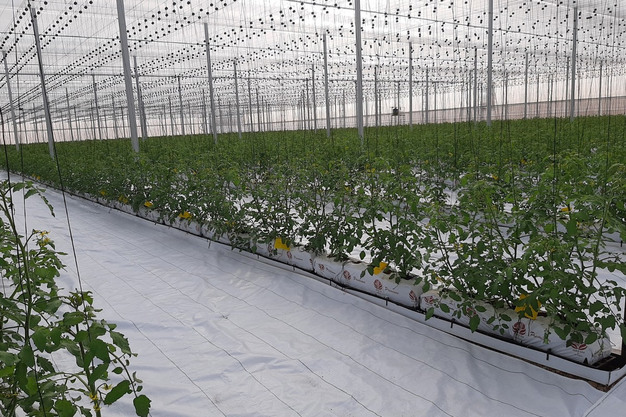
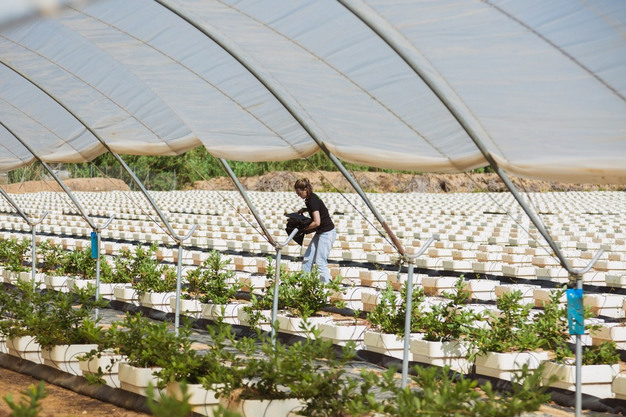
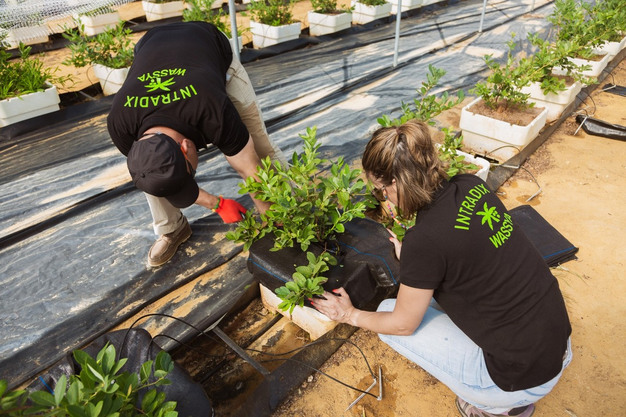
Over the past few years, coconut fiber has become an agronomic tool that many growers now consider essential when the goal is crop uniformity, irrigation control and seasonal stability. "The trend is clearly visible both in berries, where hydroponic cultivation is very common, and in greenhouse vegetables, where the shift from soil based growing to substrate cultivation is accelerating for productive reasons and because of the improvements it brings in water use efficiency and the application of plant protection products," explains Mila Ruiz, Managing Director Europe at Intradix, a specialist in coconut fiber substrates and part of the Wassya group.
 © Wassya
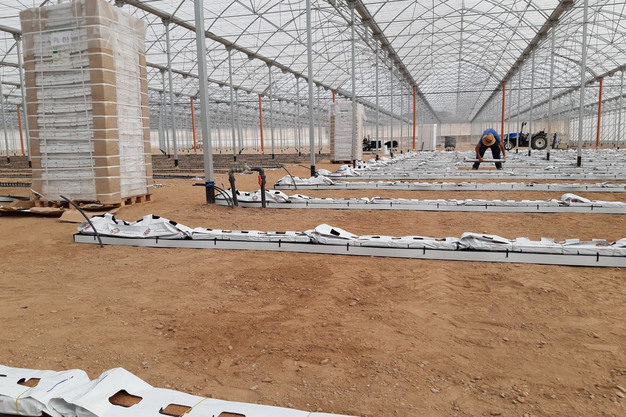
"More specifically, over the last 5 or 6 years we have seen exponential growth. In a context marked by the need to optimize resources in agriculture, coconut fiber allows maximum efficiency in water consumption and enables a more controlled crop, with higher yields and not dependent on soil conditions. Coconut fiber substrates provide a standardized growing medium that delivers highly uniform production in a respectful and sustainable way."
 © Wassya
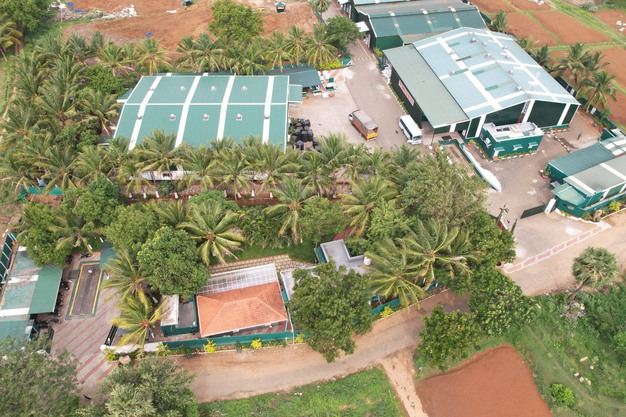
"We do not just market coconut fiber, we have our own factory in southern India"
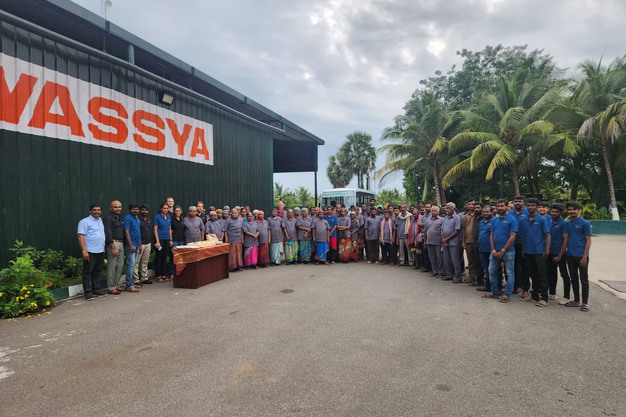
Coconut fiber is a 100% renewable and organic material, produced without the use of fertilizers or insecticides. "In general, coconut palms produce 4 harvests per year in India, where our production plant is located," Mila explains. It is there, in Pollachi, in the Coimbatore region, considered the coconut capital of the state of Tamil Nadu, that the company, with around 350 direct employees and approximately 5000 indirect employees, manufactures and exports natural, organic, biodegradable and sustainable coconut substrates to customers across Europe, America, Africa and Asia.
 © Wassya
The initiative was driven by the company's founder, Terry Sam Lucas, an agronomist by training with a background in strategic cost control. From the outset, his work focused on particle size, root development and the physical and chemical stability of the substrate over time. The objective was clear: to develop a growing medium capable of maintaining its mechanical and agronomic properties over several seasons, without degradation and with a tangible return on investment for the grower. "That pioneering idea is what gave birth to Wassya."
This vertical integration is the foundation of the company's model. "We offer a complete service, from sourcing local raw material, processing it in India, manufacturing and marketing the substrate, to technical development together with producing companies."
 © Wassya
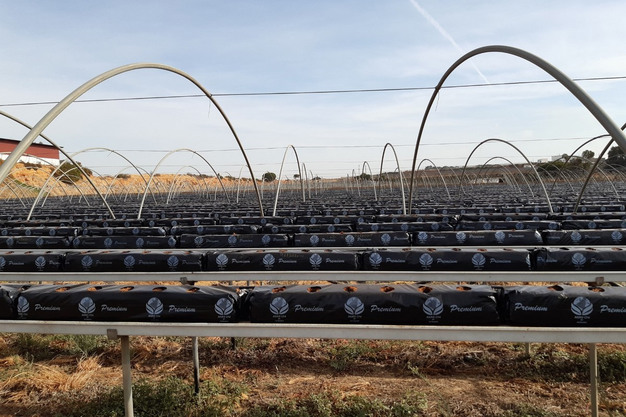
"As for our main products, we specialize in grow bags with a minimum lifespan of 3 seasons, and we develop customized filling slabs for pots. However, our greatest specialization lies in the manufacture of customized substrates for each client, based on their needs and the characteristics of their production."
"As one of our tomato growing clients says, one third of production depends on the variety, another third on agronomic management and the final third on the coconut."
 © Wassya
"In 2026 the upward trend in this market has been confirmed once again"
In recent months, the coconut fiber substrate market has experienced fluctuations linked to weather conditions in India and Sri Lanka, where raw material production has come under pressure, along with prices. "In reality, the supply issue has not been a lack of raw material, but price pressure in India, where prices have risen by more than 50% in just 8 months."
"And this increase is set to remain stable. It is also linked to the lack of peat production in the Baltic countries, which have reached only 40% of output, while northern Europe has achieved just 70% of its normal production. Coconut fiber is the only organic substitute available for peat as a substrate."
 © Wassya
The impact has been significant. "Production becomes more expensive during monsoon periods, and many companies that had agreed prices at the start of the season chose not to deliver coconut fiber or switched to other raw materials. As a result, some companies have disappeared because they were unable to absorb the increase. In this context, having industrial facilities at origin is a key advantage. For us, having our own factory in India, managed under European control standards, has allowed us to adapt to this challenging situation and minimize its impact on our activity."
 © Wassya
"In fact, we are fully prepared to continue supplying top quality coconut fiber substrates throughout 2026, a year in which the growing trend of this market has once again been confirmed."
 © WassyaFor more information:
Intradix - Wassya
Mila Ruiz (Wassya - Europe)
[email protected]
https://wassya.com/