In recent years, Egypt has moved from being a largely unexplored territory for blueberry cultivation to becoming one of the most closely watched emerging origins for international investors and operators. Water availability, favourable climatic conditions and a strategic location between key markets have all helped put the country firmly on the sector's radar. However, behind this early-stage growth lies a decisive factor that is making the difference: a technically driven approach that has been built into projects from the very beginning.
 © Originalius
"About 3 or 4 years ago, the first blueberry planting trials started in Egypt, and from the outset they showed that the crop could perform well in several areas of the country," explains Juan Luis Jiménez, CEO of Originalius. "We have supported that development from day one, providing specific substrates, know-how and technical guidance to the pioneers who decided to invest in blueberries, ensuring that growth was built on solid foundations."
Egypt, a new strategic pole for blueberries
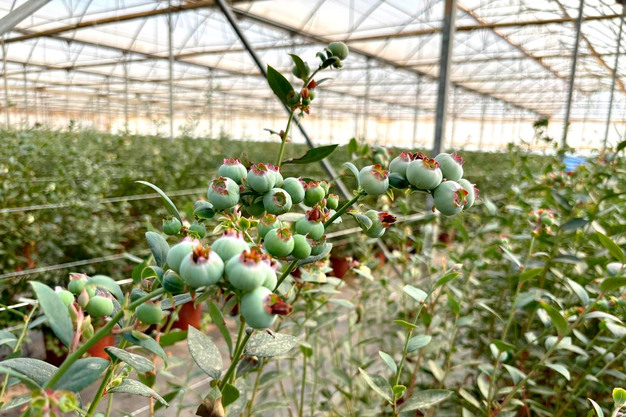
Interest in Egypt is no coincidence. In a global context marked by the expansion of blueberry production in the Southern Hemisphere, with Peru as the leading example, the sector is actively seeking robust alternatives in the Northern Hemisphere to maintain Southern Hemisphere volumes and ensure continuity of supply.
 © Originalius
"Egypt has the potential to become a very interesting Northern Hemisphere alternative, helping to create a more consistent production flow between hemispheres," Jiménez confirms. "Today, we can already say that blueberries can be produced in Egypt with very good quality. In fact, we expect a strong influx of technology and investment in the coming years, which will allow the technical level of farms to rise very quickly."
One of the aspects most emphasised by Originalius is Egypt's ability to avoid common mistakes seen in the early stages of agricultural expansion. "Unlike other emerging regions, Egypt is not starting from scratch. There is already a solid base of know-how in place, which significantly accelerates the learning curve and ensures that the right technical decisions are being made from the outset."
"In this context, Originalius is not just supplying substrates; we are actively involved in the agronomic design of projects," Jiménez adds. "Our previous experience in warm and desert environments such as Peru and Morocco, where we have been working for more than 20–25 years, has allowed us to quickly adapt substrate blends to Egypt's specific conditions, ensuring successful outcomes for our customers' productions."
 © Originalius
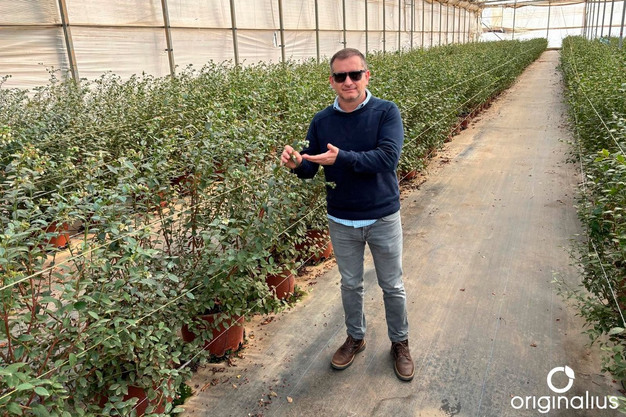
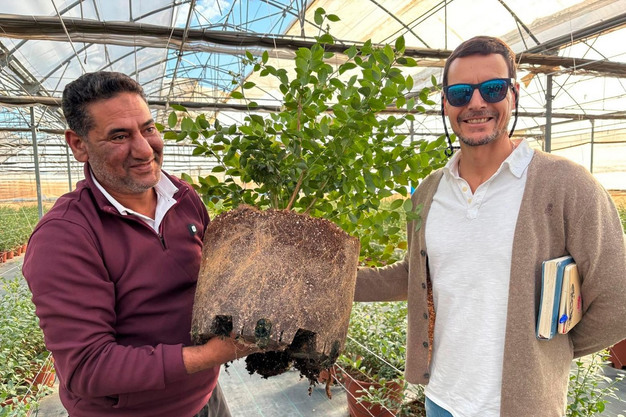
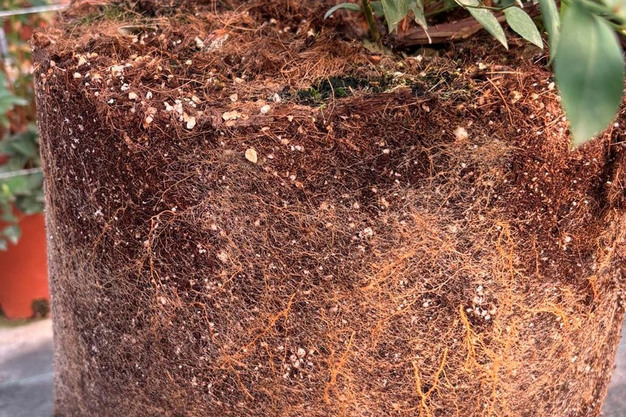
Substrate selection and management are critical in an environment characterised by high temperatures and challenging humidity conditions. As Originalius' technical team observed during its most recent visit to Egypt, the results achieved so far are particularly telling. "We are seeing plants just 5 months old that are already fully rooted, with very uniform development. The substrate is adapting extremely well to the technical limitations imposed by the Egyptian climate, allowing growers to move faster and make fewer mistakes," Jiménez notes.
"The blend that is performing best is Blueberry King Plus, a substrate that has already been used successfully in other countries, but which has been specifically redesigned for Egyptian conditions," he says.
 © Originalius
Genetics and substrate: an integrated strategy
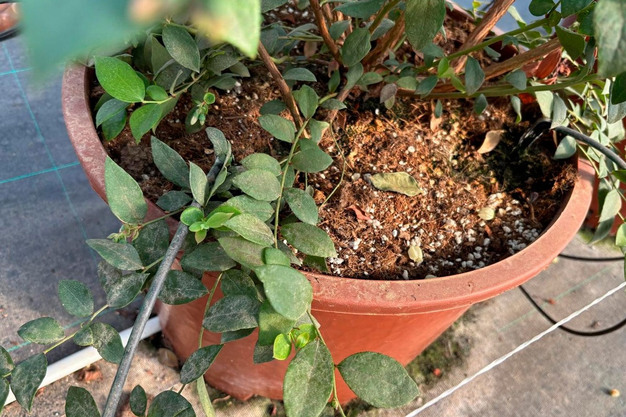
Originalius' interest in Egypt goes beyond substrate supply alone. "From a genetic standpoint, Egypt is also a strategic country for us. We are introducing our genetics there, which allows us to offer a fully integrated solution, coherent from plant material all the way through to the cultivation system," Jiménez explains. "This integration is particularly important in a country that is only now laying the foundations of a production model that is expected to scale up rapidly."
 © Originalius
"All signs point to very strong development over the next 5 or 6 years. We have met with very influential players on the ground, and the interest is real, both technically and from an investment perspective," he concludes. "That is why our roadmap involves continuing to develop country-specific substrates and supporting the sector's growth with ongoing technical assistance. Egypt is not a short-term bet for us; it is a strategic line of development."
 © OriginaliusFor further information, please contact
Originalius
USA
P.O. Box 13408
San Luis Obispo, CA 93406
SPAIN
Paraje Los Rastrojos, Polígono 9 - Parcela 48
Apt. Correos, 329
30730 San Javier (Murcia)
originalius.com