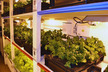
INTA and the National University of La Matanza (UNLAM) are working on the optimisation and fine-tuning of a compact, controlled and affordable hydroponic system designed to enable the domestic production of fresh food in small spaces and under variable climatic conditions. The prototype builds on the experience gained through the Antarctic Hydroponic Production Module (MAPHI).
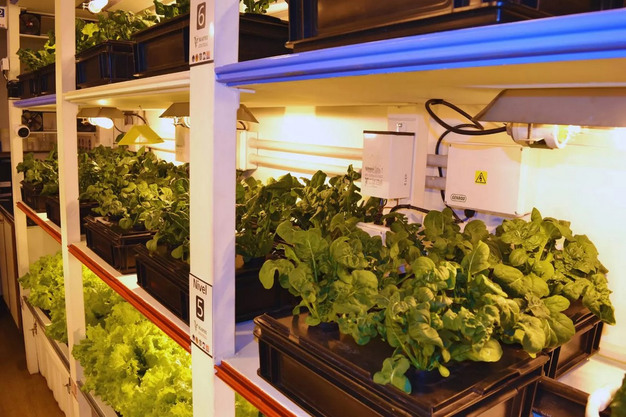 © INTA
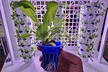
INTA and UNLAM are jointly developing a module aimed at facilitating vegetable production in reduced spaces, regardless of external climatic variability. The goal is for the final prototype to be economically accessible and simple enough to be used by anyone in a household setting.
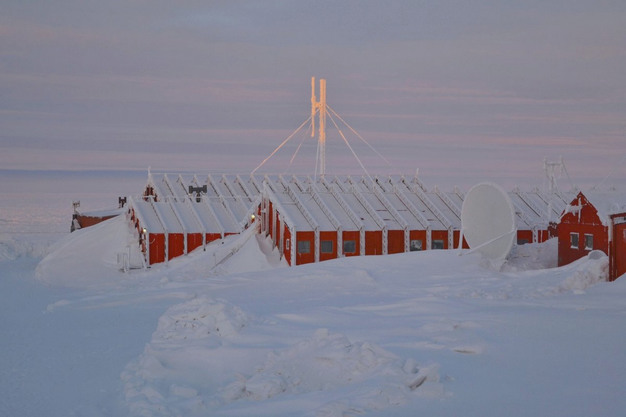
The project originates from the know-how developed through MAPHI, a system designed to produce vegetables under the extreme conditions of Antarctica. Drawing on that experience, INTA Santa Cruz, in collaboration with the National University of La Matanza, is now adapting and optimising the technology at a smaller scale, specifically targeted at domestic use.
According to Jorge Birgi, researcher at the INTA Santa Cruz Experimental Station, "we were able to design a production module that condenses the technologies used in the Antarctic system, while adding new features. Given the scale, this is a module that allows a family to produce their own food."
The initial objective was to transform a highly complex system, originally conceived for hostile and isolated environments, into a compact, efficient and economically accessible prototype capable of producing fresh food in limited spaces and under variable climatic conditions
 © INTA
Martín Díaz, project director overseeing the optimisation phase, highlighted that "this collaboration will provide technical tools that strengthen the prototype and make it possible to reach the goal of developing a product that can be commercialised."
Among its defining features, Díaz explained that "the module is designed to produce vegetables independently of external environmental conditions. It controls all key variables — temperature, light and nutrients — to ensure production regardless of location."
During its deployment in Antarctica, the MAPHI project led to the development of a complete technological package. This included compatible substrates, specific seed types, seed treatments and dedicated protocols. A tailored nutrient solution adapted to Antarctic conditions was also developed, along with a monitoring system incorporating sensors and custom-designed electronic boards. These components allowed data to be collected, processed and presented in a way that was easy for operators to interpret.
At this stage, efforts are focused on transforming MAPHI's technologies into a product that can be utilised by society and the productive sector. In other words, the project that proved capable of producing vegetables under extreme Antarctic conditions is now being used as a springboard for the development of commercial products.
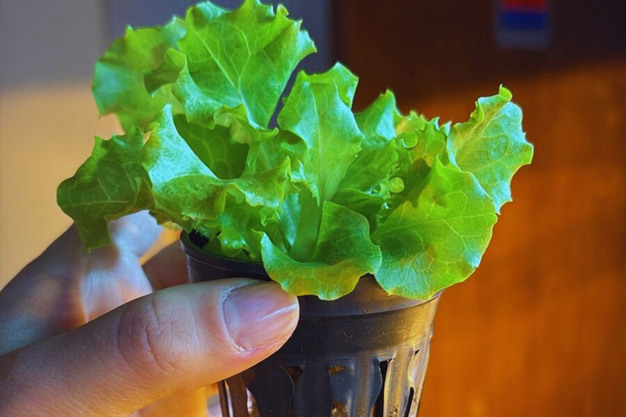
In this regard, Birgi noted that "to achieve this objective, the MAPHI team developed a reduced-size prototype that incorporates new functionalities, making it easier to operate in a domestic environment."
 © INTA
Through the joint project, INTA and UNLAM will now contribute a business plan aimed at turning the prototype developed by the Santa Cruz Experimental Station into a commercial product. This phase will include a market study to identify potential user profiles, as well as the development of an intuitive interface allowing the system to be managed via a mobile phone application.
The final outcome will consist of a series of technical documents defining target users, the final price of the production system, the data collection platform to be used, and the materials required for construction.
The initiative is part of the Technological and Social Development Project (PDTS) call, a joint programme promoted by Argentina's National Interuniversity Council (CIN) and the European Union (UNIUEAR).
Source: intainforma.inta.gob.ar