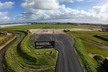
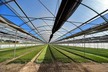
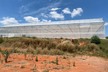
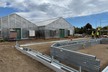
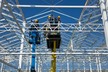
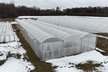
In Al Ain, a nearly 12-hectare climate-controlled glasshouse was designed and delivered to enable stable, year-round vegetable production in one of the region's more demanding environments.
The facility consistently achieved high-quality production standards and year-round harvesting, using less than 20 percent of the water per kilogram of produce compared with typical local benchmarks.
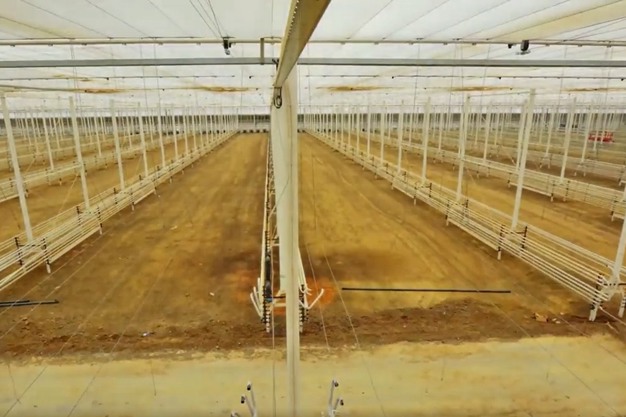
The site integrates two large production units and a hybrid propagation compartment, supported by packing, irrigation and operational areas planned as one coherent system.
With an annual capacity of more than 9,000 tonnes of round tomatoes or 3,500 tonnes of snacking truss tomatoes, the design was shaped around long-term performance, resource availability and the UAE's broader food-system objectives.
What defined this project was the alignment of the system from the outset. Early feasibility studies, climate strategy, energy demand, water use and operational flows were integrated into a single engineering model, allowing the facility to operate predictably despite climatic volatility.
 © VEK
© VEK
Rather than treating the greenhouse as a stand-alone structure, the project was approached as climate-adaptive agricultural infrastructure, grounded in system logic, resource realities and national food-security priorities.
The technology and design enabled fully protected cropping comparable to leading international standards, operating effectively under high-temperature and high-radiation conditions, with minimal water use and a shift toward biological crop protection rather than chemical reliance.
For more information:
VEK 
Email: [email protected]
vek.nl/