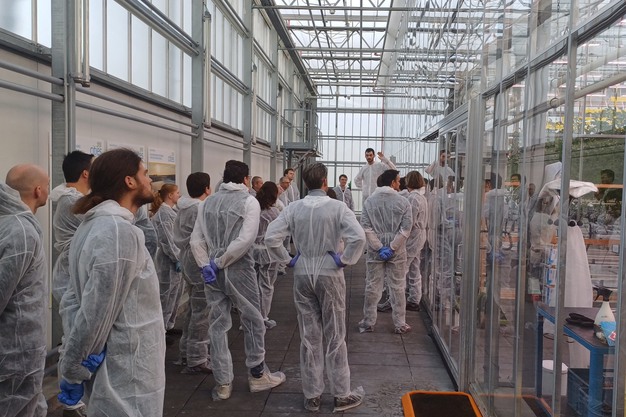
During the third meeting of the DigiKas (digital greenhouse) project at Agrotopia in Brussel, Belgium, the first results were recently shared on how plant sensors and dynamic lighting can support data-driven crop management.
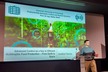
Experts from Inagro, Ghent University, KU Leuven and Thomas More presented their findings to a group of growers and horticultural companies. The research clearly shows how plant sensors can support irrigation management in tomato production, while also highlighting the challenges of turning raw sensor data into practical, decision-supporting information that growers can actually use in day-to-day management.
 © Inagro
Challenging sensors in practice
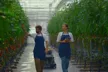
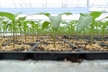
To really test the value of sensors under real growing conditions, climate and plant sensors were installed in several tomato compartments at Agrotopia. In these compartments, growers deliberately worked with both optimal and suboptimal settings. Bert Deruyck from Inagro explained how stress responses in tomato plants were intentionally triggered by adjusting the timing and composition of irrigation. This practical approach generated valuable insights. When nutrient concentrations in the irrigation water were too low, growth setbacks and physiological disorders such as blossom end rot appeared very quickly. The daily start time of irrigation also proved to have a significant influence on productivity in summer crops. By deliberately pushing the crop outside its comfort zone, the project demonstrates how effectively sensors can detect problems in the crop and how clearly they respond to different stress factors.
How sensitive are the plant sensors?
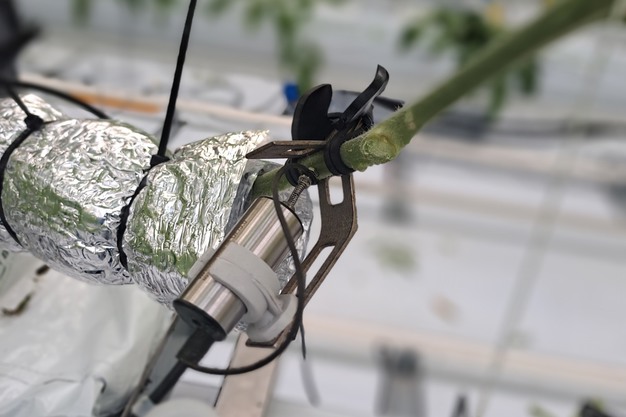
Wolf De Smet from Ghent University shared insights into how sensitive different plant sensors are when it comes to detecting suboptimal growing conditions. His overview made clear that not all sensors respond in the same way or on the same time scale, which is an important consideration for growers looking to use sensor data in daily crop management.
Highly sensitive sensors that monitor plant electrophysiology, sap flow or stem diameter can provide very detailed information at an hourly or daily level. These sensors are particularly useful for picking up short-term stress responses. Other sensors, such as those measuring slab weight, plant weight or moisture content in the substrate slab, are better suited to showing trends over several days. The analysis demonstrates that a sensor's responsiveness strongly depends on the type of stress factor involved and the time frame in which noticeable changes in the crop occur.
 © Inagro
From data to decisions
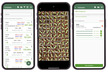
Arne De Temmerman from KU Leuven explained the challenges and opportunities involved in turning collected crop data into truly useful information for growers. He presented a robust framework designed to ensure that data are gathered in a consistent, high-quality way and made accessible for in-depth analysis.
He also outlined the techniques used to identify overlapping or duplicate information within sensor signals, making it easier to understand the relationships between different types of sensors. This approach paves the way for simpler and more practical sensor setups in commercial greenhouses, focusing on measuring only what really adds value. In the coming months, the project will link long-term production results to the day-to-day signals coming from sensors, helping growers better understand how short-term crop responses translate into overall performance.
Smart lighting = energy saving
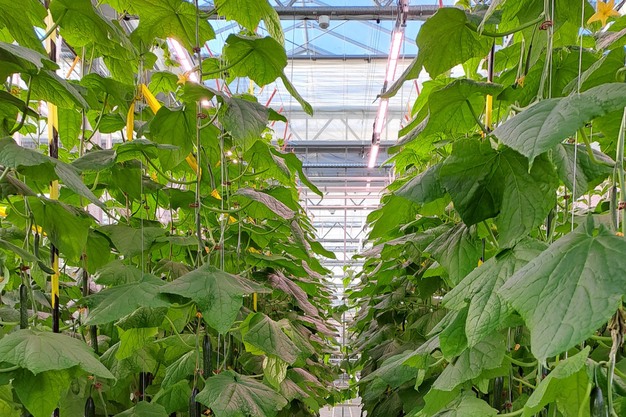
Mario Frans from Thomas More presented research focused on optimising crop production under dynamic LED lighting. With strong fluctuations in the energy market in recent years and the rapid adoption of full-LED greenhouse systems, growers now have more flexibility to respond to changing electricity prices by dimming and adjusting light levels throughout the day.
Climate chamber trials show that tomato plants can cope well with light fluctuations of 150 µmol per square metre per second on a fifteen-minute basis. The trials also indicate that a realistic lower limit for supplemental lighting is around 75 µmol per square metre per second. These initial findings will soon be tested on a larger scale in the Agrotopia research greenhouses, where their impact under practical growing conditions can be evaluated.
 © Inagro
Future research
The DigiKas project, supported by the Agency for Innovation & Entrepreneurship, aims to help growers optimize cultivation actions through data-driven decisions. In the coming months, the results will be further refined and linked to production data, with the aim of practical and efficient application in greenhouse horticulture.
Source: Inagro