Sign up for our daily Newsletter and stay up to date with all the latest news!

Subscribe I am already a subscriber

You are using software which is blocking our advertisements (adblocker).

As we provide the news for free, we are relying on revenues from our banners. So please disable your adblocker and reload the page to continue using this site.
Thanks!

Click here for a guide on disabling your adblocker.

Sign up for our daily Newsletter and stay up to date with all the latest news!

Subscribe I am already a subscriber

Stacking the future: A year inside vertical farming

Over the past year, the vertical farming industry has continued to mature, diversify, and redefine itself through innovation, reflection, and expansion across the globe. From climate-resilient strawberry production in Canada and pesticide-free farming solutions in Southeast Asia to new business models that blur the lines between greenhouses and vertical farms, the stories of 2024–2025 reveal an industry focused less on hype and more on practicality, impact, and scale.

The year also marked moments of transition and tribute, most notably the passing of vertical farming pioneer Dickson Despommier, alongside meaningful advances in open-source technology, modular systems, urban regeneration, research-driven productivity, and strategic acquisitions.
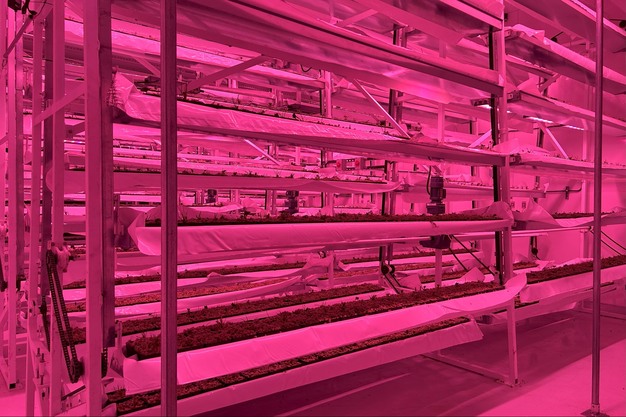
Through their use of cutting-edge technology and sustainable practices groHERE, an Edmonton, Alberta-based company, is transforming the way strawberries are grown. In their fully climate-controlled facility, groHERE can produce fresh, flavorful strawberries year-round—no small feat in a place where the average winter temperature ranges between -5°C (-23°F) and -15°C (-59°F) as the daytime high. Their mission is simple: to grow as many high-quality strawberries as they can, as close as they can to the people who love them.

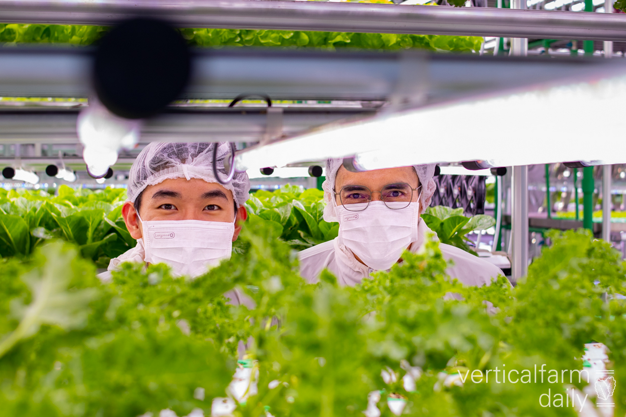
"Thailand's agricultural sector faces significant challenges, with one of the most pressing issues being the widespread use of pesticides. The Thai market often prioritizes affordability and visual appeal over food safety, leading to the dominance of low-cost, lower-quality produce. While organic labeling is common, it is often misleading," says Sansin Sriphiromrak, CEO of DISTAR FRESH, a vertical farm near Bangkok, Thailand.

"The farm has grown from a self-funded farming project to a prototype farming model which is currently competing directly with greenhouses rather than traditional vertical farms. We're not a vertical farm, we're a farm. Our customers don't care how we grow; they care about quality, consistency, and price," says Ty Dickson, Co-founder of April Sun Farms.

Dickson Despommier, known for being a true pioneer and knowledge source in vertical farming, passed away on February 7, 2025, in New York City. He was 84 years old. Despommier, a former professor at Columbia University, introduced the vertical farming concept in 1999. His 2010 book, "The Vertical Farm: Feeding the World in the 21st Century," outlined urban agriculture models.

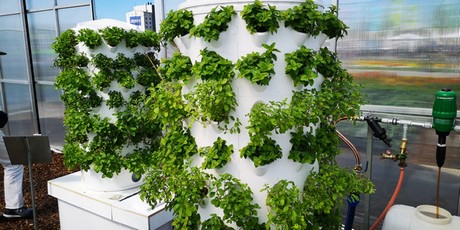
Now, while users can always purchase injection-molded pieces from Aponix, the main elements of their original V2 Vertical Barrel project, including the Substrate Shelf element for terraponic mode, are now open-sourced to the commons so users, researchers, and inventors can experiment with the data, extend, and 3D-print. All pieces are suitable for 3D printing.

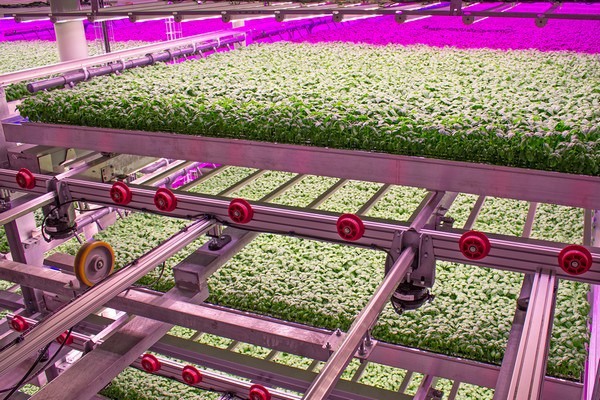
"The key advantage of vertical farms lies in their control and productivity. With multi-layer setups, the yield per cubic meter can significantly surpass that of conventional farming," says Maarten Ameye, Research Leader at Inagro.

80 Acres Farms® is expanding its footprint with the acquisition of three indoor vertical farms and related IP previously owned by Kalera, Inc. The farms are strategically located in Georgia, Texas, and Colorado.

© Growpipes

Swedish company Growpipes, led by CEO Christer Tilk, is challenging the notion that vertical farming requires a large capital investment. Instead, they've developed a modular system that allows farmers to start on a small scale and expand gradually.

© PeachyKeen

"We're using that knowledge to power urban farms and rethink how vacant town center buildings can be repurposed," says Andrew Bowie, Director at PeachyKeen. Their ambition is currently being realized through a proof-of-concept pilot project, part of a broader initiative known as the 5P Project. While the full vision touches on urban regeneration, sustainability, and community development, the pilot farm itself is where theory meets practice.

© Vertical Greens

Following its latest funding round, Swedish vertical farming company Green City Farming is preparing for international expansion with a scalable, ready-to-deploy system. The company's next step is a pilot farm in Helsingborg, developed in partnership with a major food industry player.

Related Articles → See More