India's controlled-environment farming sector is gradually shifting from one-off projects to a more structured phase, with the emphasis increasing on operations rather than just infrastructure, says Brajendra Yadav, CEO of INNOFarms.AI. "Most serious conversations now are less about how to build a greenhouse or vertical farm and more about how to run it predictably, control costs and align output with real market demand."
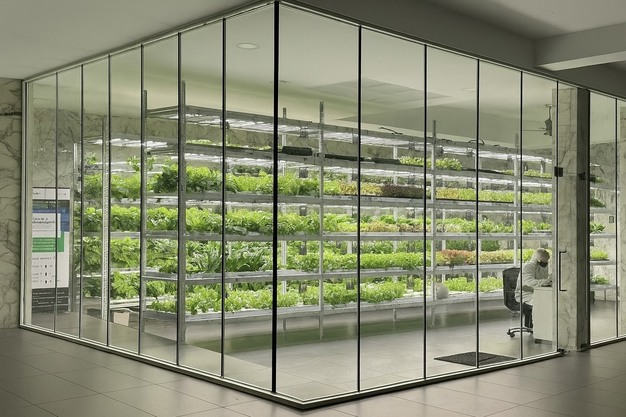
According to Yadav, most Indian vertical farms especially remain concentrated in metro and tier 1 cities such as Bengaluru, Hyderabad, Delhi NCR, Mumbai, Pune and Chennai, supplying leafy greens, herbs, microgreens and some fruits like strawberries to premium urban segments, HoReCa and institutional channels. He observes that the wider controlled-environment segment in India is expected to grow at a steady pace over the next five years, "but with a clear focus on unit economics and reliability rather than aggressive scaling, as capital intensity and energy costs remain important constraints."
 © INNOFarms.AI
INNOFarms.AI positions itself in this context as an intelligence layer for both enterprises and farms. Yadav explains that many operators still discover too late that crops have missed their ideal harvest window or only notice energy spikes after they have already eroded margins, despite investing in climate systems and automation. "There is a visibility and predictability gap in controlled environments. If you can see stress, anomalies and inefficiencies seven to ten days earlier, you can protect yield and margins without necessarily adding more hardware," he mentions.
 © INNOFarms.AI
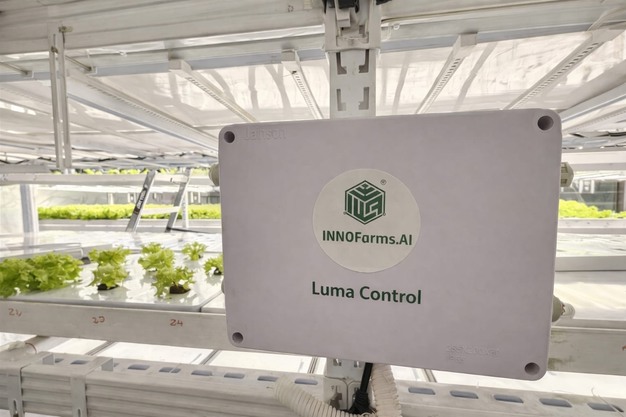
The company's platform connects an enterprise intelligence suite, covering multi‑farm visibility, forecasting, risk alerts, quality, compliance and ESG with a farm‑level suite, which is focused on AI‑driven monitoring, precision climate, irrigation and fertigation control, and SOP‑linked automation. "The technology is being piloted and deployed in vertical farms, greenhouses, hydroponic units and enterprise farm networks in India, the Middle East and Southeast Asia, covering crops such as leafy greens, herbs, microgreens and selected vine and open‑field crops."
Yadav reports that early users have seen "measurable reductions in energy, water and nutrient waste, and more consistent crop cycles, alongside growing interest from enterprises looking for multi‑farm dashboards rather than stand‑alone farm systems." He believes the direction for India's controlled‑environment segment is clear: "Infrastructure will keep improving, but the real differentiator will be intelligence, integration and adaptability, meaning how quickly a farm can sense change and respond before it becomes a problem."
For more information:
Brajendra Yadav
INNOFarms.AI
Tel: +852 5594 8188 / +91 83818 26324
Email: [email protected]
www.innofarms.ai
Chinnam Harika
INNOFarms.AI
Tel: +91 97048 36850
Email: [email protected]
www.innofarms.ai