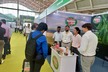
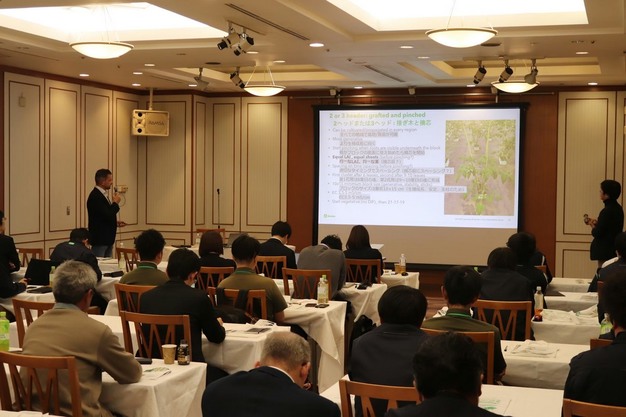
The first Asian Propagation Seminar (APS) took place on 19–20 November in Tokyo, bringing together leading propagation experts, equipment providers and hundreds of growers and propagators from across the Asia-Pacific region. The central takeaway: investments in modern propagation — from advanced substrates to automation and LEDs — deliver clear, measurable returns.
 © Grodan
Two days focused on business value
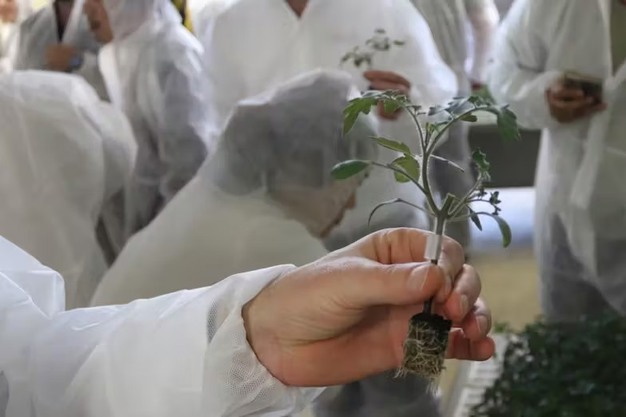
Organised by Grodan together with ZEN-NOH Green Resources Corporation (ZGR) and Agri CnS, the event combined technical presentations, business cases and a field visit demonstrating how integrated propagation solutions drive financial performance. Demonstrations at Jardin and expert contributions from Grodan, Provenance Propagation, Rijk Zwaan, Agro Solutions Asia, Flier Systems, Signify and TTA-ISO showed how new technologies translate into labour savings, yield gains and more predictable production.
 © Grodan
A region with unique propagation needs
A key objective of APS was to gather professional propagators from Japan, Korea and neighbouring countries to address the region's specific propagation challenges. Much of Asia is still in a developing stage when it comes to high-tech propagation. Many growers continue to propagate their own plants in a separate part of their greenhouse, while only a limited number of advanced propagators have adopted modern, standardised propagation methods.
This regional context makes knowledge transfer particularly complex: local growing conditions, crop choices, labour models, language and culture differ significantly from Western markets. As several speakers emphasized, simply copying established international practices is not the way forward — adaptation to the local situation is essential. For this reason, the programme was carefully tailored to ensure the knowledge shared was relevant and actionable for Asian growers and propagators.
Another recurring theme was the investment-timing dilemma: should growers first demand higher-quality plants, or should propagators invest first and demonstrate the added value? Participants agreed that propagators must be able to clearly communicate the extra value they can create — and that growers, propagators and technology providers all play a role in enabling progress. By the end of APS, there was a shared understanding that elevating the propagation sector in Asia will require coordinated investment and collaboration across the value chain.
Key ROI drivers highlighted at APS
Grafting & automation: High-speed grafters can process up to 4,000 plants/hour (1,000 on single-head units), reducing labour needs by 75–100%. International case studies presented at APS show typical ROI of 2.5–3.7 years, depending on labour costs and throughput. Trials in processing tomatoes showed yield increases of up to 25% while using 50% fewer plants.
High-quality seedlings & precision propagation: Compact, uniform, well-rooted young plants support earlier flowering, more predictable crop cycles and extended harvest periods. Growers reported 4–5 additional production weeks in some cases. Better resilience and fewer losses improve revenue per m².
Stone-wool substrates & rootzone control: Stable, inert stone wool supports stronger root systems, higher plant uniformity and more targeted crop steering. Moving to vermiculite-free systems improves water management, reduces clogging risks, supports machine longevity and enhances plant stability — further strengthening ROI.
Advanced LED solutions: Multi-channel LED systems allow growers to steer plant morphology (more leaf area in winter, more compact plants in summer), increase uniformity and shorten production cycles. Full-LED adoption is increasing as growers seek tighter scheduling and earlier market entry.
Uniform systems & automation: Automated sowing lines, block handling and integrated propagation setups reduce variability, cut unit labour costs and improve forecasting — directly contributing to higher margins.
 © Grodan
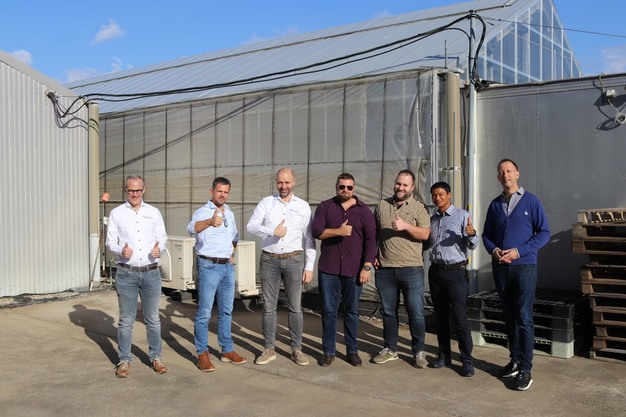
"Our aim is to grow the hydroponic market and build stronger relationships between companies and propagators. This seminar created a valuable bridge for customer-to-customer communication, with very strong engagement throughout. We plan to expand APS in the coming years so growers across the region can benefit from improved propagation techniques," said Matsutani Kazuki of ZGR, a co-organizer of the APS.
For more information:
Grodan
P.O. Box 1160
Industrieweg 15
6040 KD Roermond
The Netherlands
www.grodan.com