Climate change is no longer a future projection for greenhouse horticulture, but a daily reality that is already shaping costs, yields and agronomic decision-making. Sustained increases in average temperatures, a growing frequency of extreme heat and cold events, and the progressively limited availability of resources such as water and energy are forcing the sector to rethink its production models. It is within this context that LIFE-ACCLIMATE was born, a European project aimed at equipping growers with advanced technological tools to boost productivity, reduce resource use and mitigate pest pressure, all within a sustainable production framework.
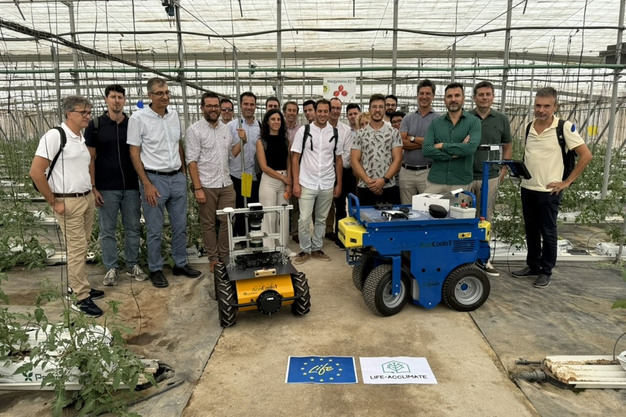
"LIFE-ACCLIMATE starts from a very clear premise: growers need precise, site-specific information in order to make the right decisions inside the greenhouse," explains Óscar Rey, from the Innovalia Association and technical manager of the project. The initiative, funded by the European Union's LIFE program, officially kicked off in September 2024 and will run until summer 2028, for a total duration of 47 months. The consortium is made up of 11 Spanish partners and has a total budget of close to €4.5 million, around €2.7 million of which comes from EU funding.
 © LIFE-ACCLIMATE
The project is led by the University of Almería, with Innovalia acting as technical coordinator and demonstrator manager. As Rey points out, "From Innovalia's perspective, when the project was first designed, it was clear that involving the University of Almería was essential, given its research expertise in horticulture and the strategic relevance of the region within the sector targeted by the project."
The role of robotics and artificial intelligence in LIFE-ACCLIMATE
One of LIFE-ACCLIMATE's core pillars is to move away from traditional approaches to climate control and fertigation management in greenhouses. "In many cases, growers are still working with a very limited amount of data, which prevents them from fully understanding what is happening inside the greenhouse. The lack of detailed data and information makes it impossible to generate solid recommendations on how to optimise climate control, irrigation, and pest and disease management," Rey explains. "Conditions inside a greenhouse are not homogeneous, and this information gap leads to inefficient use of key resources."
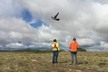
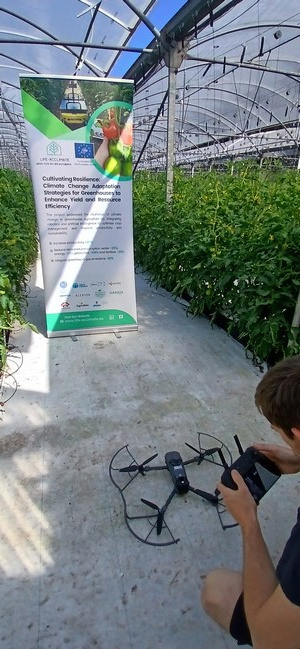
The project's approach focuses on capturing high spatial resolution data through ground-based and aerial robots equipped with sensors and cameras. These devices move throughout the greenhouse, generating data and images that are then processed using artificial intelligence models. This makes it possible to identify areas with productivity deficiencies, pinpoint zones where pest and disease management efforts should be concentrated, and estimate water, energy and fertiliser consumption linked to climate control and fertigation systems.
"It's not just about detecting a problem, but about understanding why it happens and acting precisely," Rey adds. Instead of blanket treatments and greenhouse-wide interventions, LIFE-ACCLIMATE promotes targeted, site-specific actions tailored to the actual needs of each area within the greenhouse. In pest and disease management in particular, the project prioritises the use of biopesticides and beneficial organisms over conventional chemical products.
A decision support system with economic and environmental impact
All the information generated is integrated into a decision support system (DSS) that provides growers with a comprehensive overview of what is happening in their operation. The system does not only analyse crop status, but also links each decision to its impact on resource consumption, climate and irrigation control, productivity levels, and pest and disease pressure.
 © LIFE-ACCLIMATE
"Sustainability only works if it is compatible with profitability," Rey stresses. "The DSS allows growers to understand what each action implies in terms of costs and environmental impact, and to find the optimal balance between productivity and efficient resource use."
This approach is particularly relevant in a scenario of rising temperatures, especially during key production periods. According to the analyses used within the project, over the past decade maximum summer temperatures in some areas of southeastern Spain have increased by an average of between 0.5 and 0.7 °C per decade. "These figures may seem modest, but inside a greenhouse the effect is amplified, with direct consequences on crop stress and pest proliferation," Rey warns.
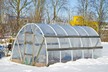
At the same time, while greenhouse heating has traditionally been common practice in northern Spain, it is becoming an increasingly complex challenge due to high energy costs and progressively warmer summers. "In the north, heating can become economically unsustainable, and climate change is also leading to hotter summers that favour pests and diseases, increase water and nutrient requirements, and directly affect production profitability," says the LIFE-ACCLIMATE project manager.
In southern regions, the main challenge is cooling. "In the future, cooling systems will be unavoidable in areas such as Almería, but they cannot operate continuously," Rey cautions. "The energy cost would be prohibitive. The key lies in knowing when and how to activate them efficiently."
LIFE-ACCLIMATE also addresses this issue, offering tools to optimize heating in colder climates and cooling in warmer ones, always with the goal of maintaining optimal crop conditions without undermining the economic viability of the farm.
Different climatic contexts, shared challenges
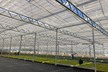
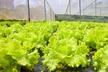
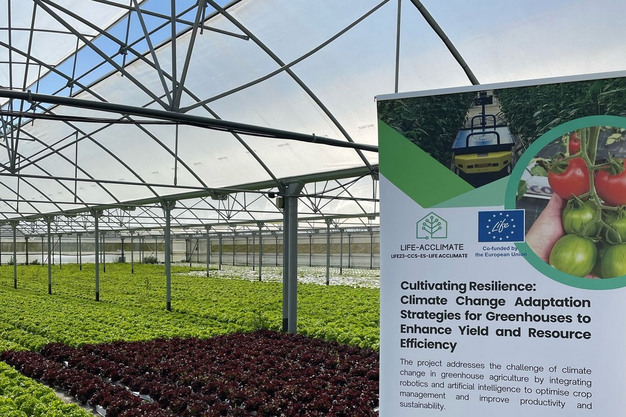
To validate its solutions under real-world conditions, LIFE-ACCLIMATE relies on 3 greenhouses where demonstration activities will take place. Two are located in the province of Almería: one at the University of Almería facilities and another at the Las Palmerillas experimental farm, operated by the Cajamar Foundation in El Ejido. The third is located in Munguía, in the province of Vizcaya, and is managed by the agricultural cooperative Garaia.
"Testing the technology under very different climatic conditions was essential," Rey explains. "Southern Spain is one of the regions most affected by rising temperatures and water scarcity, but the north is also undergoing significant changes."
"During the first year of the project, efforts have focused on adapting the robots and artificial intelligence models to the specific conditions of the demonstration sites. Using drones and ground robots in enclosed spaces such as greenhouses, with narrow corridors and multiple obstacles, represents a major technological challenge. A great deal of work has gone into this preparatory phase," Rey says. "From 2026 onwards, field demonstrations will begin, along with data generation that will allow algorithms to be trained and the first operational recommendations to be delivered to growers."
 © LIFE-ACCLIMATE
Looking to the future of greenhouse horticulture
Beyond its technical outcomes, LIFE-ACCLIMATE also raises broader questions about the future of greenhouse horticulture in Europe. "If climate change continues to progress, it is possible that some production hubs will shift towards regions with more temperate climates," Rey notes. "In that sense, trials in northern Spain will help assess the potential of new greenhouse production areas, benefiting from less extreme temperatures and favourable light availability."
"What we are trying to do is anticipate what's coming," Rey concludes, "and provide growers with tools to adapt before it's too late. Because producing more with fewer resources is no longer an option — it's a necessity."
 For more information:
LIFE-ACCLIMATE
[email protected]
[email protected]
www.life-acclimate.eu