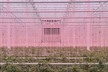
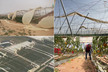
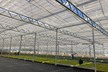
Hydroponic Systems works with growers who aim to improve greenhouse microclimates without reducing light or productivity. The company notes that managing radiation, temperature, and heat stress is one of the main challenges in warm regions, particularly for sensitive crops such as strawberries, tomatoes, and peppers. In this context, heat-diffusing mesh has become "one of the most effective solutions for balancing light and reducing heat load inside the greenhouse."
Heat-diffusing mesh works by partially blocking infrared radiation while allowing useful diffuse light to pass through. This combination reduces internal temperatures, limits heat stress, and maintains photosynthetic activity. According to Hydroponic Systems, this approach helps "improve fruit quality, reduce plant stress, and stabilise growing conditions," especially during periods of high radiation.
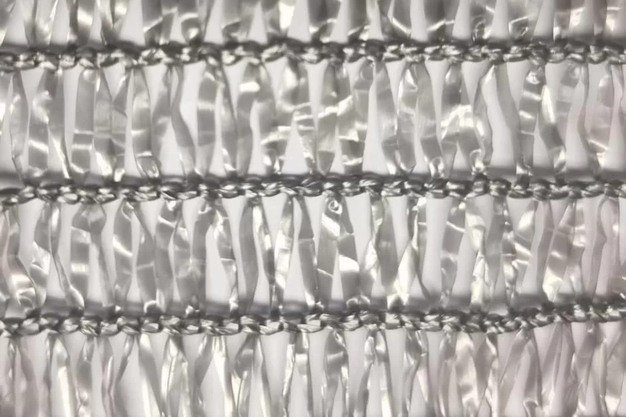
The mesh functions through light diffusion and thermal reflection. By dispersing light, it avoids hot spots and distributes photosynthetically active radiation more evenly across the plant canopy, allowing middle and lower leaves to contribute to photosynthesis. At the same time, aluminium particles embedded in the polymer reflect part of the infrared radiation, which is a major driver of heat buildup. The result is a more stable greenhouse environment with fewer temperature peaks.
Hydroponic Systems highlights Agrifresh aluminium thermodiffuser mesh as a solution that provides measurable results. The patented fabric integrates aluminium into the polymer structure, creating an effective thermal barrier without compromising light quality. Based on field experience, the company reports that the system performs best in professional greenhouses of around half a hectare or more, where uniform temperature and radiation directly affect yield and quality.
In practice, reduced infrared radiation leads to lower heat accumulation, fewer temperature spikes during critical growth stages, and a more consistent microclimate throughout the day. At the same time, increased diffuse light improves PAR distribution, avoids harsh shadows, and supports stable photosynthesis even under intense external radiation. Together, these effects reduce heat stress and contribute to "more uniform fruit, fewer deformities, and better colour and firmness."
 © Hydroponic Systems
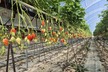
Strawberries show particularly clear responses to heat-diffusing mesh due to their sensitivity to heat and direct radiation. Hydroponic Systems reports improvements in fruit uniformity, firmness, colouring, and overall crop stability, along with reduced sunburn and less premature flower or fruit drop. Similar trends have been observed in tomatoes, peppers, cucumbers, and other horticultural crops.
The company emphasises that correct installation is essential for performance. Installation height, proper tension, and correct orientation affect light diffusion, durability, and airflow. The mesh must also be integrated carefully with side and roof ventilation, as it "does not replace ventilation but works alongside it. Poor placement can restrict air movement and reduce its effectiveness."
Based on multiple installations across different regions, Hydroponic Systems concludes that aluminium heat-diffusing screens act as a reliable thermal regulator that preserves photosynthesis. While results vary by climate, structure, and crop, consistent outcomes include reduced temperature fluctuations, improved light uniformity, lower heat stress, and more stable yields. The company advises that selecting the right mesh should be based on climate, crop needs, greenhouse design, and material quality rather than shade percentage alone.
For more information:
Hydroponic Systems
Email: [email protected]
https://hydroponicsystems.eu/