Sign up for our daily Newsletter and stay up to date with all the latest news!

Subscribe I am already a subscriber

You are using software which is blocking our advertisements (adblocker).

As we provide the news for free, we are relying on revenues from our banners. So please disable your adblocker and reload the page to continue using this site.
Thanks!

Click here for a guide on disabling your adblocker.

Sign up for our daily Newsletter and stay up to date with all the latest news!

Subscribe I am already a subscriber

Another year of big advancements in greenhouse automation

Throughout the past year, automation continued to play an expanding role across the greenhouse sector, with developments spanning robotics, climate control, data platforms, and integrated production systems. From large-scale controlled environment agriculture projects to tools designed for smaller and mid-sized growers, these stories reflect how technology providers, researchers, and growers are applying automation to address labor challenges, improve precision, and support more efficient and resilient greenhouse operations.
© Foray

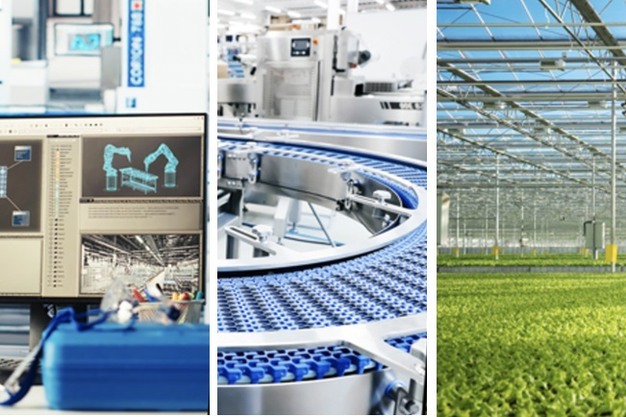
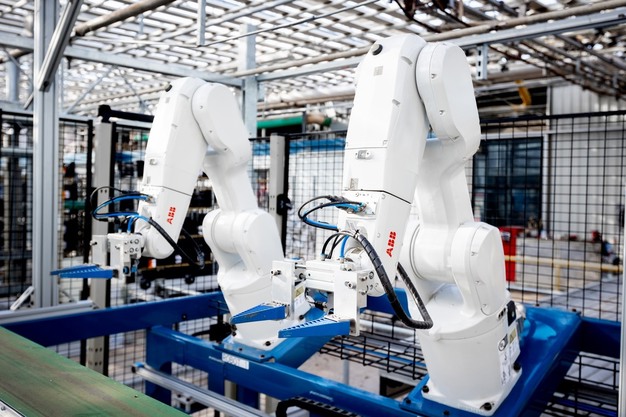
Viscon Group NA, known for post-harvest automation within the Controlled Environment Agriculture (CEA) sector, announces the launch of its new company, Foray Enterprises Inc. The newly launched company focuses on providing integrated solutions for growing systems, energy management, and post-harvest automation, with a particular emphasis on large-scale sustainable CEA projects. The new venture builds upon Viscon Group NA's experience in design, engineering, consultation, system integration, implementation, and localized after-sales service.

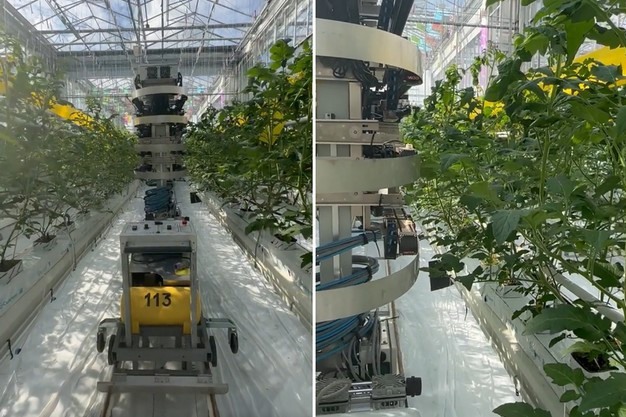
© Bold Robotics

"Every greenhouse is different — and that's exactly how we approach every project," says Bill VandenOever of Bold Robotics. "There's no one-size-fits-all in this space. Crop type, container sizes, packaging, space constraints — we look at everything."

"We reuse existing technologies wherever possible," he adds. "So while it might look like a custom solution, often it's an adaptation of proven systems we've already deployed. That's how we make automation more accessible to smaller farms too."

© Argus Controls

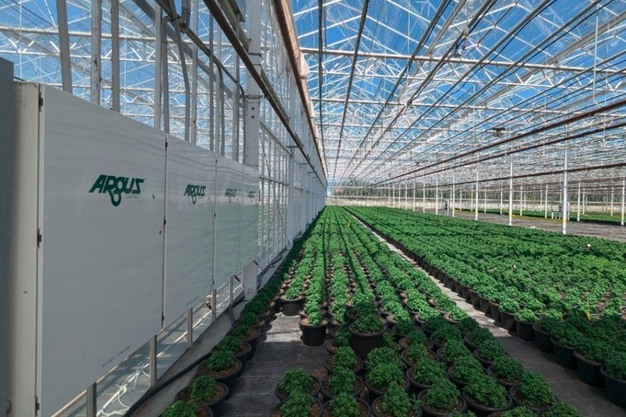
"Axia is more than a control system—it's a platform for innovation," said Kevin Meier, VP and General Manager at Argus. "We've built Axia with the user in mind - from the ground up. Axia has all the power of Titan and advanced functionality to empower growers and researchers alike with the flexibility, precision, and simplicity they need to control their growing environment like never before and optimize their climate across any scale."

© Delphy Improvement Centre

Tomato plants in a greenhouse in Bleiswijk are currently being pollinated by a robot. The robot, called Polly+, is developed by Arugga AI Farming and has been on trial at the Delphy Improvement Centre for about three weeks. Polly+ pollinates the tomato flowers using advanced vision technology combined with gentle air pulses.

© Thijmen Tiersma | HortiDaily.com

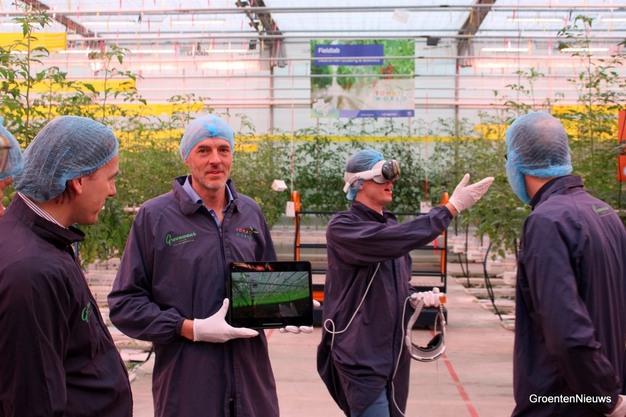
It was quite a sight this Wednesday inside the greenhouse at Tomatoworld: people wearing special headsets are "clicking" into thin air, their excitement growing by the minute. Around them, others without the headsets watch curiously as the participants gesture and move. While the headset wearers see layers of data floating around them, everyone else sees just a regular greenhouse filled with tomatoes.

© Fravebot

The Czech company Fravebot is applying knowledge and technology from the automotive industry to automate harvest forecasting and pest detection in horticulture. For the company, 2025 marks the year to introduce its technology to the wider market—through trade shows, field demonstrations, and practical trials. On Thursday, October 2, founders Matěj Sklenář and Vratislav Beneš had the opportunity to present their company and showcase a live demo during the opening of Hortivec.

© Fieldwork Robotics

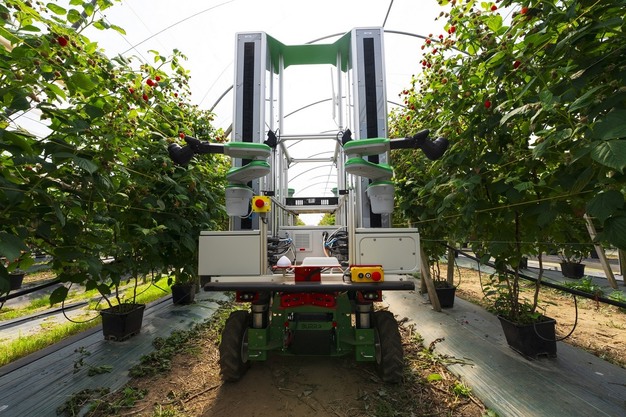
Fieldwork Robotics has partnered with the Research Centre for Sustainability – a research consortium constituted by Lusomorango, Portugal's largest berry producers' organization, INIAV, I.P. (Portugal's National Institute for Agricultural and Veterinary Research), and the companies Driscoll's and Maravilha Farms – for a research and development programme.

© Eelkje Pulley | HortiDaily.com
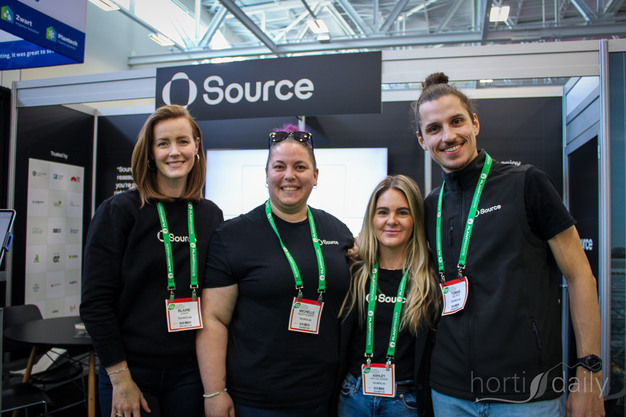
As a grower, Michelle Montgomery experienced first-hand the challenges of handling endless Excel files, manual data entry, and the mistakes that come with it. Now, she helps growers implement Source.ag's AI-driven solutions as an Artificial Intelligence Solutions Specialist for North America. "It's about being prepared instead of reacting afterward," she says.

© Hoogendoorn Growth Management

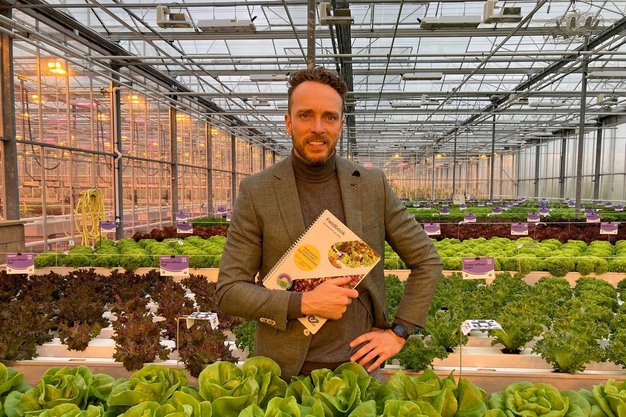
With IIVO from Hoogendoorn, Limgroup can control every stage of cultivation individually. "The IIVO gives us the flexibility to provide each stage with its own cultivation control," says Cas Weijers, Crop Specialist Strawberry at Limgroup. "Furthermore, the system can scale up; this flexibility also gives us more confidence in the growth of our company."

© Viemose DGS

CEO of Viemose DGS, Floris Berghout, believes that greenhouses owners should strive to make jobs in horticulture more attractive to help sort out the problem of labor shortage.

"No one wakes up excited to spend eight hours doing the same manual task repeatedly. Machines should do the boring stuff. People should be operating, maintaining and innovating. That's how you make horticulture an attractive career for the next generation," says Berghout.

Related Articles → See More