Kazakhstan's greenhouse industry is entering a new phase after a sharp downturn that followed rapid growth 7–10 years ago. According to agribusiness entrepreneur and MP Bolatbek Aliyev, much of the earlier state support failed to produce sustainable results, while competition from Turkmenistan has become a decisive challenge for domestic producers.
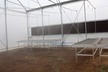
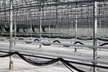
Most industrial greenhouses built in southern Kazakhstan, particularly in the Turkestan Region and Shymkent, have either shut down or are operating at partial capacity. Despite investment subsidies covering 25–40% of capital costs and access to concessional loans, many projects proved unviable. High production costs, limited scale, and open import competition led to the conservation of hundreds of hectares of greenhouse facilities.
Aliyev identifies several key reasons for the collapse of the previous wave: expensive natural gas, coal priced higher in southern regions than in coal-producing areas, high electricity tariffs, and relatively small greenhouse sizes that did not allow economies of scale. As a result, production costs exceeded market prices.
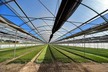
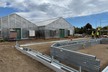
Today, a new generation of greenhouse projects is being launched, built on a much larger scale—50, 50, 100, 200 hectares, or more—and using modern technologies. However, Aliyev questions whether these projects can survive under current market conditions.
The main competitive pressure comes from Turkmenistan. According to official data from the Union of Industrialists and Entrepreneurs of Turkmenistan, the country currently operates around 530 hectares of greenhouses, with another 1,792 hectares under construction across 188 projects. Total greenhouse capacity is expected to exceed 2,300 hectares.
Turkmenistan already dominates tomato imports into Kazakhstan. In 2023, 70% of imported tomatoes came from Turkmen producers. The country exports about 149,000 tons of greenhouse tomatoes annually, with 56% going to Russia and 28% to Kazakhstan. Turkmen tomatoes also compete directly with Kazakh produce on the Russian market, which is a key export destination for new Kazakh greenhouses.
Turkmen producers benefit from significantly lower costs. Diesel fuel prices are roughly ten times lower than in Kazakhstan, reducing logistics expenses. Natural gas for greenhouses is heavily subsidized, electricity is produced from low-cost gas, and labor is cheaper. This allows Turkmen producers to maintain very low production costs and pursue aggressive export strategies.
Kazakhstan's main advantage is access to the Eurasian Economic Union market, including tariff-free exports to Russia. However, Aliyev notes that this advantage is outweighed by higher energy, labor, and logistics costs. Even with transportation, Turkmen tomatoes often reach the market cheaper than Kazakh tomatoes, leaving the greenhouse.
Aliyev warns that without changes to tariff policy, energy pricing, logistics costs, and market protection mechanisms, Kazakhstan risks repeating the failure of the previous greenhouse cycle.
Source: apk-news.kz