Sign up for our daily Newsletter and stay up to date with all the latest news!

Subscribe I am already a subscriber

You are using software which is blocking our advertisements (adblocker).

As we provide the news for free, we are relying on revenues from our banners. So please disable your adblocker and reload the page to continue using this site.
Thanks!

Click here for a guide on disabling your adblocker.

Sign up for our daily Newsletter and stay up to date with all the latest news!

Subscribe I am already a subscriber

From incentives to innovation in the energy market this year

Over the past year, energy savings featured prominently in developments across the greenhouse and horticulture sectors. Energy companies expanded incentive programs to encourage efficiency upgrades and manage grid demand, while growers and technology providers advanced projects involving LED lighting, renewable electricity, geothermal heat, and alternative energy systems.

Research initiatives, public–private partnerships, and new infrastructure investments focused on reducing energy use, improving system performance, and increasing flexibility in heat and power supply. Collectively, these headlines point to a continued emphasis on efficiency as a practical response to energy costs, grid limitations, and long-term sustainability goals.
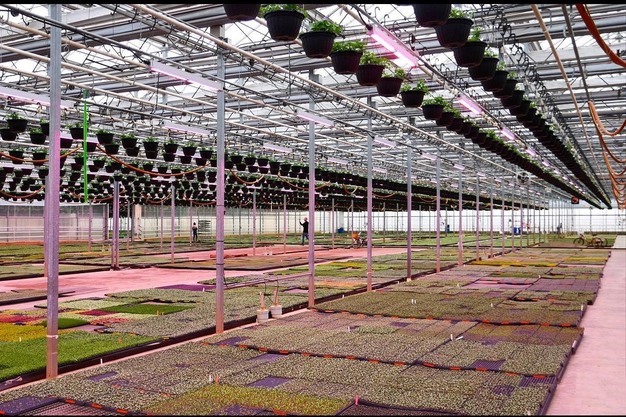
Energy companies incentivize energy-efficient upgrades in order to manage demand and reduce the risk of strain on the power grid. "Encouraging CEA operations to adopt energy-efficient equipment helps reduce peak demand, which is cheaper than upgrading grid infrastructure," explains Ron. "These rebates benefit growers and align with energy providers' goals to reduce overall grid demand."

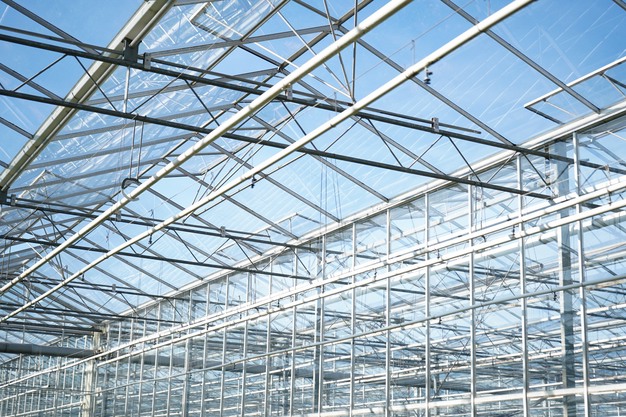
A partnership between BC Hydro and Windset Farms has enabled the local vegetable producer to expand its Delta facility, making it Western North America's largest LED-lit greenhouse powered by renewable electricity from BC Hydro.

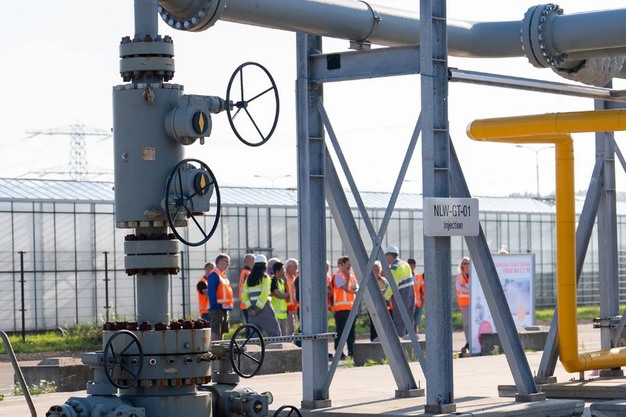
"We see growing support for geothermal energy. This is driven in part by the ever-increasing need for affordable, sustainable collective heat, the desire to reduce dependence on foreign countries, and the need to combat grid congestion. But this strong support is not yet translating sufficiently into rapid growth. More new geothermal production facilities must be added soon to harness the potential for affordable, sustainable heat from domestic sources."

"As a result, there is less friction and higher efficiency, which saves you around 18% to 27% energy when applied to existing systems that are a few years old, throughout the life of the system. But we even see efficiency improvements of 6% possible on brand new equipment. The great thing is that it is a one-off treatment. In addition, it lowers peak load, and the compressor wears out less quickly, extending its lifetime and reducing maintenance costs. An additional advantage is that it has no impact whatsoever on the SOP (standard operating procedures)."

The Program Board of Knowledge in your Greenhouse and the Ministry of LVVN have agreed on 12 new projects within the Greenhouse as a Source of Energy research program. Some projects have already started. Below are the approved projects.

© Grodan/Philips Horticulture

Grodan and Philips Horticulture LED Solutions are exploring opportunities for growers to reduce energy costs through an efficient approach to LED lighting and effective root zone management, combined with climate control and active dehumidification.

© Kaz Vermeer

A group of Dutch companies has joined forces to develop a comprehensive alternative to gas-fired CHP (Combined Heat and Power), ensuring that affordable electricity, heat, and CO₂ remain available. Voltiris and TNO are taking the lead on this initiative. With the help of an MOOI subsidy, the companies will collaborate over the next three years. The goal? To shape the future energy supply for greenhouse horticulture.

© BeeBeeOne

BeeBeeOne is currently not a well-known name in the greenhouse horticulture sector, but the Dutch company, founded in 2019, is eager to change that quickly. This year, they expect to start a first pilot project at a greenhouse horticulture company. It involves an in-house developed modular energy concept that allows growers to store electricity, trade electricity, convert electricity into heat, and store cold.

© Rivenhall Greenhouse

With a 100-acre low-carbon greenhouse, supplied with energy and CO₂ by a nearby waste management facility, Rivenhall Greenhouse Limited aims to reduce the UK's reliance on Mediterranean imports, which they see as increasingly at risk due to climate change. "If the recent Valencian storm had occurred only 200 kilometres further south, the implications for production regions would have been severe, resulting in food inflation throughout Europe," says Project Director Ed Moorhouse. Pending the due planning process, financing, and construction, the new Essex greenhouse site could be operational by 2027, marking a shift away from conventional hydrocarbon-based models.

© BioTherm / RBI Boilers

This advanced boiler line offers capacities up to 10 million BTUs (2930 kWh), making it ideal for greenhouse operations of all sizes. Each system is designed with a cascade strategy in mind, where multiple boilers share the energy load to ensure operational reliability, energy efficiency, and a fail-soft/safe backup in case of unit downtime.

Related Articles → See More