Agrivoltaics (Agri-PV) is increasingly assessed as a practical option for managing light quality while generating on-site energy. Semi-transparent photovoltaic glass offers a way to combine crop production with electricity generation without sacrificing greenhouse performance.
Brite Solar is one of the companies supporting this shift. Based in Patras, Greece, it operates the world's only dedicated nanotechnology production plant for Agri-PV glass and recently completed an €11 million investment to establish its manufacturing lines. Its installations are now present in more than 14 countries, including the Netherlands.
"Growers are turning to Agri-PV for yield stability, energy independence, and microclimate control," says Kiriaki Nerantzaki of Brite Solar. "Under European conditions, this combination is increasingly valuable."
 © Brite Solar
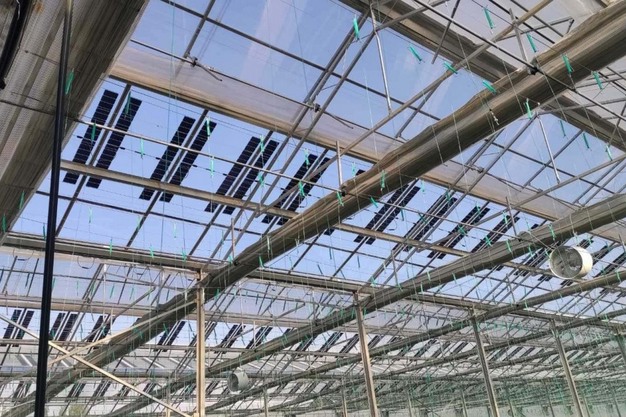
A tomato greenhouse using semi-transparent solar glass
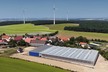
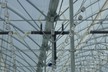
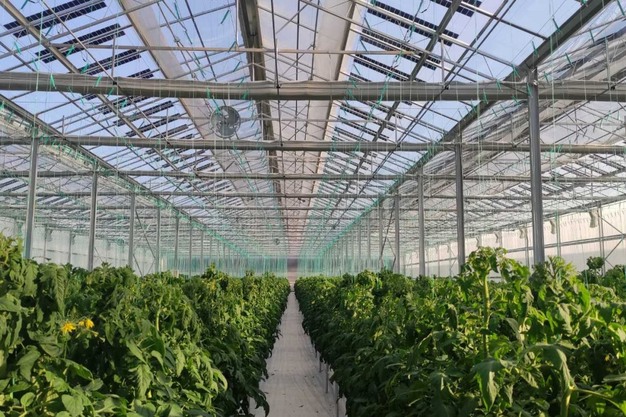
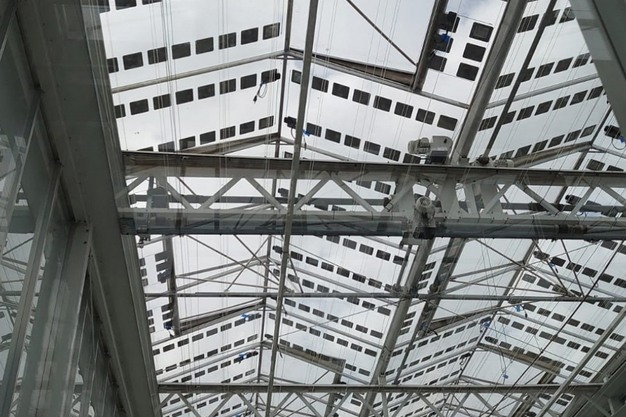
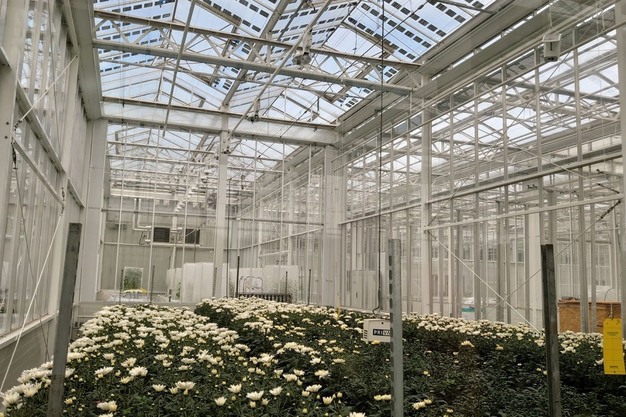
One example of Agri-PV moving into commercial practice is a new hydroponic tomato greenhouse integrating Brite Solar's semi-transparent modules directly into the roof. The facility feeds electricity into a net-metering scheme, offsetting high energy costs while maintaining the light quality required for production.
 © Brite Solar
"Our patented nano-coating absorbs ultraviolet light and re-emits it as red light, supporting photosynthesis. This technology ensures that plants receive biologically useful light even as the greenhouse produces power," she explains.
 © Brite Solar
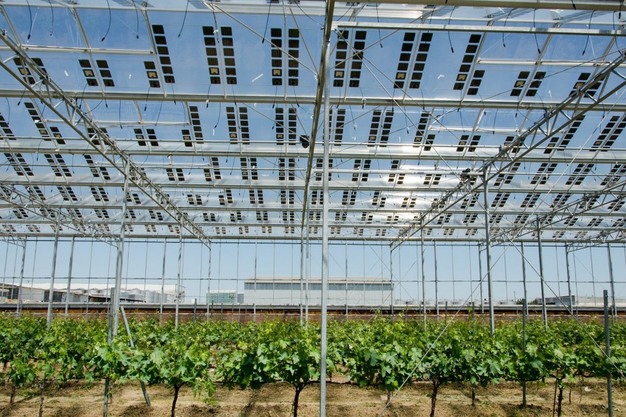
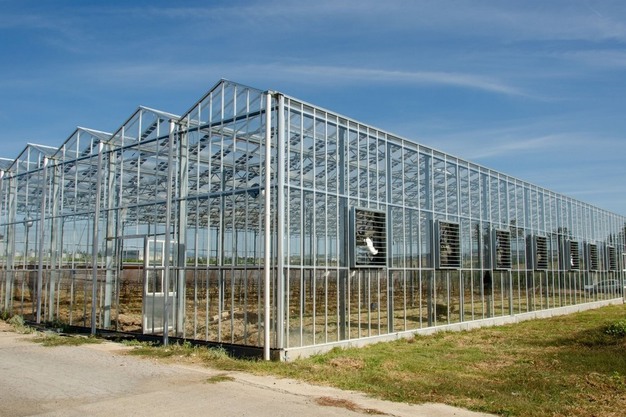
"In Greece, we collaborated with a winemaker on a vineyard greenhouse. The project investigates whether controlled-environment viticulture can mitigate heat stress and even support double annual harvests."
 © Brite Solar
She adds that climate stress is forcing growers to rethink traditional structures and the team is excited to see what is next.
The blueberry Agri-PV pilot in the Netherlands
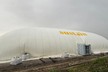
One of Europe's earliest installations is the Broekhuizen Blueberry Pilot in Limburg, developed in 2020 with grower Wouter Aerts.
He regularly lost up to 30% of his harvest to heat and hail. Instead of expanding plastic tunnels, he installed 50 semi-transparent Agri-PV modules elevated at 2.5 meters, providing approximately 40% light transmission, integrated rain gutters for irrigation, and sensor-based climate monitoring.
"The goal was not to guarantee increase yields outright but to reduce weather-related losses and maintain stable production," she adds. Many agrivoltaic projects and research studies on various crops and climates show that the solar canopy reduced heat peaks by up to 10°C, improved soil moisture retention, and reduced UV stress. Growers also reported notable reductions in disease pressure.
"In climates where radiation, hail, or heat threaten production, Agri-PV becomes less of an experiment and more of a risk-management strategy."
A Wageningen University meta-analysis (2024) supports these findings, showing that blueberries can benefit from up to 50% shading during high-radiation periods. The shading can improve yield stability and fruit quality.
 © Brite Solar
Nanotechnology-based solar glass
Brite Solar's Agri-PV panels differ from conventional PV technology by prioritizing plant physiology. Their nano-coating converts UV to red light, increases spectral efficiency for photosynthesis, and enhances crop protection. The modules are designed for 25+ years of durability and supply both diffuse light and renewable power.
 © Brite Solar
European policy is rapidly aligning with Agri-PV deployment. In July 2025, the European Commission adopted Recommendation C(2025) 4024, urging Member States to define agrisolar in their national regulations, establish clear and accelerated permitting procedures, and amend legislation to enable deployment. Complementing this, the Commission Notice on innovative technologies highlights that agrisolar remains underused due to regulatory barriers, calling for clearer rules, faster approval processes, and tailored financial frameworks.
Kiriaki adds that Agri-PV also aligns with EU Green Deal goals by reducing carbon footprints, improving water-use efficiency, and enabling biodiversity benefits such as improved soil activity and habitat continuity.
"Policy is finally moving from theory to implementation. This is critical for making Agri-PV accessible to small and medium-sized growers."
Dynamic solar glass and new applications
Looking ahead, Brite Solar is preparing its next major development: dynamic solar glass for architectural use. To accelerate this phase, the company is seeking €15 million from the European Innovation Council.
The effort is led by founder and CEO Dr. Nikos Kanopoulos, who holds a Ph.D. in Electrical and Computer Engineering from Duke University.
Regulation sources:
https://energy.ec.europa.eu/document/download/02f8d3f4-289e-4c6a-8de4-ccff382d306f_en?filename=C_2025_4011_1_EN_annexe_acte_autonome_cp_part1_v3.pdf
https://commission.europa.eu/document/download/46bd7ddc-02e8-45e8-856c-986a6ecefa00_en?filename=C_2025_4024_1_EN_ACT_part1_v7.pdf)
For more information:
Brite Solar Technologies
[email protected]
www.britesolar.com