Daccache Agriculture has established itself as a key greenhouse manufacturer in the Middle East, operating production facilities in Lebanon, Saudi Arabia, and Cyprus. Founded in 1994 by Chaouki Daccache, the company emerged from a long family history in farming. As Executive Manager, Chawki Daccache notes, "My father was a farmer, and when the first greenhouse came to Lebanon, he immediately became interested in how protected agriculture could improve production in the region."
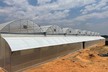
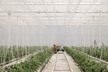
Today, the company manufactures steel-structure greenhouses, hydroponic growing systems, shade systems, and turnkey agricultural infrastructure designed for diverse climatic conditions across the GCC, Africa, and beyond. Its three operating entities include Daccache Agriculture (Lebanon), United Industrial Development (UID) (Saudi Arabia), and Green Fyllo Agritech (Cyprus).
 © Daccache Agriculture
Manufacturing capacity across three countries
Daccache's production model centers on full in-house manufacturing of greenhouse structures and components. "In Lebanon, we operate about 10,000 square meters of factory space, including two mills that convert steel coils into tubes," Chawki explains. Structural elements are then bent, punched, and manufactured according to project requirements, supported by five to eight accessory production lines dedicated exclusively to greenhouse components.
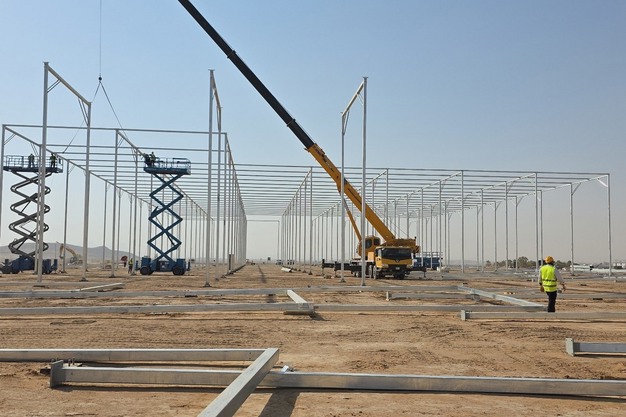
This manufacturing capacity enables the company to deliver large-scale projects. In the past year, Daccache completed approximately 300 hectares of greenhouse and shade structures across multiple sites, including 45–50 hectares in the United Arab Emirates, and 150 hectares in Saudi Arabia.
Designing for climatic variation
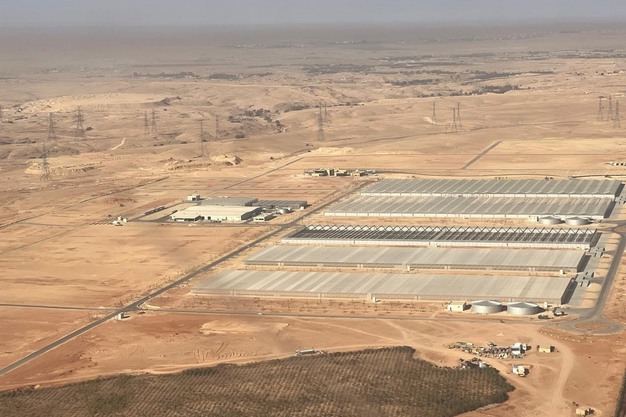
A defining characteristic of the company's approach is its emphasis on environmental assessment. Before designing a system, Daccache's teams collect and analyze soil samples, water samples, and local climate data to determine the most suitable structure for each project.
 © Daccache Agriculture
"We study the water source, the soil profile, and the crops the client intends to grow," he explains. "If the water requires treatment, we recommend appropriate systems. If the soil is unsuitable, we propose substrate-based or soil-free cultivation systems. The structure and climate-control design are based entirely on the conditions of the site."
This careful analysis is essential in regions where microclimates can vary significantly over short distances. "Conducting accurate sampling is one of our greatest challenges, because the design must fit the exact environment to ensure stable production."
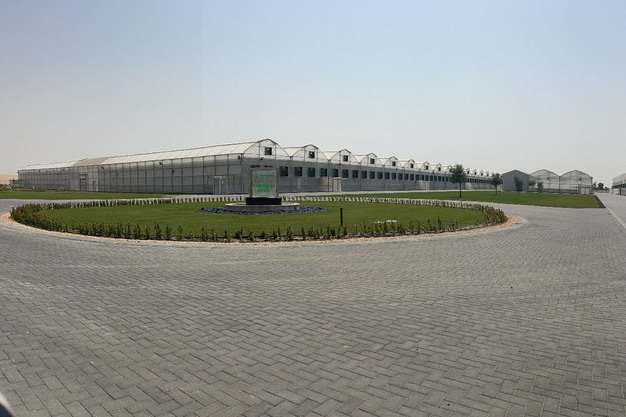
Each region receives its own engineered specification. "Our standard designs are built for wind loads of 120 km/h, while structures in Saudi Arabia are strengthened to about 160 km/h," he shares. Ventilation systems range from fixed roof openings (commonly used in parts of Africa) to forced-air ventilation and desert cooling pads in hotter regions.
 © Daccache Agriculture
Shade systems for harsh and arid environments
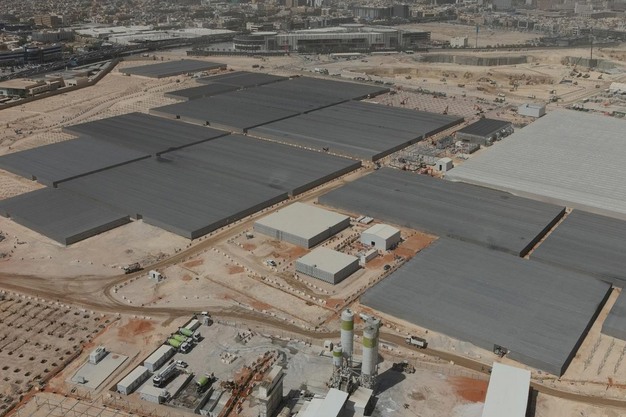
A major area of activity for the company is the development of shade structures tailored to extreme climatic conditions, particularly in Saudi Arabia. Current installations include the company's 11-meter shade house, optimized for tree nurseries, ornamentals, and hardening facilities.
"Shade systems reduce temperature and control light exposure, which is essential for crops grown in arid climates. Ornamental plants benefit significantly as they become more resilient and achieve more consistent quality under regulated shading."
Shading also contributes to water-use efficiency. By lowering plant and soil temperatures, evaporation is reduced, decreasing irrigation requirements which is an important factor in water-limited regions.
 © Daccache Agriculture
Resource efficiency and sustainability
The company incorporates recyclable materials and climate-control strategies aimed at lowering overall resource consumption. System designs prioritize airflow optimization, moderated light levels, and reduced cooling demand.
"Reducing water and energy requirements directly impacts operational costs while supporting better yield stability," Chawki notes.
Beyond greenhouse manufacturing, Daccache provides turn-key solutions and includes installation. This includes irrigation system design, electrical control panels, and operational management support. Teams consist of agricultural engineers, civil engineers, designers, irrigation specialists, electricians, and installation experts.
"We provide turnkey solutions, from the initial land study to the final control system," he explains. "If required, we send crop-specific experts to manage the facility for several months and train the local staff."
The group of companies supplies structures across the GCC, including Saudi Arabia, Kuwait, the UAE, and Oman, alongside projects in Africa, Latin America, Morocco, and other global markets. Installations have been completed in GCC, Africa, Australia, and parts of Europe.
For more information:
Daccache Agriculture
Chawki Daccache, Executive Manager
+961 3 668668
[email protected]
https://daccache.com