Sign up for our daily Newsletter and stay up to date with all the latest news!

Subscribe I am already a subscriber

You are using software which is blocking our advertisements (adblocker).

As we provide the news for free, we are relying on revenues from our banners. So please disable your adblocker and reload the page to continue using this site.
Thanks!

Click here for a guide on disabling your adblocker.

Sign up for our daily Newsletter and stay up to date with all the latest news!

Subscribe I am already a subscriber

Water makes the world go round

This year brought notable developments in irrigation and water management, marked by advances in precision technology, changing regulatory pressures, and expanding infrastructure.

AI-driven irrigation trials demonstrated how real-time plant feedback can refine watering strategies, while new systems such as IRRISENSE showed how substrate-weight monitoring can automate water use with greater accuracy. At the same time, large-scale projects—including the installation of Hydroponic Systems' Premium Tomato Irrigation System in Eastern Europe—highlighted continued investment in efficient production capacity.
Irrigation challenges in the greenhouse sector are unique due to the confined space and specialized water requirements. Jake Beam, Technical Sales Manager at Reinke, mentions how their technology is relevant to this industry, particularly concerning water efficiency. "It doesn't matter if we're talking about a greenhouse or a full pivot system; the more uniform we can make those water applications, the better off we are," he explains.

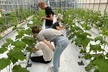
Students from the Cultivation & Technology course at Zone.college Zwolle successfully completed the 'Automatic Irrigation with AI' trial on 16 December 2024. In collaboration with Vivent Biosignals, they investigated how cucumber plants responded to automatic watering when the plants requested it themselves. This was done using Vivent biosensors that can record drought stress.

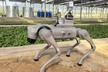
"As the crop modules move, our irrigation robot sprays a fine mist of water and nutrients directly onto the roots," the team explains. "This minimizes microbiological risks and reduces the need for extensive nozzle maintenance. In short, we have made aeroponics more affordable and stable, bringing high-tech agriculture within reach of more growers."

© Tinneke Hattingh | HortiDaily.com

Water regulations continue to shape how CEA operations function, often dictating availability and quality. "Water quality means quantity," Tim Reusch, Sales Manager at Dramm Corporation says, emphasizing the need to understand how water characteristics influence nutrient uptake and overall plant health. Gus Brennan, Head Grower at Greenswell Growers echoes this, sharing firsthand experience in dealing with root disease challenges at Greenswell Growers.

Soilless strawberry irrigation has a new input thanks to the "IRRISENSE" Control Point, a system that revolutionises water management by turning substrate weight into an automation variable. By monitoring water loss in real-time through evapotranspiration, the system activates irrigation only when it is needed, ensuring efficiency, sustainability, and optimal productivity.

© Hydroponic Systems International

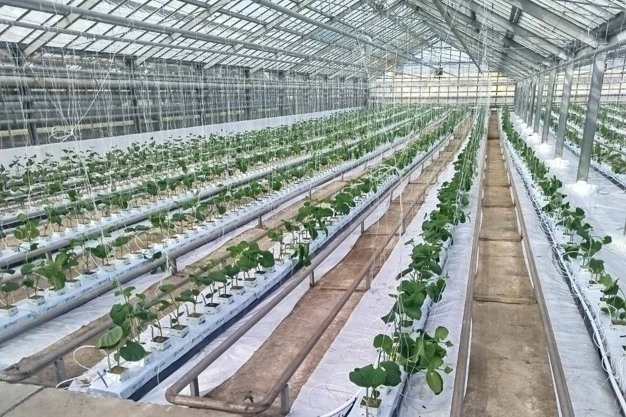
Hydroponic Systems has successfully completed the installation of 12,800 linear meters of its Premium Tomato Irrigation System in a greenhouse in Eastern Europe. This project, developed in collaboration with its official distributor in the region, has allowed the producer to begin production in record time, optimizing its resources and focusing on growing high-quality tomatoes for its home country.

© J. Huete Greenhouses

Reverse osmosis has become an essential technology for ensuring a supply of pure and stable water in greenhouses, where water quality directly impacts plant health and fertigation efficiency. J Huete Greenhouses shares the basic principles of reverse osmosis systems, their key benefits—such as reducing dissolved salts and preventing scale buildup in pipes and drippers—and the best design, installation, and maintenance practices to get the most out of them in your greenhouse.

© AZUD

In partnership with Técnicas Sanjorge, AZUD has implemented a highly efficient drip irrigation solution for hydroponic strawberry cultivation at Frutas Esther, a leading farm in Cartaya, in the Spanish province of Huelva. 95% of the acreage has been converted already, with plans to reach 100% in the 2025/26 season.

© Thijmen Tiersma | HortiDaily.com

Anyone who climbed the communal water basin in Berlikum, Friesland, in mid-May after several months without rain will see calmly rippling water. This year, there is still plenty of water available in the 45,000 m2 basin, which is a reassurance for the Dutch growers who see their individual rainwater basins visibly becoming emptier in mid-May.

© Grupo La Caña

Grupo La Caña has completed its participation in the iGUESSmed (Innovative Greenhouse Support System in the Mediterranean Region) European project, an initiative focused on improving the efficiency of water and nutrient use in greenhouse crops in the Mediterranean area.

Related Articles → See More