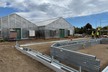
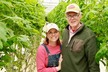
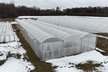
Québec-based greenhouse manufacturer Tessier is entering 2026 with a growing portfolio of greenhouse and high tunnel projects, supported by rising demand for local food production and climate-resilient infrastructure across eastern Canada.
Marie-Ève Arsenault of Tessier says that the focus remains on structures robust enough for snow, wind and freeze–thaw cycles. "For us, it's really important to have solid structures while keeping them as accessible as possible for growers."
Founded in 1979 and operating from Saint-Damase, the company designs, engineers and fabricates a full range of structures, from gutter-connected and standalone greenhouses to high tunnels, umbrella tunnels, caterpillar tunnels and micro-tunnels, adapted specifically to Québec and Canadian weather conditions.
Across Québec and Ontario, Tessier reports clear growth in protected cropping. Government strategies around food autonomy, modernization of older sites, and consumer appetite for local produce are driving investment, especially in season-extension structures.
 © Eelkje Pulley | HortiDaily.com
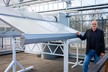
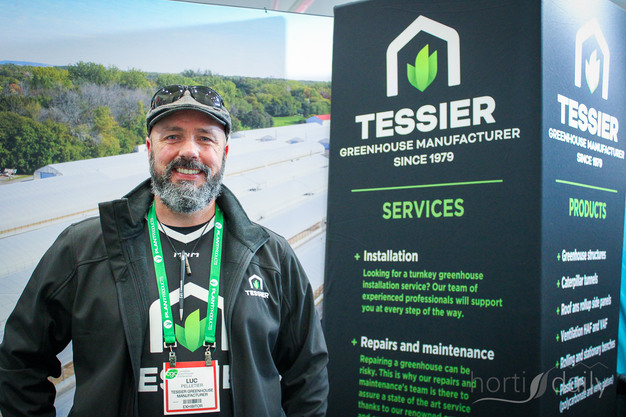
Luc Pelletier of Tessier at their booth at the 2025 Canadian Greenhouse Conference
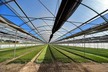
Marie-Ève notes that high tunnels have become one of the company's most requested products this year. "It's been a while that growers in Europe have been using high tunnels, but it's quite new for growers in Québec," she explains. The strongest momentum is in berries: strawberries, raspberries and blueberries, with growers also testing root vegetables and emerging specialty crops. "We see new crops beside the traditional cucumbers and tomatoes. There's a trend right now and even fig growers are experimenting in greenhouses."
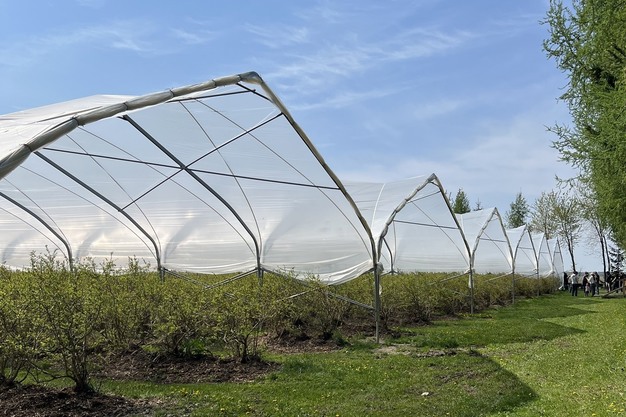 © Tessier
In small fruits, the economics are especially sensitive. Competition with imported berries is significant, and local producers are working to keep costs manageable. "The price of strawberries on the shelf is not really favorable for local growers," she says. "Of course, it can help if the structures are less expensive."
Still, she sees a positive shift in consumer behaviour supporting the trend. "There's definitely an awareness. We see more space in grocery stores for locally grown strawberries because consumers ask for it, and they are willing to pay a little extra."
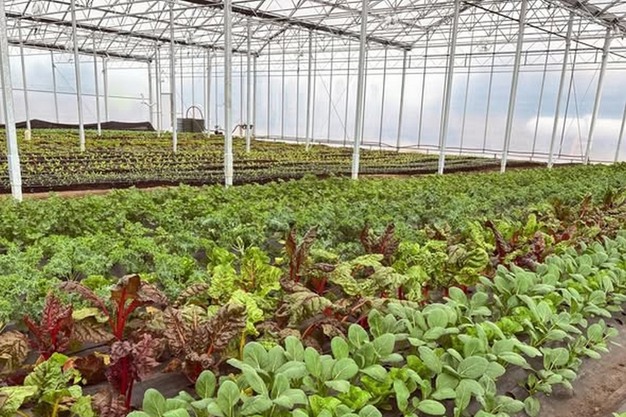 © Tessier
Technical challenges and co-design approaches
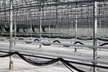
Tessier's rollout of a new high-tunnel line in 2025 brought both challenges and validation. Different farms required customized anchoring, ventilation and geometry to suit soil conditions and exposure. "The challenge is adapting the structure, but at a price that is accessible," she explains. The company responded by intensifying field visits, co-designing layouts with growers, and offering phased implementation so farms could scale gradually.
The outcome strengthened confidence in the system. Tessier saw significant improvements in labour efficiency for workers harvesting under tunnels. "It's really easier for the workers because they can stand up instead of being directly in the field. Some growers saw it more than double, almost triple the amount they could harvest in a day."
Several 2025 projects set the stage for a strong year ahead. Tessier completed the integration of Techni-Serre, reinforcing its offer in gutter-connected structures and expanding its premium polyethylene product line. The company also deployed ambassador projects in berries and large-scale vegetables as part of the high-tunnel program, validating yield and earliness benefits.
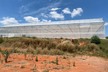
In Québec City, the Ferme Décembre winter-harvest complex features Tessier gutter-connected structures and serves as a local model for urban agriculture. Tessier is also engaged in institutional and research partnerships with Université Laval, Sherbrooke University and Solar Energy Québec, including trials integrating solar energy and the conception of a greenhouse made from recycled materials.
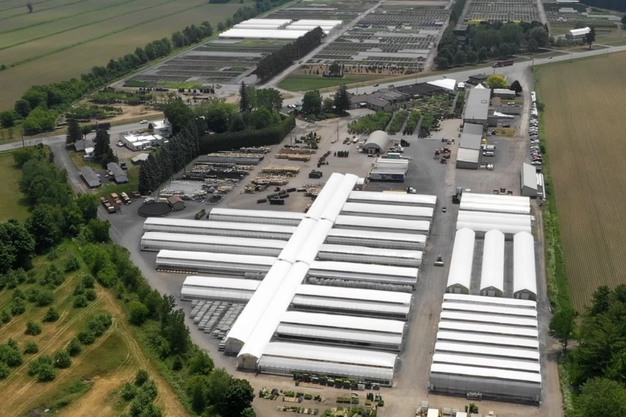 © Tessier
Preparing for 2026: Expansion and new markets
The company is targeting approximately 35–40% growth in 2026, with a structured expansion in Ontario supported by an on-the-ground team. Tessier will scale up its commercial offensive in high tunnels and launch its new residential greenhouse line supported by an e-commerce platform and consumer-facing partnerships.
"While we manufactures our structural systems in-house, we integrate partner technologies for climate tools, coverings, energy systems and distribution."
For growers, the company also emphasizes practical, field-tested techniques that improve results: ventilation planning, double films, insulated walls, water management, crop layout and strong knowledge networks.
Marie-Ève says the company's role is to align infrastructure with agronomic intent. "We match the right structure and layout to the grower's strategy and support them as they evolve, from first tunnels to more advanced, four-season systems."
For more information:
Tessier
Marie-Eve Arsenault
[email protected]
www.cultiveztessier.com