Sign up for our daily Newsletter and stay up to date with all the latest news!

Subscribe I am already a subscriber

You are using software which is blocking our advertisements (adblocker).

As we provide the news for free, we are relying on revenues from our banners. So please disable your adblocker and reload the page to continue using this site.
Thanks!

Click here for a guide on disabling your adblocker.

Sign up for our daily Newsletter and stay up to date with all the latest news!

Subscribe I am already a subscriber

Breakthroughs, farewells and rising prices in cucumbers this year

This year's cucumber sector delivered no shortage of headline-worthy moments. Ambitious Dutch entrepreneurs expanded their operations, long-standing family growers marked bittersweet transitions, and researchers sharpened strategies to guard crops against persistent viral threats.

Greenhouses globally embraced digital monitoring, dynamic lighting, and modernized infrastructure to push yields and efficiency further, while seed companies advanced disease-resistant varieties poised to shape future production.

Even the marketplace added its own twist, with cucumber prices soaring amid favorable weather.

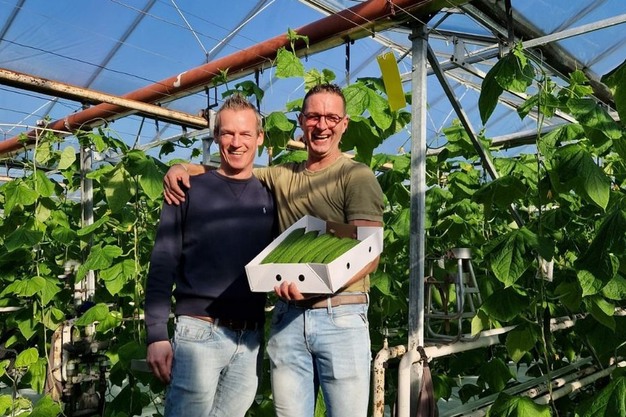
Dutch cucumber growers Bart de Groot and Stef Zwinkels drank a glass of champagne on Tuesday. There was something to celebrate for the young, ambitious entrepreneurs, as they had purchased a new location with their company KAS.KO, at Zwethkade Zuid 33 in Den Hoorn, Netherlands.

Sjaak de Hoog has harvested the first cucumbers of the season. It's extra special this year, as it is his last season for the grower. The family business from Pijnacker has existed for more than 100 years, 25 of which Sjaak has been at the helm. But the greenhouses will be demolished in September and the cultivation business will end. What Sjaak's future plans are? That is not quite clear yet, but it will take more and more shape in the coming months. That it will be something related to greenhouse farming, he does not rule out, shares Oxin Growers, the cooperative to which the grower is affiliated.

How to protect against CGMMV?
To prevent CGMMV infection, it is crucial to use seeds from companies that ensure their seeds are virus-free and to use resistant varieties whenever possible. Additionally, implementing a solid hygiene plan that addresses disinfection of tools, equipment, structures and machinery is vital, as well as several other safety measures such as use of single-use gloves, gowns, and shoe covers for visitors, proper work attire, organized workflow within greenhouses and scheduled sampling.

A Dutch cucumber greenhouse has implemented a plant monitoring system to optimize irrigation scheduling and plant stress prevention. The eight-and-a-half-hectare facility, Van Lipzig Tuinderijen B.V., transitioned from manual weight loss calculations to real-time data analysis using Gremon Systems' Trutina.

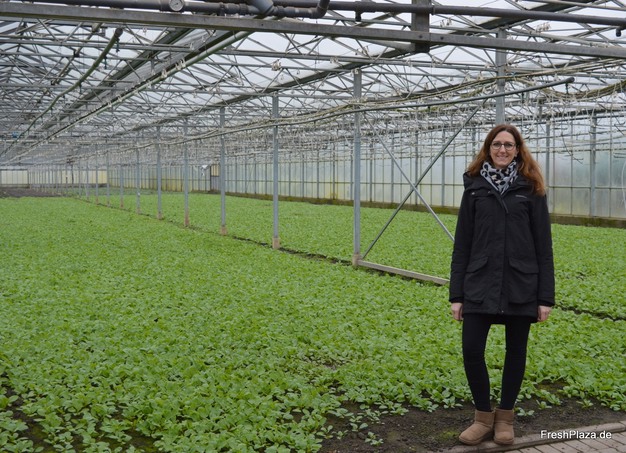
For more than three years, the family business Ruff-Häring GbR has been dedicated to the year-round cultivation of garden radishes. The vegetables are marketed throughout the year to both food retail customers and via their own stand at the wholesale market. "Garden Radish sales over the winter have been relatively weak so far, especially in the food retail sector. However, given the fact that we may not even have half the volume in winter that we do in summer, it was quite a good fit," said Stefanie Häring during an on-site interview in Nuremberg's Knoblauchsland.

© Certhon

Certhon has successfully completed the modernization of the greenhouse facilities for Louis Vinet, with a strong focus on efficiency and quality. This project marks an important step in the renewal of the cultivation area of market gardener Louis Vinet, a leading player in the French agricultural sector.

© Sollum Technologies

Cucumber production under LED lighting presents growers with a unique set of challenges -and opportunities. In a trial conducted at Delphy Improvement Centre, Sollum Technologies explored how dynamic lighting strategies, including far-red (FR) modulation and blue supplemental morning lighting (B-SML), could impact crop balance, yield, and energy use.

"There are crops that have their cycles and cannot be produced for many months of the year, but with Almeria-type cucumbers, it is possible to have a continuous and very high quality production all year round using this technology. This ensures greater profitability, as shown by the company's results with the high-tech greenhouse built in the first phase. We have managed to increase our turnover despite the fact that we had 5 fewer hectares, which were under construction with this second phase."

© SYNGENTA

After developing a range of ToLCNDV-resistant zucchinis - ND Protected range nominated at SIVAL 2024 - Syngenta is now applying its ND resistance to cucumbers with the latest addition: Siriana (Dutch long type), designed for full-summer production.

Cucumber prices have surged over the past week, but in fact, all greenhouse vegetables are performing well thanks to the current fine weather. "The cucumber price increase is particularly striking. In just one week, prices have jumped from €0.20 to €0.80 at auction. Of course, the weather is glorious, which is boosting demand," says Bruno Vuerinckx of BelOrta.

Related Articles → See More