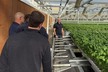
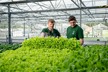
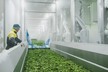
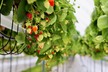
On 9 December, Rijk Zwaan celebrated the opening of its new greenhouse in De Lier, the Netherlands: 'De Hybride Phase 2'. This marks the next step in the company's breeding activities for tomato, sweet pepper and aubergine crops. The new facility creates extra space for research and development related to innovative varieties.
Selecting the best varieties
"Besides providing extra space, this expansion underlines Rijk Zwaan's dedication to research, innovation and the future of vegetable breeding. Here, creativity meets science to deliver healthy, resilient and tasty varieties for generations to come," said Amanda van Oord, Breeding Manager for Sweet Pepper and Aubergine, at the opening event.
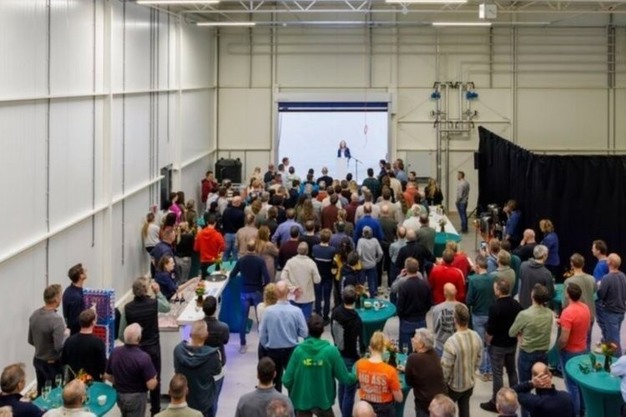 © Rijk Zwaan
When the greenhouse was officially opened, it already contained young plants of tomato, sweet pepper and aubergine varieties. These form the start of the selection process for breeders. "This expansion features numerous new compartments that will be used for selection trials, variety testing and pre-breeding research. We will be able to study a diverse range of plant materials sourced from around the world," explained Van Oord.
Multiple market introductions have originated in the De Hybride greenhouse, including the aubergine Pallada, the Clean Leaf concept, the award-winning large ready-to-eat snack pepper Tatayoyo, the Sweet Palermo sweet pointed pepper, and tasty ToBRFV-resistant tomato varieties.
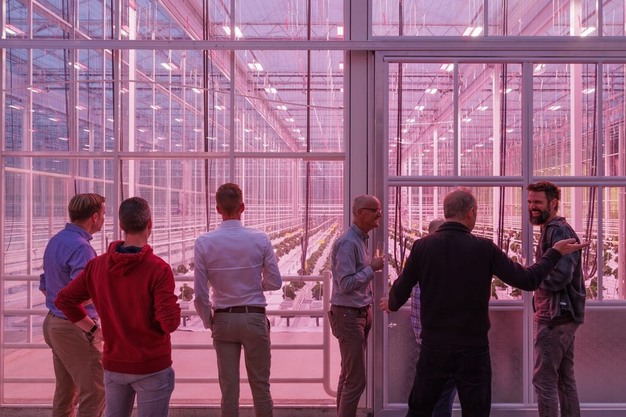 © Rijk Zwaan
Robust varieties
In addition to the new selection compartments, the expansion includes a new isolation section for dedicated abiotic stress research, which is a key focus area for Rijk Zwaan. Here, in smaller compartments, targeted research will investigate mechanisms and genes that can enhance plant resilience, enabling them to cope with extreme conditions such as heat, cold, salinity and drought. This work is increasingly vital as climate change is resulting in more extreme weather conditions in a growing number of regions. "This represents a significant leap forward for both seed technology and breeding," concluded Van Oord.
For more information:
Rijk Zwaan
Burgemeester Crezéelaan 40
2678 ZG, De Lier
www.rijkzwaan.com