The pepper thrips, Thrips parvispinus, is an invasive, highly polyphagous thrips species that has established itself in Dutch greenhouses in recent years and is now causing major concern in ornamentals as well as fruiting vegetables such as sweet pepper. As with many thrips species, which reproduce through haplodiploidy and arrhenotokous reproduction, unfertilized eggs develop into male offspring. Recent literature has highlighted this point, and it is relevant for T. parvispinus because females can lay eggs even without mating, writes Lennart Simonse of HortiPro in this contribution.
Spread and current status in the Netherlands
Thrips parvispinus originates from Southeast Asia and was officially detected in the Netherlands for the first time in 2019, in a Ficus benjamina greenhouse. Its official status since then has been "present, only under protected cultivation." Meanwhile, the species is being found with increasing frequency in ornamentals and sweet pepper crops across Europe and beyond.
Biology and reproduction: why males emerge from unfertilized eggs
Thrips often use a haplodiploid sex-determination system. Unfertilized eggs develop into haploid males, known as arrhenotoky, while fertilized eggs produce diploid females. This mechanism is widely documented in Thysanoptera and explains why unmated, or virginal, female populations can still produce offspring, although those offspring will be male.
It is also known that parthenogenesis plays a species-specific role in population growth and competitive ability among thrips. In the case of T. parvispinus, it is especially important that females can lay eggs without mating. Following the rules of arrhenotoky, those eggs produce male offspring.
The practical consequence, Lennart points out, is that even a very small introduction of just a few females can quickly lead to a mixed population. First, males emerge from the unfertilized eggs, and later, once mating occurs, female offspring appear. "This accelerates establishment and makes early detection absolutely crucial."
Host plants and damage symptoms
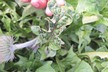
Pepper thrips are highly polyphagous. It feeds on a wide range of ornamental and vegetable crops, including anthurium, gardenia, ficus, and sweet pepper. Greenhouse conditions, with their warm and sheltered climate, provide ideal conditions for rapid population development. In sweet pepper crops, the life cycle takes roughly 13 to 14 days. Feeding damage occurs when thrips puncture and suck on young leaves and flowers, leading to silvery patches, bronzing, scarring, distorted shoots, and flower drop. In sweet pepper, this often results in misshapen fruits, rough skin, and losses in both yield and quality.
In southern Europe, such as the Almería region, a significant portion of the sweet pepper acreage is already affected, Lennart notes. "This highlights the risk for Dutch fruiting vegetable crops if populations are not brought under control in time."
The importance of monitoring
Accurate and consistent monitoring is essential for effective management of T. parvispinus, he explains. At one anthurium nursery, growers use blue sticky traps combined with the PheroThrip 2.0 pheromone, as shown in Figure 1. "This pheromone has a uniquely long activity period of six to eight weeks and attracts both male and female pepper thrips, giving a much clearer picture of population development than visual scouting alone."
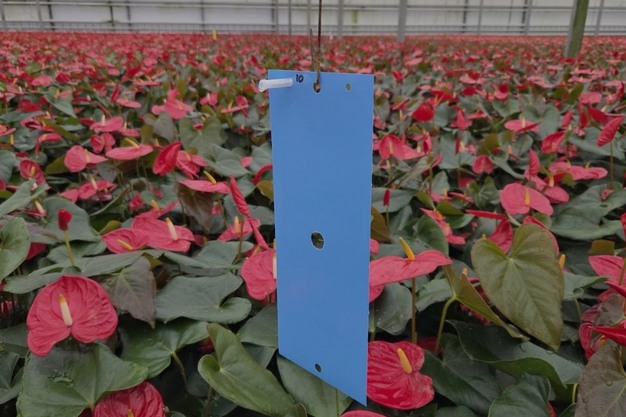 © HortiProBlue HortiPro sticky card in combination with the PheroThrip 2.0 pheromone, used in anthurium cultivation, where pepper thrips is a big problem.
Each week, the number of thrips caught on the sticky traps is recorded, with growers distinguishing between male and female T. parvispinus. "This sex ratio provides valuable insight into the stage of population development. For example, an early infestation with many males often indicates establishment from just a few unmated females. By tracking both total numbers and shifts in the sex ratio, growers can intervene at the right moment, fine-tune their biological control strategy, and plan chemical interventions more precisely."
Monitoring and diagnostics
Lennart shares several tips for effective monitoring and diagnostics. When scouting, it helps to focus on growing points, young or curling leaves, and floral tissues. "Use blue or yellow sticky traps together with the PheroThrip 2.0 pheromone, and combine that with visual inspections." Once thrips are detected, identification becomes essential. Female T. parvispinus have a black, two-toned abdomen. Males are smaller and more yellow, with a distinctive black edge along the wings, as shown in Figure 2.
For information on reporting and the official pest status, HortiPro advises consulting EPPO or NPPO updates, which provide insight into affected areas and the measures to be taken.
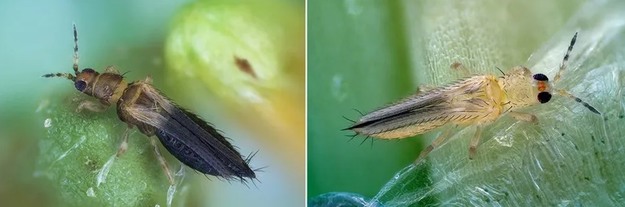 © HortiProThrips parvispinus adults. Left: female pepper thrips. Right: male pepper thrips. Source: https://extension.psu.edu/invasive-insect-thrips-parvispinus
Conclusion
The combination of a rapid cycle, sheltering behavior, and the arrhenotoxic mechanism—where unfertilized eggs only produce males, allowing populations to quickly establish themselves—makes Thrips parvispinus a tough opponent in greenhouses. "This means staying vigilant in ornamental horticulture, and proactively monitoring peppers and acting immediately at the first signs," advises Lennart on behalf of HortiPro. "Through strict hygiene, monitoring, accurate identification, and well-thought-out IPM strategies, the pest can be managed, although this requires discipline and updating the approach as new knowledge and resources become available."
Sources
- EPPO/NPPO Netherlands: first finding NL and status "under protection only". gd.eppo.int+1
- Biology & parthenogenesis/arrhenotoky in thrips. PMC+1
- T. parvispinus in peppers and ornaments (damage, cycle, monitoring). Inside Grower+3mrec.ifas.ufl.edu+3Insecticide Resistance Action Committee+3
- European practice experience; impact in peppers. GroentenNieuws
- IPM/biological and chemical options. ScienceDirect+1
For more information:
Lennart Simonse
HortiPro
[email protected]
www.hortipro.com