Starting in 2026, PATS-C users will work with an updated detection model that identifies and distinguishes key moth pests earlier and more accurately. This gives growers quick insight into the first signs of pest pressure and lets them act before caterpillar damage develops.
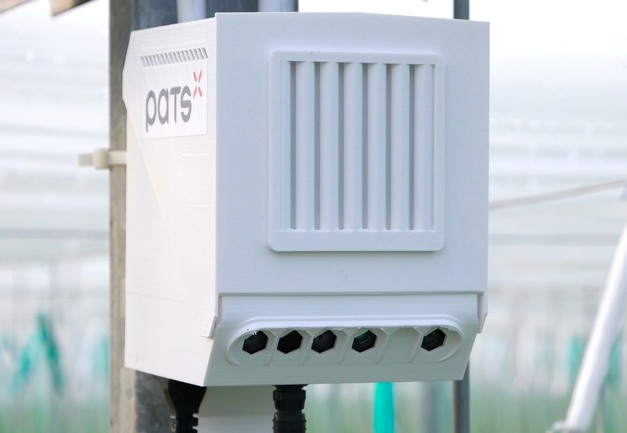 © PATSPATS closely monitors pest activity in a tomato crop
This improvement comes from years of intensive data collection, paired with steady feedback from dozens of engaged users. The model was trained on more than half a million insect flights and over 12,000 minutes of visual data gathered across eight crops, including tomato, bell pepper, and gerbera. By reporting false positives, users help sharpen accuracy over time. With standardized data coming in from hundreds of companies worldwide, everyone benefits as the model improves.
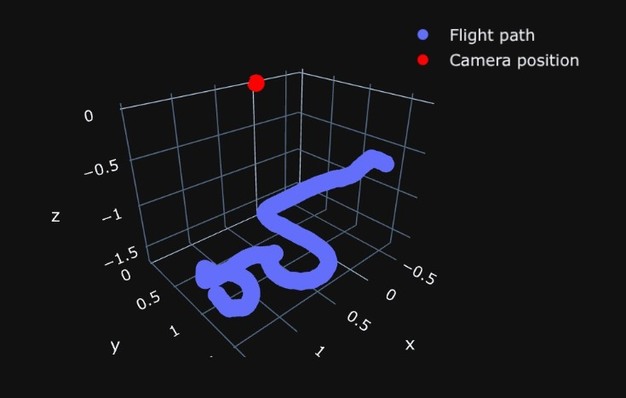 © PATS PATS-C captures each moth's unique flight path, providing biometrics for accurate pest type differentiation
The new model supports growers dealing with Tomato looper moth (Chrysodeixis chalcites), Tomato leafminer (Tuta absoluta), European pepper moth (Duponchelia fovealis), and Banana moth (Opogona sacchari). Accurate identification of these pests is essential for containing problems early across vegetable and fruit crops, as well as flowers and ornamentals. With PATS-C already active in more than twenty countries, this development has a global impact on daily crop protection practices.
 © PATSGrowers prefer not to see this harmful caterpillar in their crops
This matters because, as of January 1st 2026, restrictions on crop protection products will tighten again, leaving growers with fewer chemical options and less flexibility. Early detection and continuous monitoring become even more important for keeping pest pressure in check. New users will start with the updated model right away, and existing users will move over gradually, with the full transition complete by early January.
The improved detection also allows more accurate predictions of key life cycle stages. PATS-Vinder can predict the first caterpillars up to seven days in advance, helping growers plan labor, resources, and interventions at the right moment. This level of forecasting is possible because PATS-C tracks moth activity every night, something traditional monitoring tools cannot do. Early generations often go unnoticed in traps, which can lead to bigger issues later in the season.
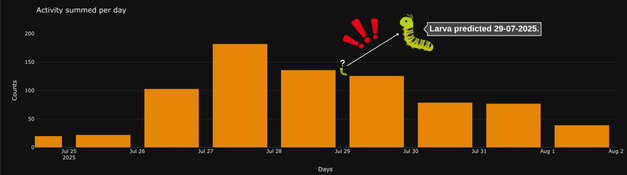 © PATS PATS-Vinder predicts exactly when caterpillars will hatch, enabling precisely timed interventions.
Through the uniform way of monitoring across hundreds of companies, national and regional patterns also become visible: "A significant moment occurred on the first real hot night of 2025, when large numbers of Tomato loopers entered nearly all monitored greenhouses across the Netherlands, Belgium and Germany. This enabled us to send highly targeted warnings to vegetable growers. The response was remarkable: both users and non-users immediately recognised the first signs of increased pressure and were able to act accordingly," said Bram Tijmons, PATS.
For more information:
PATS Delftechpark 26, 2628 XH, Delft, NL
[email protected]
www.pats-drones.com