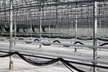
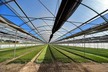
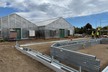
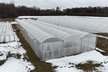
A new greenhouse complex, Ecoculture-Eurasia, has begun operations in Kazakhstan's Turkestan region, aiming to become one of the most technologically advanced agro-industrial facilities in Central Asia.
The cluster covers nearly 52 hectares and is designed to produce 27,000 tons of vegetables per year, primarily large- and small-fruited tomato varieties. The project's total investment is 42 billion KZT (€71.4 million).
In 2025, 21 hectares of greenhouses are being commissioned. The complex already has nine boiler houses with a combined capacity of 14 MW, 37.76 hectares of greenhouse blocks have been fitted with polyethylene covering, and two blocks totaling 12.5 hectares are fully ready for planting.
The greenhouses operate on a full technological cycle, enabling stable production even under the wide temperature fluctuations typical of southern Kazakhstan. In October, the first "Klimon F1" tomato seedlings were planted on 6.25 hectares, with the first harvest expected in February 2026. Plans include expanding the variety to 12 tomato types, including plum and cherry tomatoes.
Produce from the complex will supply both domestic markets and exports, primarily to Russia, including Siberia and the Far East. Authorities note that the scale and reliability of production will make Ecoculture-Eurasia a key contributor to Kazakhstan's vegetable export flow.
Source: agrosektor.kz