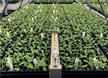
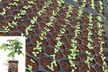
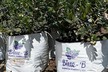
Demand for coco peat and coir substrates is showing steady growth across Europe, Middle East, and Latin America, says Tharun Kumar of M2Balu Export, an integrated manufacturer of coir-based substrates. "As more growers transition to controlled-environment and soilless systems the requirement for stable and predictable substrates continues to increase.
Tharun observes the main drivers behind rising global coir demand and coco peat pricing: "In the Baltic region, peat harvesting normally runs May to August, but extreme wet conditions in 2024-25 limited the output, with no further harvesting possibilities until the 2026 season. Meanwhile, the Philippines faces weather disruptions slowing coconut husk processing while Sri Lanka grapples with lower yields from aging trees. Replanting has begun but climate recovery lags and recent cyclone and flooding events have tightened raw husk supply."
 © M2Balu Export
According to Tharun, the consumption of coir products among export clientele is led by berries like blueberries, raspberries, and strawberries. "Tomatoes, cucumbers and peppers in high-tech greenhouses, leafy greens and herbs in hydroponics plus nurseries for seedlings, ornamentals, forestry and avocados also rely heavily on coir substrates." He adds that pricing holds firm as demand from Asia and Latin America outpaces supply.
Many first-time growers transitioning from soil naturally compare substrate costs directly with traditional inputs, Tharun mentions. "However, once they experience the long-term benefits in terms of water efficiency, higher yield potential and more predictable root-zone management, price becomes less of the main focus."
 © M2Balu Export
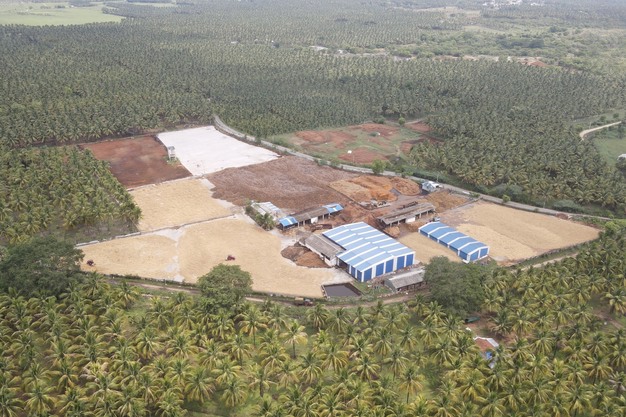
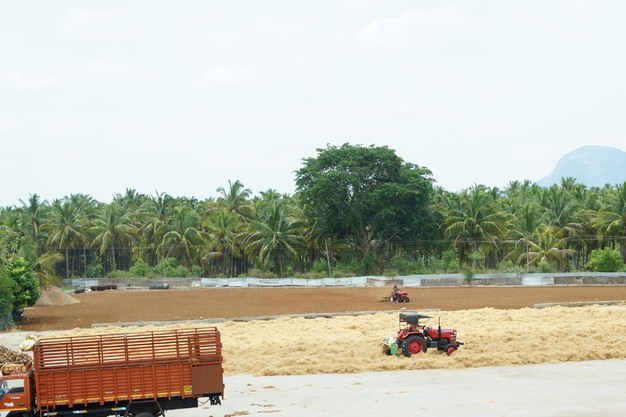
M2Balu Export began exporting last year but draws on 15 years of raw coir manufacturing through group companies Tharun Coir Products and Balu Coir Products. "A vertically integrated set-up handles everything from raw husk washing, drying and screening to fiber separation and compression right through export packing. This gives uniform EC, consistent particle structure, predictable fiber-pith ratios and reliable lot-to-lot performance. Besides, quality inspectors monitor each stage individually, not just the final block."
Tharun describes two of their custom blends being developed to suit specific crop needs: "MaxChip offers higher-airflow for berries, avocados and crops requiring stronger aeration. FiberBalance gives fine-textured substrate for leafy greens and hydroponic vegetables needing predictable moisture." M2Balu currently exports to China, the Middle East, Europe and Latin America.
 © M2Balu Export
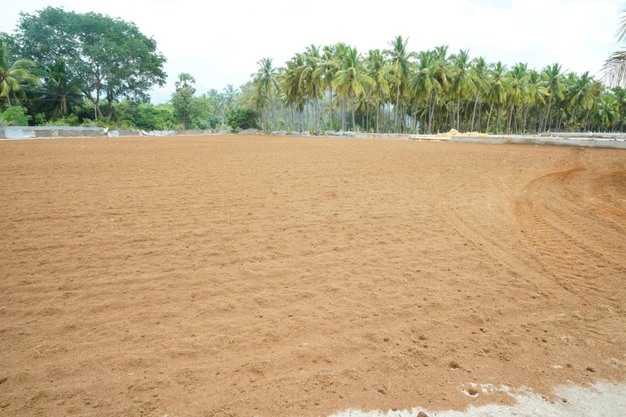
"A new facility coming online early 2026 will hold up to 50 packed containers of export-ready products at once, with an adjoining warehouse storing dry coco peat equivalent to 25 to 30 containers. This setup helps smooth out supply timing for distributors," says Tharun, predicting better husk availability in 2026 on the back of strong rains in India's southern state of Tamil Nadu. Looking ahead, he expects the demand for coir substrates to remain strong as peat regulations tighten. "As a young exporter with deep manufacturing roots, our focus is not on scaling as fast as possible but on scaling responsibly. Consistency, transparency and long-term trust matter more to us than short-term volume," Tharun concludes.
For more information: © M2Balu Export
Tharun Kumar
M2Balu Export
Tel: +91 90 92 429 900
Email: [email protected]
www.m2baluexport.com