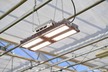
Due to the increasing use of LED lighting in the greenhouse industry, questions are also arising about potential health risks. The main point of attention is blue light (400–500 nm), which can cause retinal damage after prolonged exposure. This is known as Blue Light Hazard.
With the right precautions, it is possible to work safely under (blue) LED light. In some countries, like the Netherlands, these measures are mandatory and follow from occupational health and safety legislation regarding artificial optical radiation. It is advised to check your local legislation on the subject.
In order to reduce risks, growers are encouraged to check the risk group (RG0 to RG3) of the LED fixture via the manufacturer. RG3 products are high-risk and not permitted in areas where people work. Preferably, growers should also choose a fixture with a low-risk group and switch off the lighting during work activities whenever possible.
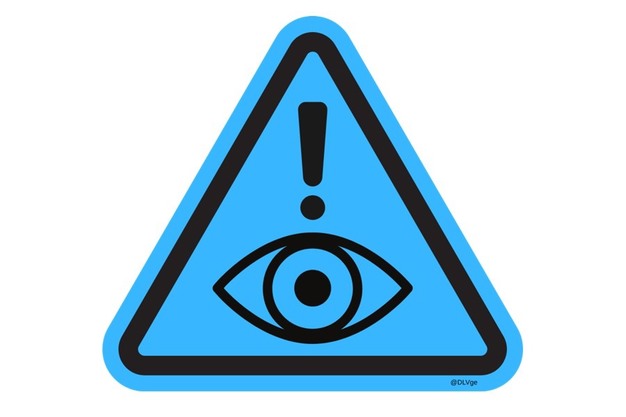 © DLVge
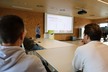
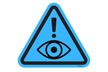
When working in an area with RG2 LEDs, you should never look directly into the light source and always maintain the prescribed safety distance (Dthr). If this is not possible, special safety glasses are mandatory. Put up a warning sign. Inform employees and, if necessary, offer an occupational health examination.
The use of LEDs in horticulture carries risks related to the blue light spectrum. The risk group and the prescribed safety distance of the lamps—available from the manufacturer—determine which measures must be taken. Check your local legislation.
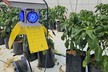
DLVge has developed a warning sign to be placed in greenhouses where the working distance to the LED RG2 is too small. If interested, you can request it via email: [email protected]
For more information:
DLVge
Email: [email protected]
http://www.dlvge.nl/