The development of the Naepo Agri-Bio Convergence Industry Cluster – a flagship project of the 8th Chungnam Provincial Government – is gaining momentum. The cluster will span 1.67 million square metres (500,000 pyeong) in the Sapgyo-eup region and will combine an integrated smart-farm complex, a research and development hub, and a dedicated industrial zone. The project represents an investment of 680.3 billion KRW and is scheduled for completion in 2028.
A feasibility study was finalised in October last year, followed by a central government investment review in April. Work to draft the industrial complex plan began in June. In parallel, a separate planning process for Celltrion's expected move into the complex started in May, with final approval anticipated in December.
 © ChosunBiz
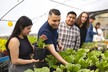
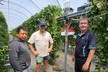
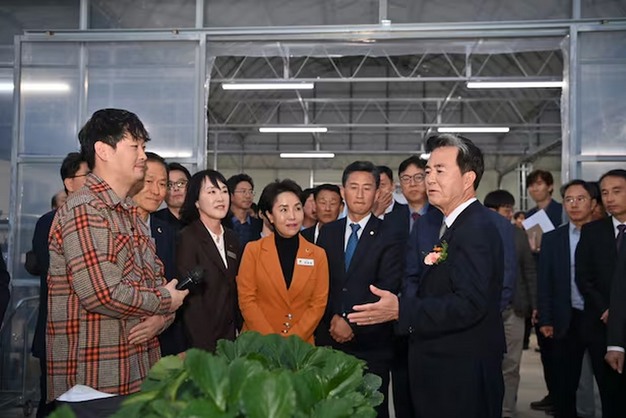
Governor Kim Tae-heum (right) visits the first lease-type smart farm and inspects crops grown by a young tenant. /Courtesy of South Chungcheong Province
Chungnam Province aims to establish an advanced distribution and logistics platform within this new cluster, supporting biotechnology development and demonstration trials, high-value crop cultivation, and vertical-farming R&D. The province plans to accelerate administrative procedures, commence construction during the first half of 2027, and finish the entire development by 2028. The long-term vision is to position Naepo as a leading centre for advanced bio-industries and the future agri-industry.
Chungnam—already home to Korea's core semiconductor and automotive industries—is positioning the bio-industry as its next major growth sector. During the current provincial administration, the government has launched a comprehensive plan to advance the Chungnam bio-industry and has created a dedicated bio-industry division.
An Ho, head of Chungnam's Industry and Economy Office, said:
"As we enter the second half of the current administration, we are proactively fostering the bio-industry as our main engine for the next 50 to 100 years. The new bio-industry division is organized into three teams—bio policy, biohealth, and green bio."
He added that the province aims to build Korea's only full-cycle support system for commercializing microbiome-based pharmaceuticals while also developing a green-bio hub that links high-value livestock and crop industries with advanced biotechnology.
 © ChosunBiz
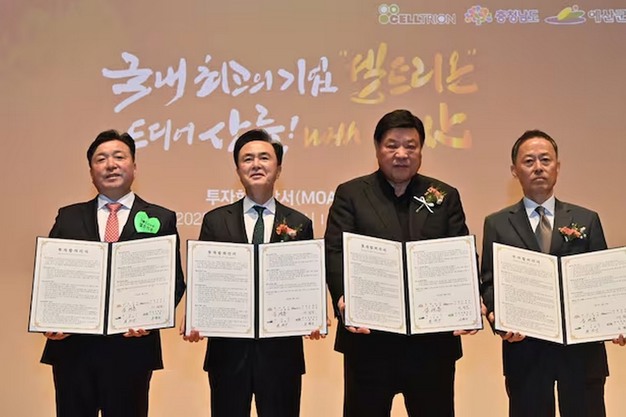
Kim Tae-heum, governor of South Chungcheong Province (center left in photo), and Seo Jung-Jin, chairman of Celltrion (center right), pose after signing a memorandum of agreement (MOA) for investment. /Courtesy of South Chungcheong Province
The Naepo Agri-Bio Convergence Cluster is the centrepiece of Chungnam's bio-industry strategy, and the development is divided into three major zones.
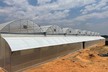
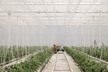
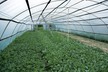
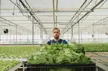
An important zone will be their Smart-Farm Zone (approx. 150,000 pyeong). A combined 150,000-pyeong smart-farm area—40,000 pyeong inside the industrial zone and 110,000 pyeong adjacent to it—will host state-of-the-art greenhouse and indoor-farming facilities. Construction of the smart-farm convergence complex began last month, with additional greenhouses set to break ground next month and targeted for completion in August next year.
Thanks to its proximity to the Seoul metropolitan market, Chungnam is poised to become a major production and distribution hub for high-tech greenhouse farming. Fast, efficient logistics are critical for the fresh-produce sector, and the province is working to build a competitive advantage here.
One example is SP Agri, which is developing a 60,000-pyeong high-tech greenhouse in Unsan, Seosan, dedicated to summer strawberry production. Strawberries typically require temperatures below 15°C and are traditionally grown only in winter and spring. SP Agri plans to maintain ideal climates through advanced cooling systems so that consumers can enjoy fresh Korean strawberries in summer. Once all smart farms in the province are fully operational by 2028, strawberry output alone is expected to exceed 4,000 tonnes.
Other smart-farm developments include:
Pamirése, establishing a 3,000-pyeong strawberry export greenhouse in Sapgyo, Yesan
IOcrops, building a 6,000-pyeong automated greenhouse in Cheongra, Boryeong, featuring integrated climate and irrigation control systems based on advanced software solutions
A provincial official noted:
"Chungnam is rapidly emerging as a production and logistics hub for smart-farm agriculture, supported by strong provincial policies."
Governor Kim Tae-heum added:
"During my term, with a 2-trillion-won budget, we will build 2.53 million pyeong of smart farms, nurture 9,000 young farmers, and ensure at least 3,000 can establish themselves successfully. We have built a one-stop support system enabling young people to start farming with enthusiasm—even if they lack capital—and we offer various revenue models including rental, sales, and independent-operation formats."
Source: biz.chosun.com